The Miners Made Record Cash While the Metal Fell 23%

 |
14 SEPTEMBER 2026
 By Mike Lee
sponsored Starbucks Went Public at 27 Cents |
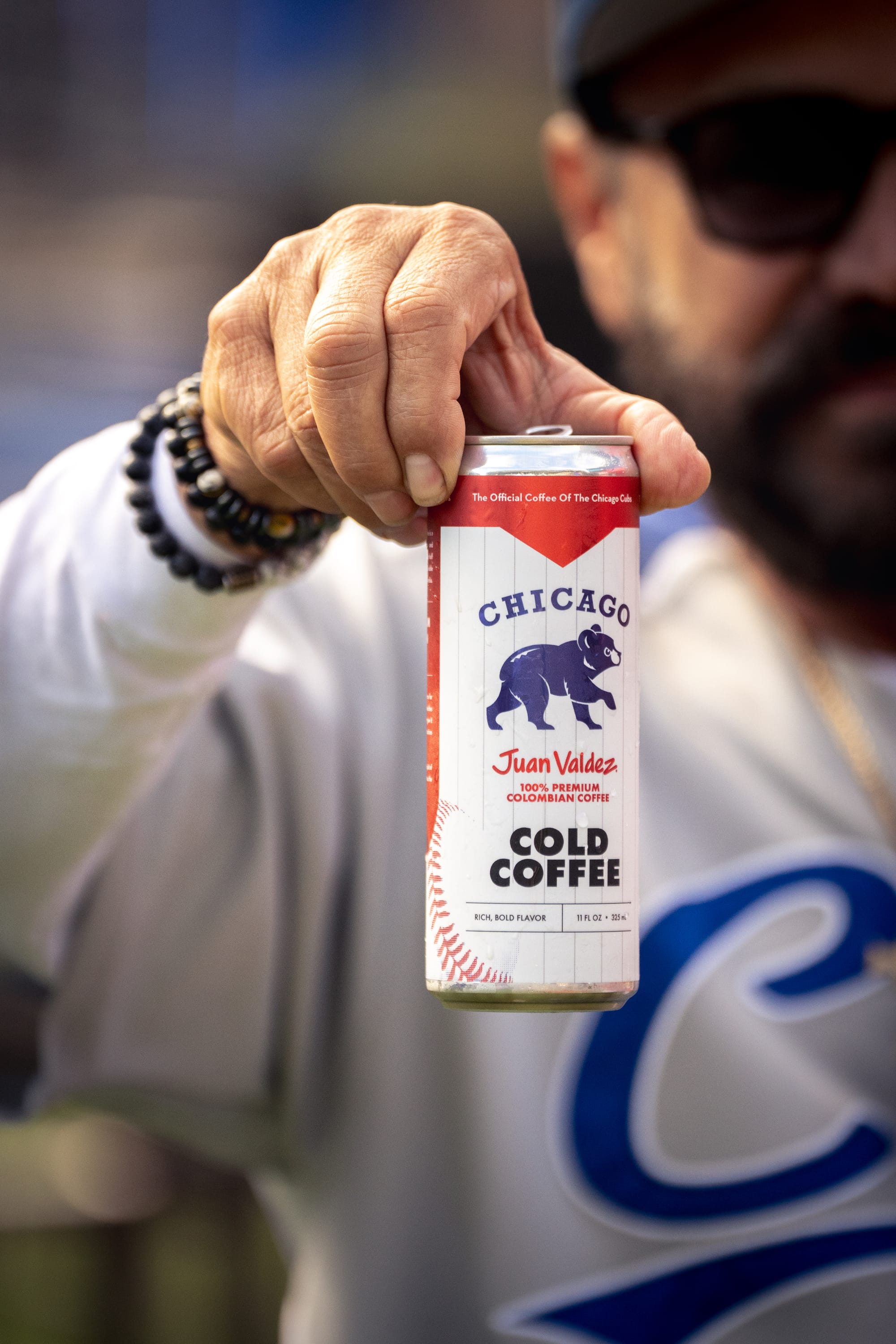 In 1992, Starbucks went public at a split-adjusted price of approximately $0.27. Today, its stock trades above $108. That’s a gain of roughly 40,000%. Put another way… That turns $100 into $40,000… $500 into 200,000 dollars… And a tiny stake of $1,000 into almost half a million dollars. But unless you invested in Starbucks back in 1992, that opportunity is already gone. The bigger question is: Where could coffee’s next major growth story come from? The global coffee market is projected to reach approximately $380 billion by 2033. And its next breakout company may not be built around thousands of cafés. It may begin with the farms… And that’s the opportunity that could dwarf Starbucks returns. Click here to see what a $1,000 stake buys today – and why this company believes the next big coffee story is moving from farm to shelf. Meet Green Coffee Company. It owns approximately 45 Colombian farms and 10 million coffee trees. It also holds exclusive third-party rights to Juan Valdez coffee products across U.S. and Canadian retail and institutional channels. Those products are already reaching Target, Walgreens and thousands of North American retail locations. And individual investors can now own a stake while the company is still private. No accreditation required.  This is a paid advertisement for Green Coffee Company’s Regulation A offering. Please read the offering circular at https://invest.greencoffeecompany.com/. Timelines are subject to change. Listing on the NASDAQ is contingent upon necessary approvals. |
Three Numbers to Start
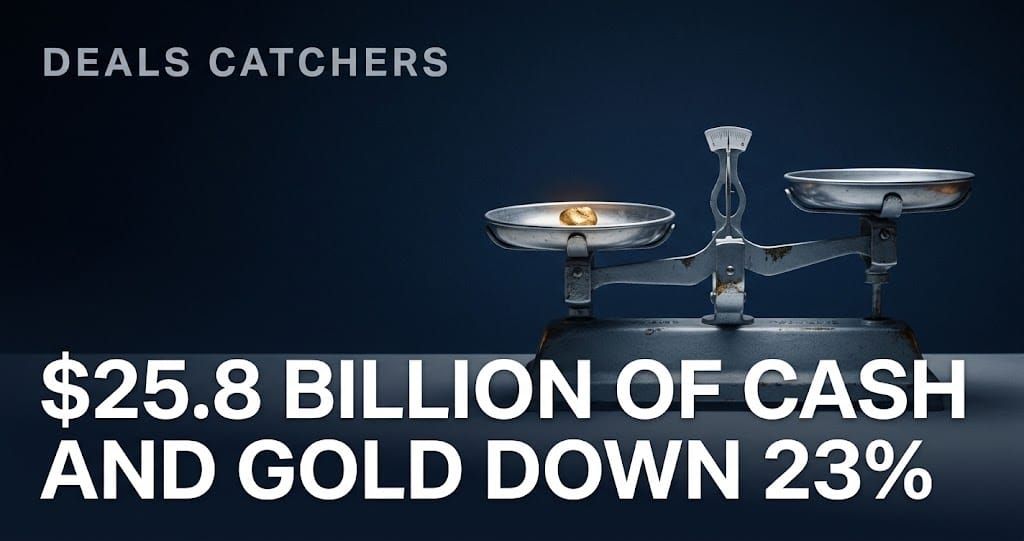
$25.8b | free cash flow across the world’s leading gold producers last year, against $9.2 billion the year before. |
$4,284 | gold this morning, down 23% from its January peak and falling for a third straight week. |
Tomorrow | the Federal Reserve begins a two-day meeting. Markets put the odds of a rise near 60%. |
ad In 1992, Starbucks went public at a split-adjusted price of approximately $0.27. Today it trades above $108. See what a $1,000 stake buys today |
The Miners Made Record Cash While the Metal Fell 23%
Two things are true about gold right now and they point in opposite directions, which is why the sector is confusing to read.
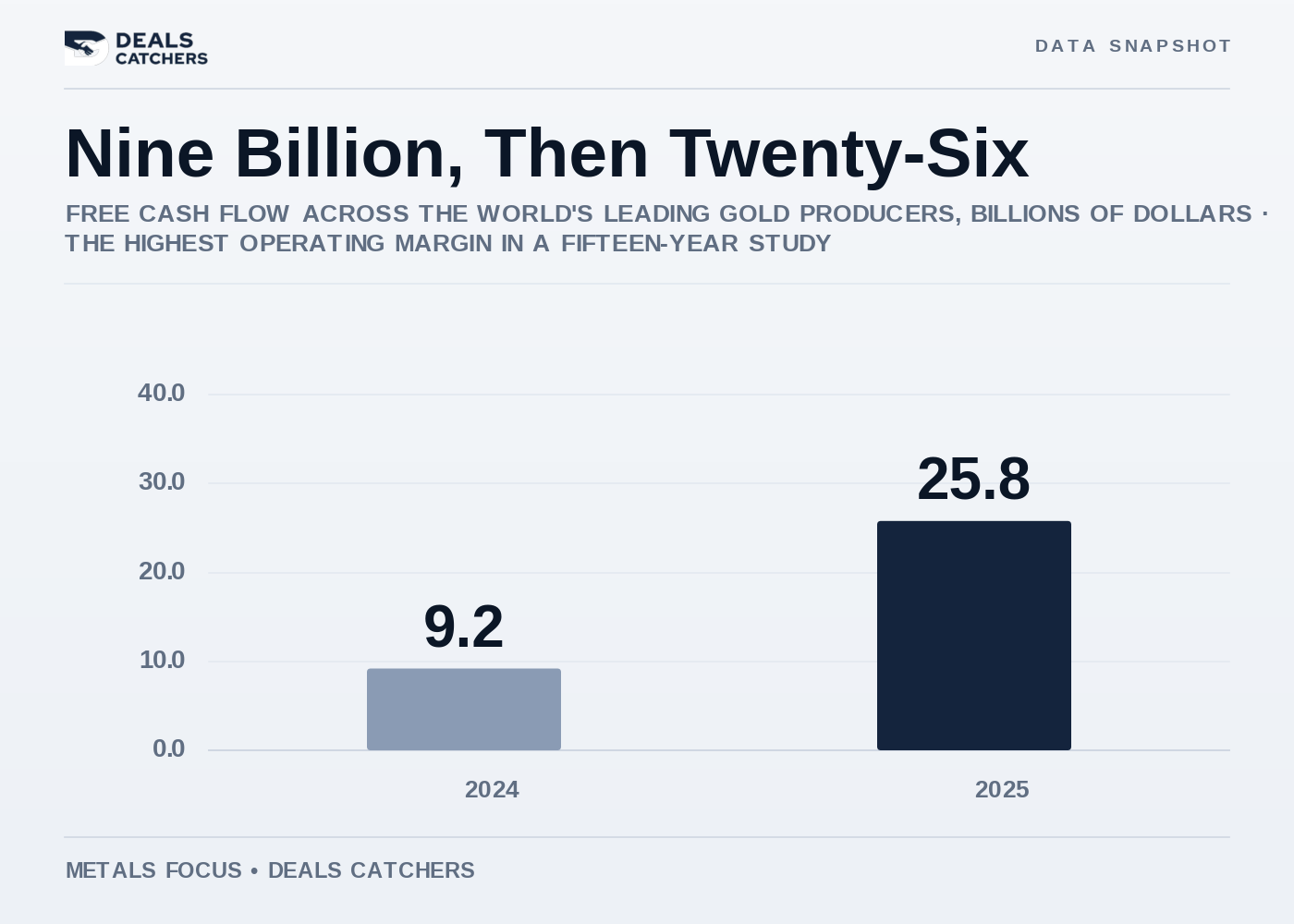
The world’s leading gold producers generated $25.8 billion of free cash flow in 2025, against $9.2 billion the year before, according to Metals Focus. That is an increase of roughly 180%, and the highest operating margin recorded across the firm’s fifteen-year study.
Newmont alone produced $7.3 billion of free cash for the full year. Barrick made $3.87 billion. Agnico Eagle reported $1.335 billion in a single quarter this year, a company record.
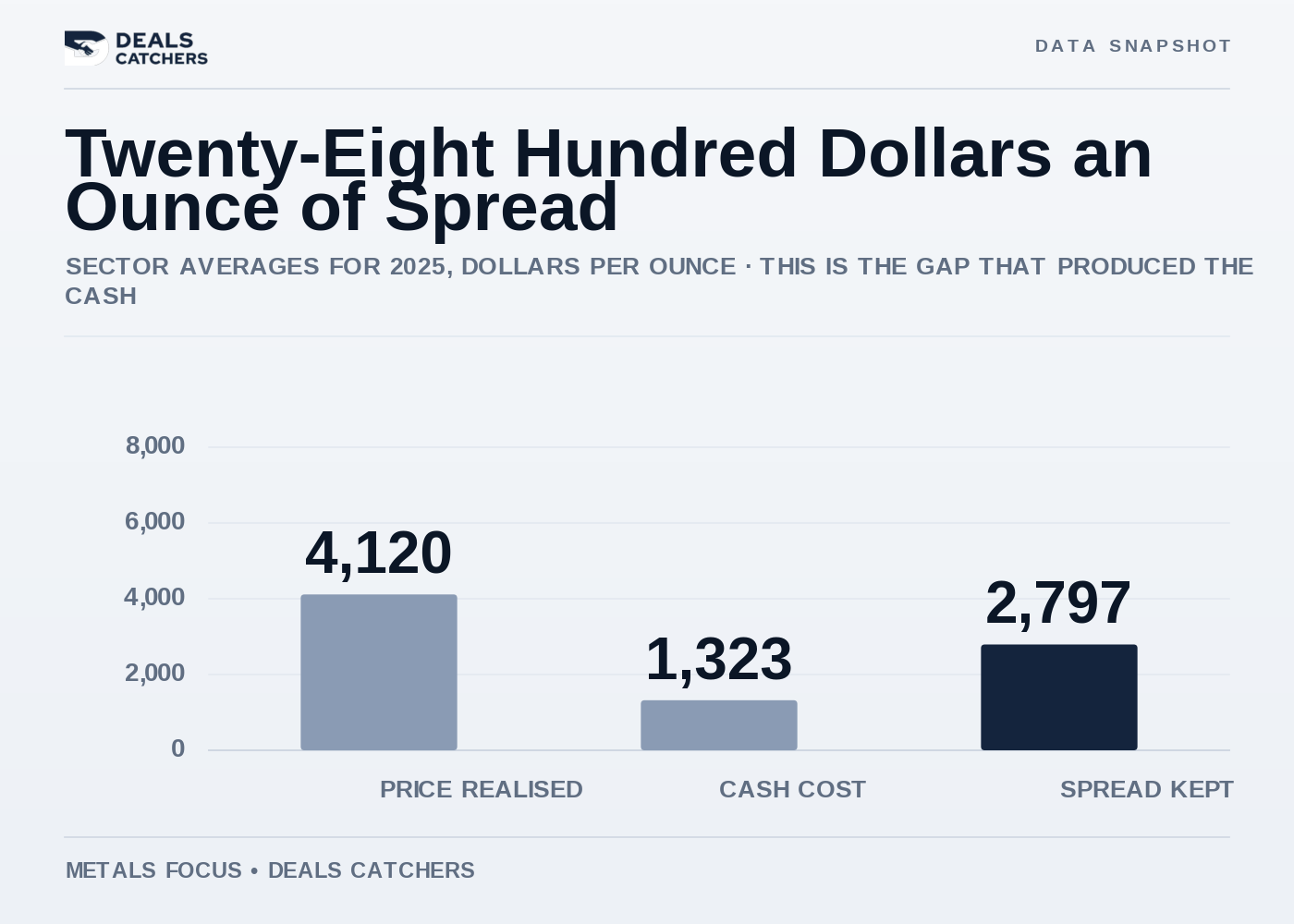
The arithmetic behind it is simple and worth seeing directly. The sector realised an average of about $4,120 an ounce against cash costs averaging roughly $1,323. That leaves a spread of about $2,797 an ounce on everything they dug up.
Now the other side.
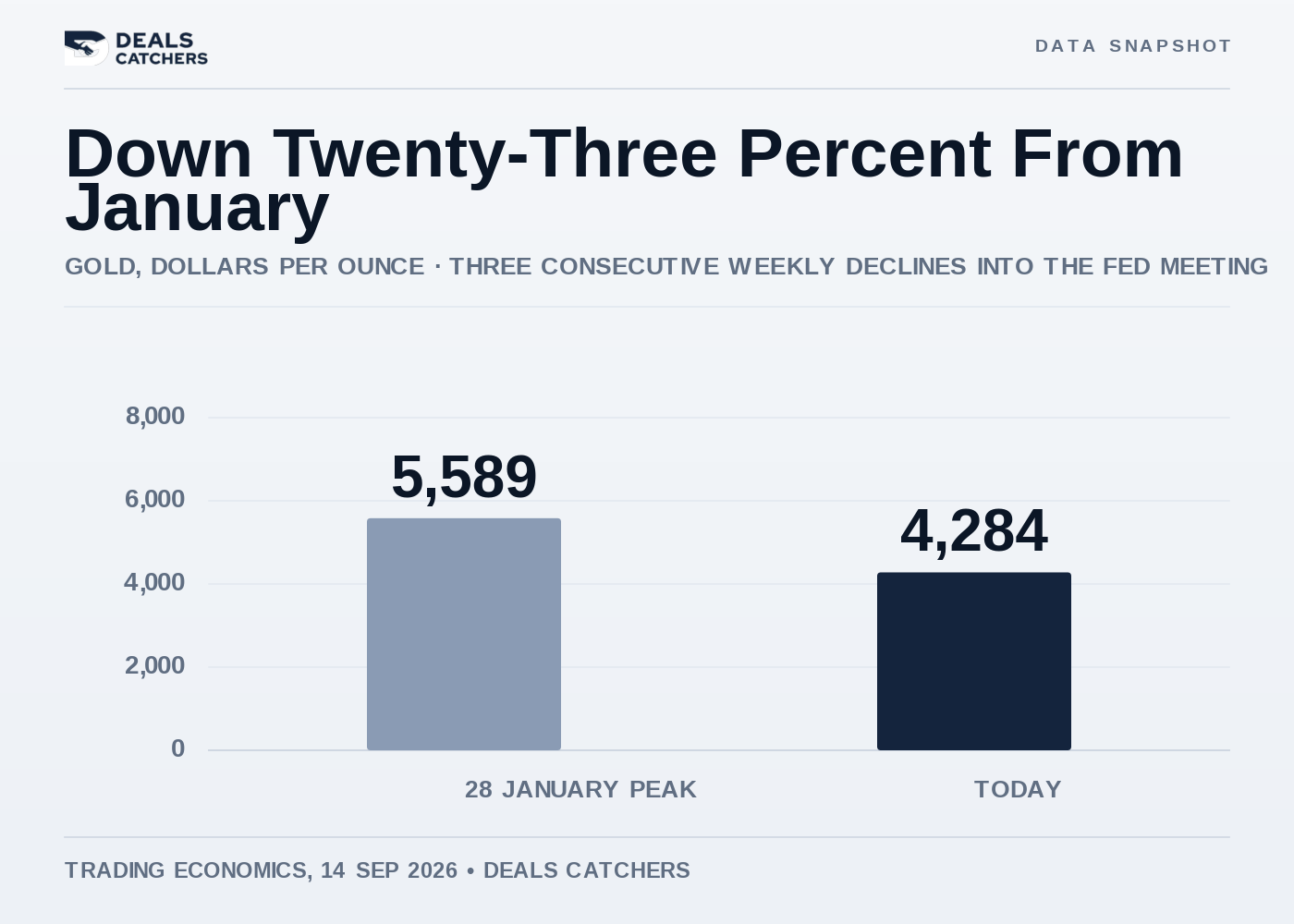
Gold peaked at $5,589 an ounce on 28 January. This morning it trades near $4,284, a third consecutive weekly decline and the lowest level since August.
Two forces are doing that. Oil surged after Saudi Arabia closed a pipeline used to bypass the Strait of Hormuz following drone attacks, which pushes inflation expectations up. And higher inflation expectations push rate-rise odds up, which raises the opportunity cost of holding metal that pays no interest.
So the geopolitical risk that usually supports gold is currently working against it, through the interest rate channel. That is unusual and it is the main thing to understand about this market.
For the miners, though, the pullback barely registers. A producer with $1,323 of cash costs does not care much whether it sells at $5,589 or $4,284. Both are enormously profitable. The share prices move with the metal; the cash flows do not move nearly as much.
Why a Discount Exists, and What Closes It
The claim that junior mining assets trade at a fraction of the gold in the ground is not a trick. Ounces in a resource statement really are worth less than ounces in a vault, and the reasons are specific.
Time. An ounce in the ground is an ounce you might sell in eight to fifteen years, after permitting, financing and construction. Discount any cash flow that far out at any sensible rate and most of its present value disappears.
Dilution. A junior with no revenue funds itself by issuing shares. A deposit that looks cheap per ounce today is often being divided by a share count that will be considerably larger before a single ounce is poured.
And the chance it never happens at all. Permits are refused. Grades disappoint. Governments change terms. A meaningful share of defined resources are never mined by anyone.
So the discount is a price for those risks rather than a mistake. The question is not whether a gap exists — it always does — but whether today’s gap is wider than the risks justify.
What genuinely could close it is the thing the promotion identifies, and that part is sound. Major producers deplete reserves every year they operate. Replacing them by exploration is slow and uncertain. Buying somebody else’s defined deposit is fast. When the majors are sitting on record cash and their own production profiles are shrinking, acquisition becomes the cheaper path.
The catch for an individual is selection. A wave of takeovers lifts the few assets that get bought and does very little for the many that do not. Owning the sector broadly captures an average that includes a long tail of companies that never produce anything. Owning one name concentrates on a judgement about which deposit an acquirer wants, and that judgement is what the whole exercise rests on.
Being Named on Page 146 of a Filing Is Not an Endorsement
A recurring device in investment promotions is the regulatory document with a page number attached. The specificity is the point — a page number sounds like evidence in a way that a claim does not.
So it is worth knowing what a company being named in somebody else’s filing actually establishes.
Filings are disclosure, not recommendation. A 10-K or an S-1 lists suppliers, customers, partners, competitors and risks because securities law requires the filer to describe its business honestly. Naming a vendor means the filer depends on them enough to disclose it. It says nothing about whether that vendor is a good investment.
Risk factors are written to be pessimistic. The section most often mined for dramatic quotes exists specifically to list everything that could go wrong. Lawyers draft it to be comprehensive rather than balanced, because an undisclosed risk is a liability and an over-disclosed one is not.
And private companies do not file. A startup named inside a public company’s filing has published nothing itself — no audited accounts, no revenue figures, no risk disclosure of its own. Everything you can learn about it from that document is what somebody else chose to say.
The habit worth building takes about two minutes. Filings are free at the SEC’s EDGAR database. If a promotion cites a page, open the document and read the surrounding paragraphs. What usually appears is a routine disclosure in a list of similar ones, and the framing collapses immediately.
This is not an argument that filings are uninteresting. They are the most reliable public source there is, precisely because the penalties for lying in one are severe. It is an argument that a citation is only as good as the sentence it points at, and the sentence is available.
sponsored Page 146 of an SEC Document |
 See this official SEC document? On page 146 Elon Musk revealed the name of a startup that Jeff believes will be… The next monster IPO on Wall Street. (Click here to get the details.) Even though this has nothing to do with robots, self-driving cars, or rockets… This startup is growing faster than Tesla… faster than SpaceX… and even 23 times faster than Nvidia. That’s why The Atlantic called it… “The fastest-growing business in the history of capitalism.” |
The Fed Meets Tomorrow and the Dot Plot Is the Real Question
15–16 | September — the Federal Open Market Committee meets. Officials are in blackout until the decision. |
~60% | the market’s odds of a rise, lifted by a hot August producer price reading. |
$4,284 | gold, pressured by the same expectations that are pushing those odds up. |
The decision lands Wednesday. The more interesting document arrives with it.
At the June meeting, Warsh declined to submit a dot-plot projection — the first sitting chair on record to do so. The dot plot is the chart showing where each official expects rates to sit in coming years, and it is the closest thing the Fed publishes to forward guidance.
Whether he submits one on Wednesday tells you more about how this Fed intends to communicate than the rate decision itself will. A chair who keeps declining is choosing to remove the market’s main tool for pricing the path ahead, which makes every individual data release carry more weight than it used to.
Oil sits underneath all of it. Saudi Arabia closing a bypass pipeline after drone attacks pushed crude toward four-month highs, and that feeds directly into the inflation numbers the committee is reading.
sponsored A Dollar of Gold for Thirty-Six Cents |
Right now, you can buy a dollar’s worth of gold for about 36 cents. That sounds impossible. Here’s how it’s real. The major gold miners are throwing off record cash flow — even after gold’s recent pullback. The four largest have never had this much free cash on hand. Ever. At today’s gold price, they’re running margins as high as 75% — the most profitable they have ever been. Which hands them a problem. Go here to see the problem — and why the majors are about to go on a shopping spree for the ages. When a major gold miner makes record profits, it does one of two things: hand the cash back to shareholders, or buy the best junior mining assets to secure future production. And here’s the piece the market is missing: The best junior assets are still priced as if gold were stuck at $1,800 an ounce — not north of $4,000, where it trades today. So the majors are staring at their own future production shrinking, sitting on record cash, looking at top-tier junior assets trading at a fraction of what that gold is worth at today’s price. They don’t have a choice. They buy — or their output keeps shrinking until they’re out of business. That’s how you buy a dollar of gold for 36 cents: you own the junior before the major is forced to pay up for it. The gap between what these assets are worth and what they trade for has a name. I call it the Golden Anomaly. It only appears early in a gold bull market, and it closes fast — usually the moment the majors start writing cheques. So you can pay full price after the gap closes… Or buy the dollar for 36 cents while it’s still open. |
ad The global coffee market is projected to reach approximately $380 billion by 2033. See what a $1,000 stake buys today |
Twenty-Eight Hundred Dollars an Ounce
$2,797 | the spread between what gold producers realised per ounce last year and what it cost them to dig it up. That gap is why a 23% fall in the metal barely dents their cash flow, and why the share prices and the cash flows have been telling different stories all year. |
Forget the hot picks — protect what you’ve already built, and open the document before you believe the page number. Because the best trade you’ll ever make is the loss you never took. Mike LeeDeals CatchersThanks for reading. See you tomorrow. |
Forwarded this? Get it every morning. |