Mode Mobile’s Share Price Changed to $0.52. SpaceX’s $1.75 Trillion Listing Is Five Days Away. And One Million Satellites Just Hit the FCC Docket


Three Calendars That Don’t Wait for Each Other
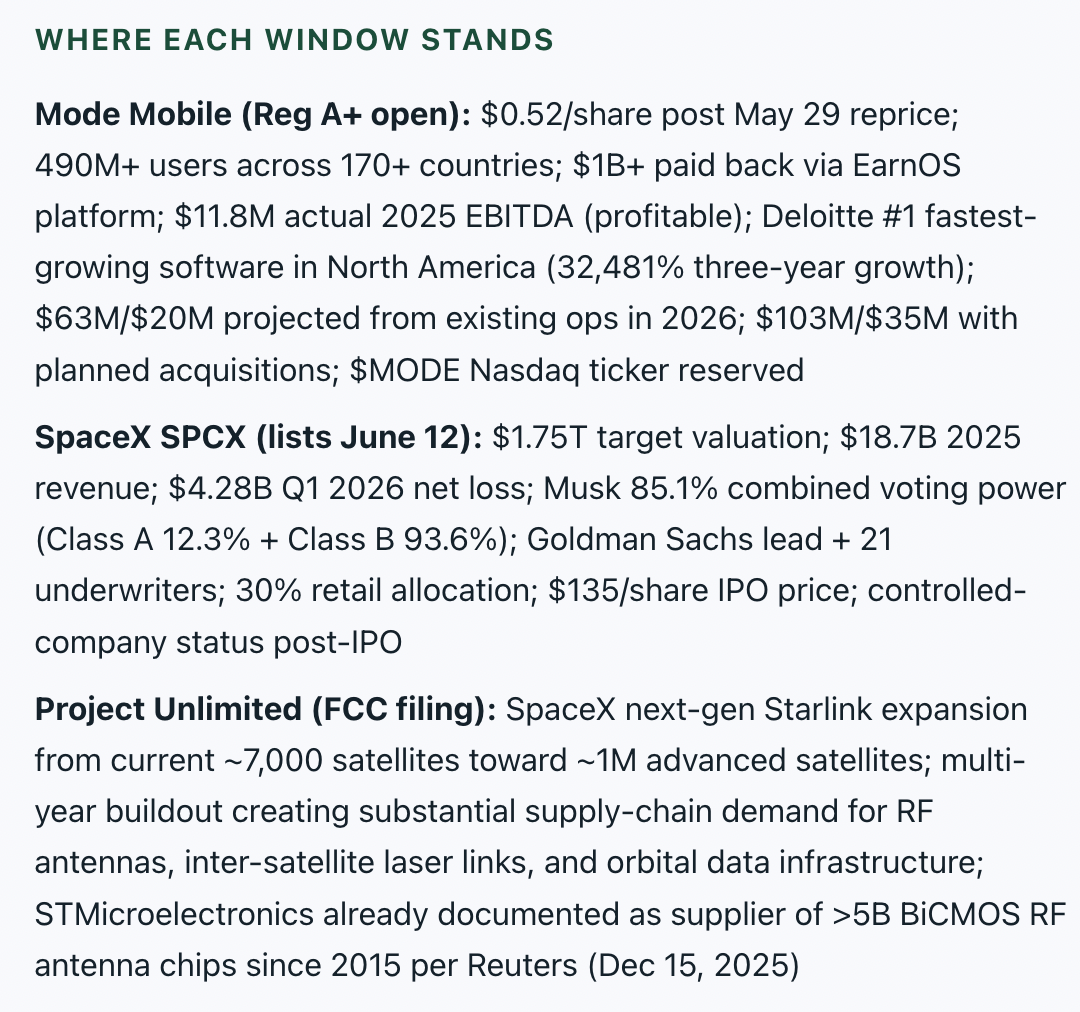
Three windows sit on this week’s page, and the discipline that links them is identical: each rewards an investor who positions before the broader market does the price discovery. Mode Mobile’s Reg A+ round is open at $0.52 per share — the new round opened May 29 after the $0.50 window closed on the company’s communicated schedule. SpaceX’s SPCX listing is five days away on Nasdaq at a $1.75 trillion target valuation; the S-1 was filed May 20 with 277 pages of disclosures, Goldman Sachs leading a 21-bank syndicate, 30% retail allocation. And in a quieter corner of the public record, SpaceX’s next-generation Starlink expansion — the FCC filing now broadly referred to as “Project Unlimited” — calls for scaling the constellation from approximately 7,000 satellites today toward 1 million advanced satellites over the next phase. The supply-chain layer underneath that buildout is the one publishers are actively trying to identify before public-market price discovery sets the mark.
What this means for your retirement accounts: The three positions sit on different calendars. The Reg A+ round closes when Mode decides it’s warranted; the listing arrives on a fixed June 12 date; the supply-chain repricing happens incrementally as the public absorbs which suppliers are named or implied by the SpaceX expansion. None of them rewards passive waiting. Each rewards an investor who reads the documentation, understands the mechanic, and decides where they stand before the calendar decides for them.
Why a $1 Billion User-Payout Number Says More Than Most Pre-IPO Numbers Do
Reg A+ pre-IPO marketing is full of growth projections, total addressable market figures, and roadmaps that may or may not be executed against. Mode Mobile sits in the smaller subset that has already executed: the company turned profitable in 2025 with $11.8 million in actual EBITDA, and the platform underneath that profitability has paid more than one billion dollars back to its users. EarnOS pays users for everyday smartphone activity — music, games, shopping, fitness, even charging their phones — and the aggregate paid out at that scale doesn’t arrive from marketing spending. It arrives from operating revenue that’s deep enough to share. Combined with 490 million users across 170+ countries, $115 million+ in lifetime revenue, and Deloitte’s #1 fastest-growing software ranking at 32,481% three-year growth, the underlying business carries the weight the $0.52 share price is asking it to carry.
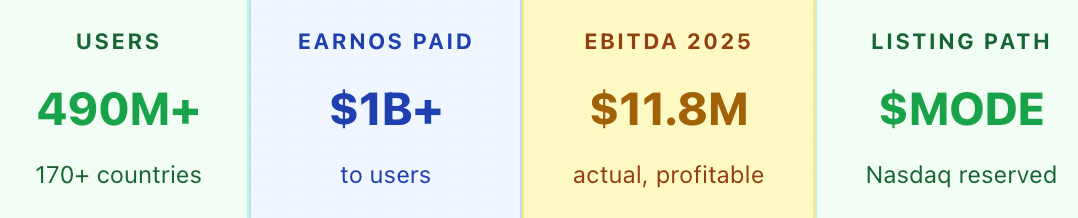
What this means for your retirement accounts: The Reg A+ category rewards investors who understand operational reality underneath the marketing. Mode’s previous two rounds both sold out entirely before reaching the originally communicated close window. The reprice mechanic is what the company uses when the underlying business has moved enough to warrant a higher mark. The $0.52 entry exists on a calendar Mode itself controls; the next reprice will reflect what the operating business has done in the meantime.
What the Historical Pattern Around Generational IPOs Actually Looks Like
Every generational IPO — Facebook in 2012, Alibaba in 2014, Snowflake in 2020 — created two distinct investor outcomes. The first was for the public investors who bought at the listing-day price; their returns ranged from modest to negative for extended stretches. The second was for the early supplier ecosystem named in the S-1, where the asymmetric multi-year returns landed before retail investors typically connected the dots. The Peter Thiel Facebook story is the canonical reference point most retail investors know in shorthand: $500,000 invested in 2004 for a 10.2% stake at a $4.9 million valuation, which Thiel began selling at the May 2012 IPO. That single investment realized more than $1.1 billion in cumulative sales across multiple transactions, with additional unrealized gains in the original Roth IRA structure now estimated north of $5 billion per ProPublica court filings. The structural lesson isn’t about Facebook specifically — it’s about positioning in supplier and adjacent businesses before the IPO names them and the public absorbs the relationship.
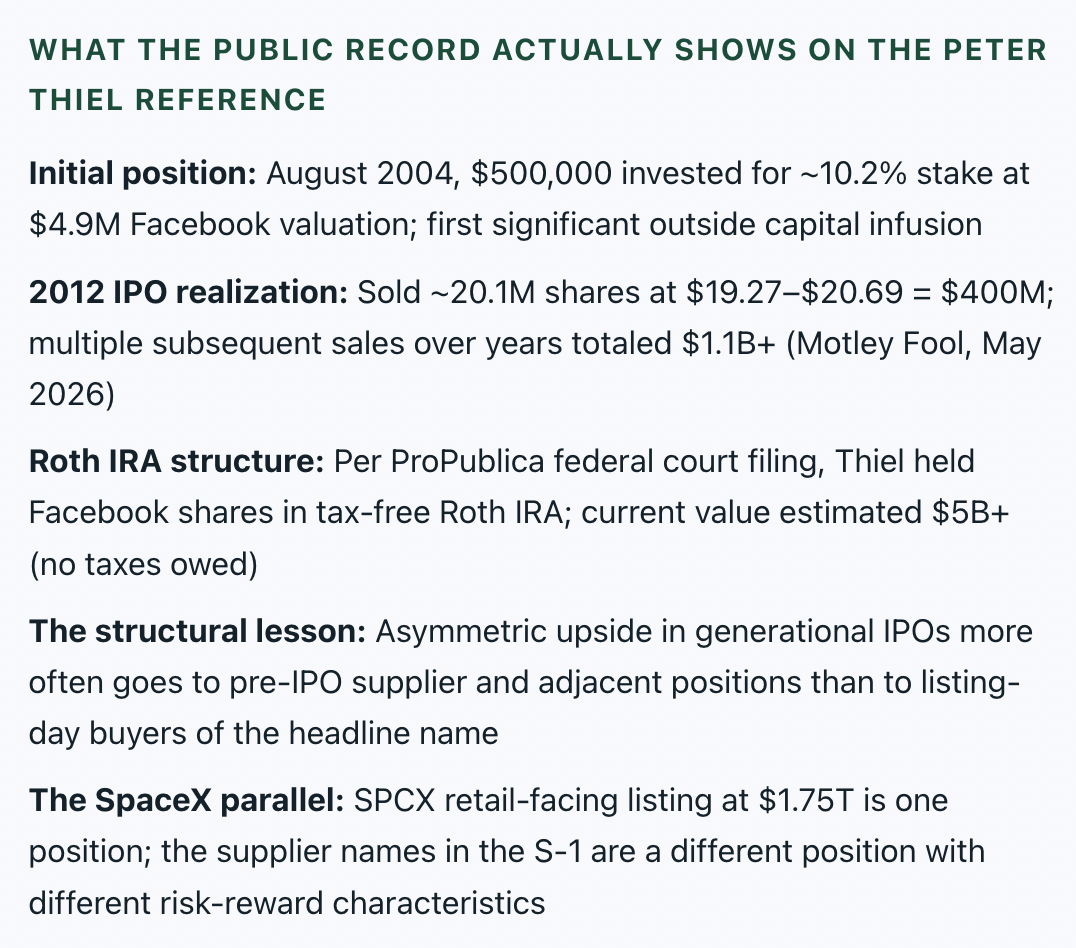
What this means for your retirement accounts: The SpaceX IPO arrives on June 12 regardless of whether retail investors have positioned around the supply chain or not. One publisher has identified a specific publicly-traded American company they argue sits in this asymmetric position relative to SpaceX — small enough to be missed by the institutional book, named or implied in the S-1’s material agreements section, and buyable in any standard brokerage account today.
[URGENT] The SpaceX Pre-IPO Window Is Closing
SpaceX is going public.
And it’s expected to be the biggest IPO in history…
As high as $1.75 TRILLION by some estimates.
That is generational money on the table.
Wall Street insiders are already positioning themselves.
But here’s what almost nobody is talking about…
There’s a small American company that Elon Musk cannot launch this empire without.
You’ve never heard of them.
Wall Street hasn’t priced them in yet.
And you can buy their stock today — in a regular brokerage account — before the IPO window closes.
This is the kind of pre-IPO setup that turned Peter Thiel’s $500,000 into $10 billion when Facebook went public.
Except this time, it’s available to you.
| Click Here for the Full Story → |
From the S-1 to the FCC Docket — The Bigger Filing Most Investors Haven’t Read
The 277-page S-1 is the document drawing the headlines, but it isn’t the only filing reshaping the SpaceX investment thesis. Buried in the FCC docket sits SpaceX’s next-generation Starlink expansion request — the filing now broadly described in publisher research as “Project Unlimited.” The plan calls for scaling the orbital constellation from approximately 7,000 active satellites today toward 1 million advanced satellites in the next deployment phase. That is a roughly 140-fold expansion. The technical capabilities described in the filing extend well beyond consumer broadband — including inter-satellite laser communication links, dedicated infrastructure for orbital AI workloads, and bandwidth capacity that fundamentally changes what computational architectures the constellation can support. STMicroelectronics is already documented (Reuters, Dec 15, 2025) as the chip supplier whose BiCMOS-based RF antenna components sit inside every Starlink user terminal. The next phase will require materially more.
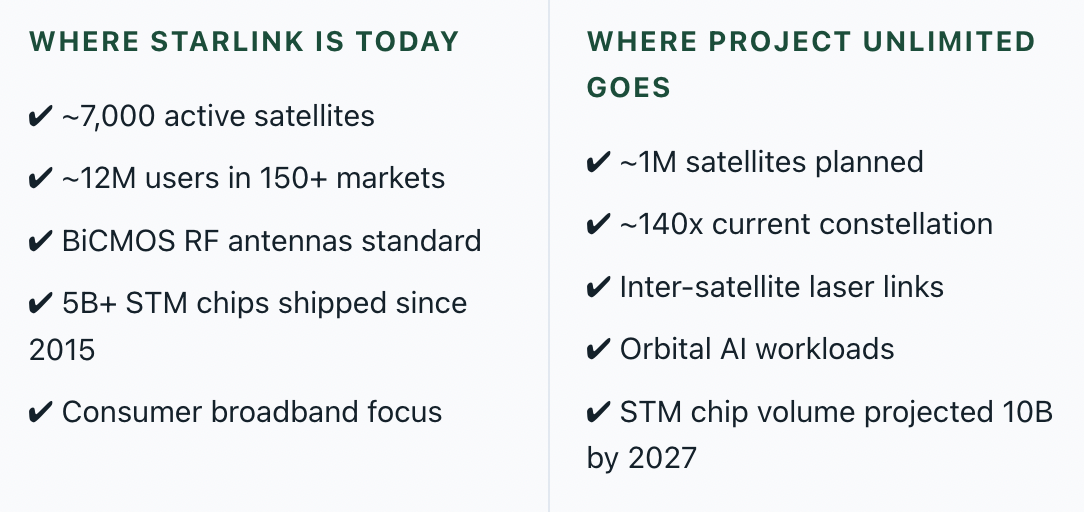
What this means for your retirement accounts: A constellation 140 times the size of today’s Starlink doesn’t arrive on a one-week calendar — it’s a multi-year buildout. But the suppliers positioned to capture that order flow get re-rated as the public absorbs the scale of the buildout. One publisher has framed a hard deadline of June 30 for retail positioning around the specific name they believe captures the asymmetric supplier upside.
Before SpaceX Goes Public…
SpaceX is going public at as high as $1.75 trillion by some estimates — the biggest IPO in history. Wall Street insiders are already positioning themselves. But almost nobody is talking about the small American company Elon Musk cannot launch this empire without. You’ve never heard of them. Wall Street hasn’t priced them in. And you can buy their stock today, in a regular brokerage account, before the IPO window closes. This is the kind of pre-IPO setup that turned Peter Thiel’s $500,000 into more than a billion dollars when Facebook went public.
The Underrated Phrase in the Filing: “Inter-Satellite Laser Communication Links”
Most retail investors reading SpaceX coverage focus on the headline-friendly metrics: satellite count, user count, revenue, valuation. The technical capabilities buried in the FCC and S-1 filings often carry more investment weight. Inter-satellite laser communication links — the technology that lets satellites communicate with each other directly without needing to relay through ground stations — transform Starlink from a consumer broadband service into a globally distributed compute network that can route data between satellites instantly. STMicroelectronics has already been publicly named as the supplier for this technology on future SpaceX platforms (Reuters, December 15, 2025). The point isn’t that STM is the only player; it’s that the supplier layer underneath this expansion is documented in public filings and the names are findable today, before SPCX’s public-market price discovery establishes the new mark on June 12.
From One Million Satellites to One Deadline on the Calendar
Publisher research desks that follow the SpaceX ecosystem tend to converge on one structural conclusion: the next decade of orbital infrastructure is being built largely by a handful of small-to-midcap suppliers whose business won’t be visible to retail investors until SpaceX names them in S-1 amendments, supply chain disclosures, or earnings calls post-listing. A 1-million-satellite constellation isn’t announced in a single news cycle — it’s deployed over years through procurement cycles that capture supplier revenue progressively. Investors who position before the named-supplier moment historically capture the asymmetric portion of the move; investors who wait until the relationship is broadly understood capture the residual. One publisher has set a specific calendar deadline for retail positioning around the supplier they believe most captures the buildout: June 30.
Why this matters if you’re retired or near retirement: The publisher’s June 30 deadline isn’t a regulatory event — it’s the window they’ve identified between the SPCX listing on June 12 and the institutional flow they expect to begin compressing supplier valuations through the second half of the year. Whether or not you act on the specific recommendation, the underlying mechanic is worth understanding.
Beyond Starlink: The June 30th Deadline
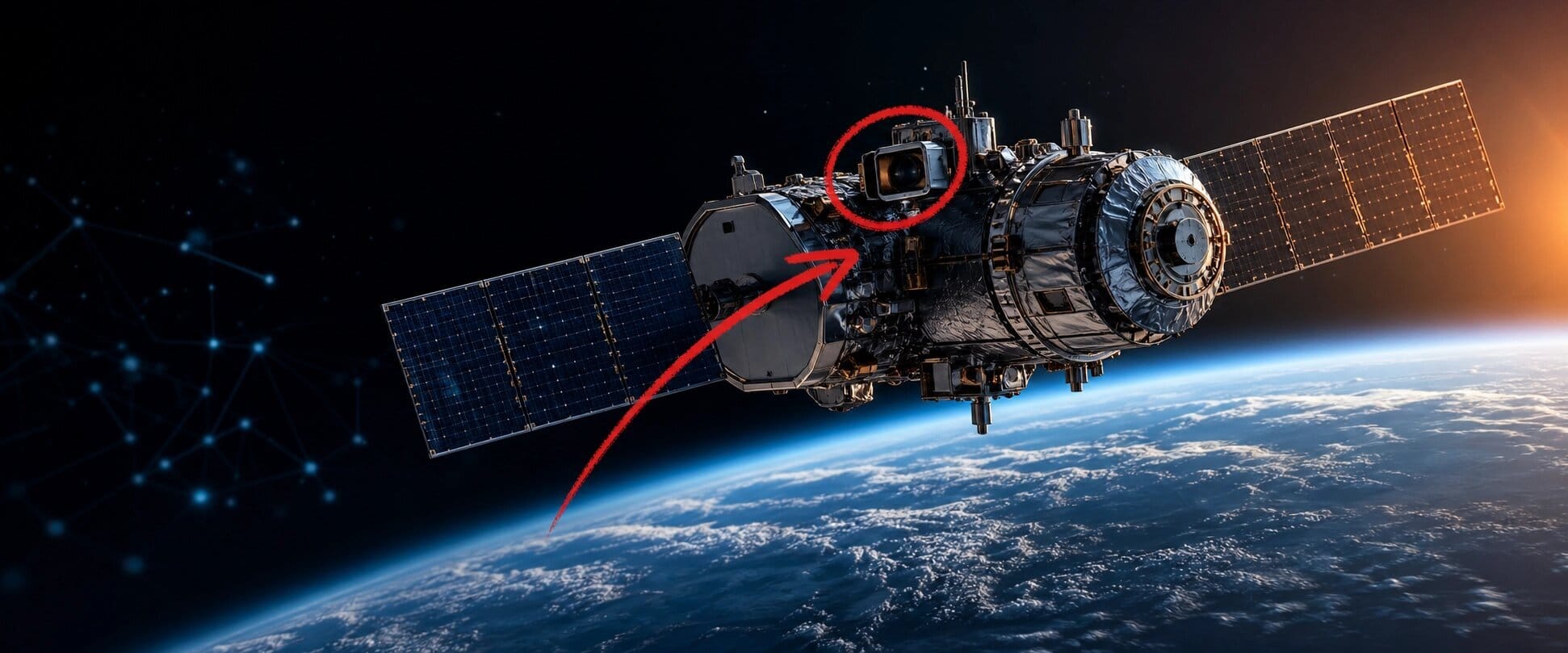
Starlink was just the warm-up.
Elon Musk’s $1.75 Trillion “Project Unlimited” is preparing to scale that network 100-fold — launching 1 million advanced satellites to build the ultimate Artificial Intelligence network in outer space.
By moving AI off-world, he is bypassing Earth’s limitations entirely.
Discover the under-the-radar supplier building this massive orbital infrastructure before the June 30th deadline.
| See The 100x Starlink Blueprint → |
Bottom Line
Three threads sit on this week’s page, and each rewards an investor who reads the documentation before the broader market does the price discovery. Mode Mobile’s $0.52 per share Reg A+ round is open following the May 29 reprice from $0.50 — with 490 million users across 170+ countries, more than $1 billion paid back to those users through the EarnOS platform, Deloitte’s #1 fastest-growing software ranking in North America at 32,481% three-year revenue growth, $11.8 million in actual 2025 EBITDA, and the $MODE Nasdaq ticker reserved. SpaceX’s SPCX is five days from listing on Nasdaq at a $1.75 trillion target valuation, with the 277-page S-1 disclosing that Elon Musk will hold 85.1% of voting power through a dual-class share structure. And in the FCC docket sits the “Project Unlimited” next-generation Starlink expansion calling for scaling the constellation toward 1 million advanced satellites — roughly 140 times today’s active fleet of approximately 7,000.
On the Mode Mobile side: after closing the strongest Q1 in the company’s history, Mode communicated to investors directly that the share price would change — and on the date communicated, May 29, the $0.50 window closed and the $0.52 round opened. Current revenue run rate positions the company to reach $63 million in revenue and $20 million in EBITDA in 2026 from existing operations alone, up 59% and 70% respectively from 2025 pro forma figures. Planned acquisitions could propel those numbers to $103 million and $35 million respectively. Over $1 billion has been given back to users through the EarnOS platform, a milestone reflecting the scale of the ecosystem and growing demand worldwide. With the $MODE Nasdaq ticker reservation in place, the company is moving closer toward its potential public market debut. The last opportunity to invest at $0.52 per share is the company’s own framing of the current round.
On the SpaceX pre-IPO side: SpaceX is going public, expected to be the biggest IPO in history — as high as $1.75 trillion by some estimates. That is generational money on the table. Wall Street insiders are already positioning themselves. But almost nobody is talking about the small American company Elon Musk cannot launch this empire without — a company most retail investors have never heard of, Wall Street hasn’t priced in yet, and that can be purchased today in a regular brokerage account before the IPO window closes. This is the kind of pre-IPO setup the Peter Thiel Facebook story is the canonical reference for: a $500,000 position in 2004 that compounded into more than $1.1 billion in realized sales by 2012, with the underlying shares held in a Roth IRA structure now estimated above $5 billion tax-free. The structural lesson isn’t about Facebook — it’s about positioning in the supplier layer before the IPO names it.
And on the Project Unlimited side: Starlink was just the warm-up. Elon Musk’s $1.75 trillion expansion is preparing to scale the network roughly 140-fold — launching toward 1 million advanced satellites to build the next generation of orbital infrastructure capable of supporting off-world AI workloads. The under-the-radar supplier names building this massive infrastructure are documented in public filings but mostly unread by retail investors. The publisher framing argues a hard June 30 deadline for retail positioning ahead of the institutional flow they expect to begin compressing supplier valuations through the second half of 2026. Forget the hot picks — protect what you’ve already built. Read the offering documents, read the S-1, read the FCC filings, decide where you stand before the calendar decides for you. Because the best trade you’ll ever make is the loss you never took.