It Sold 5% of Itself. The Other 95% Is Still Coming.

 |
Deals Catchers • August 31, 2026
 By Mike Lee · 31 Aug 2026
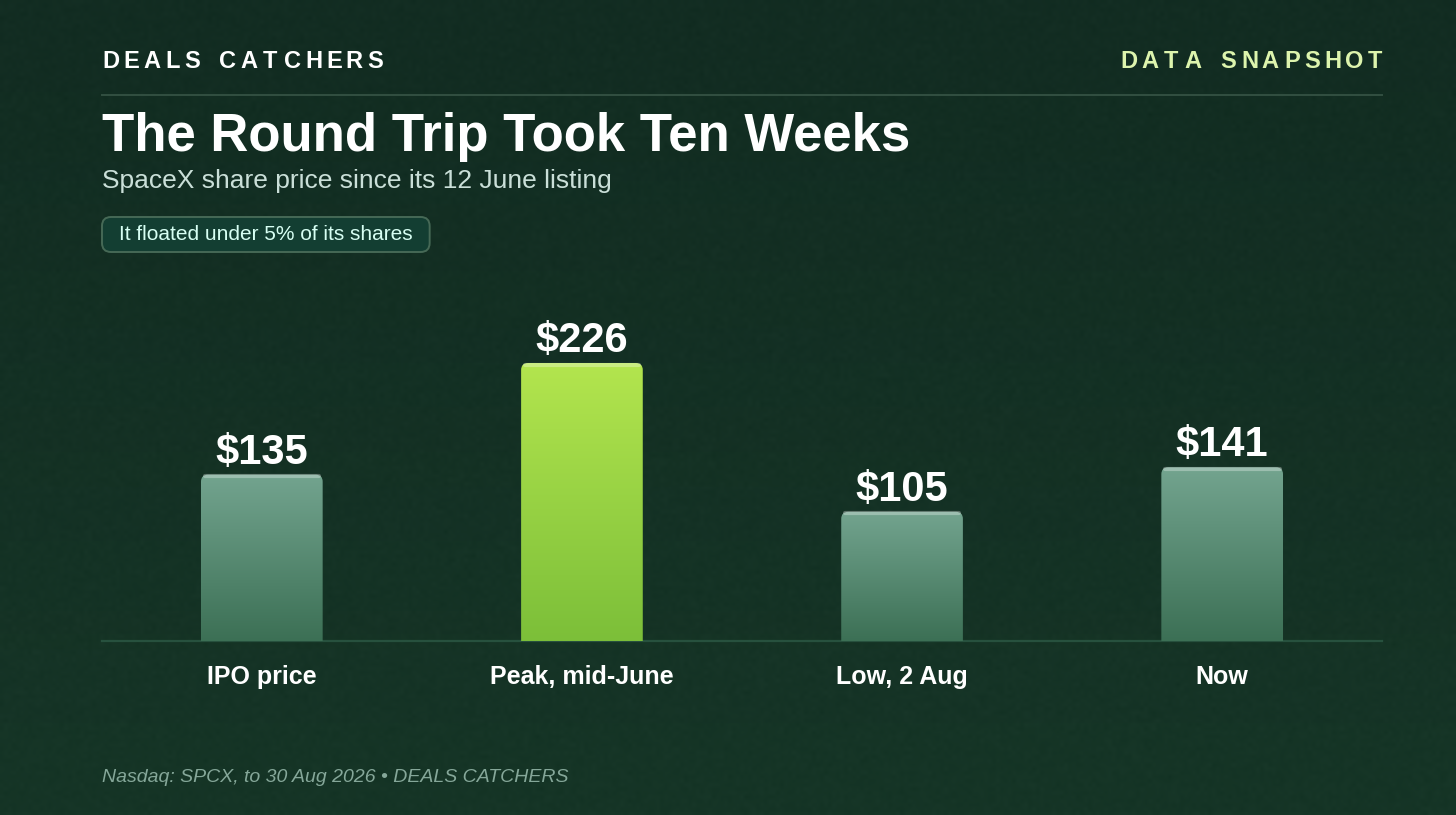
The largest IPO in history listed at $135 in June, ran to $226, fell to $105, and now trades at $141. Ten weeks, and the shares available to sell have not even arrived yet.
Over 90% of hardware technology startups collapse long before they ever land nationwide retail distribution. Invest before the Aug 31 price change → Ad

| Latest Stories | See all → |


Securing prime shelf space at major retail giants normally requires a decade of burning through venture capital. Invest before the Aug 31 price change → Ad
| The Week Ahead |
| The August jobs report lands Friday. It is the first of two numbers that decide the September meeting, and the only framework for reading it is the one the market builds for itself. |
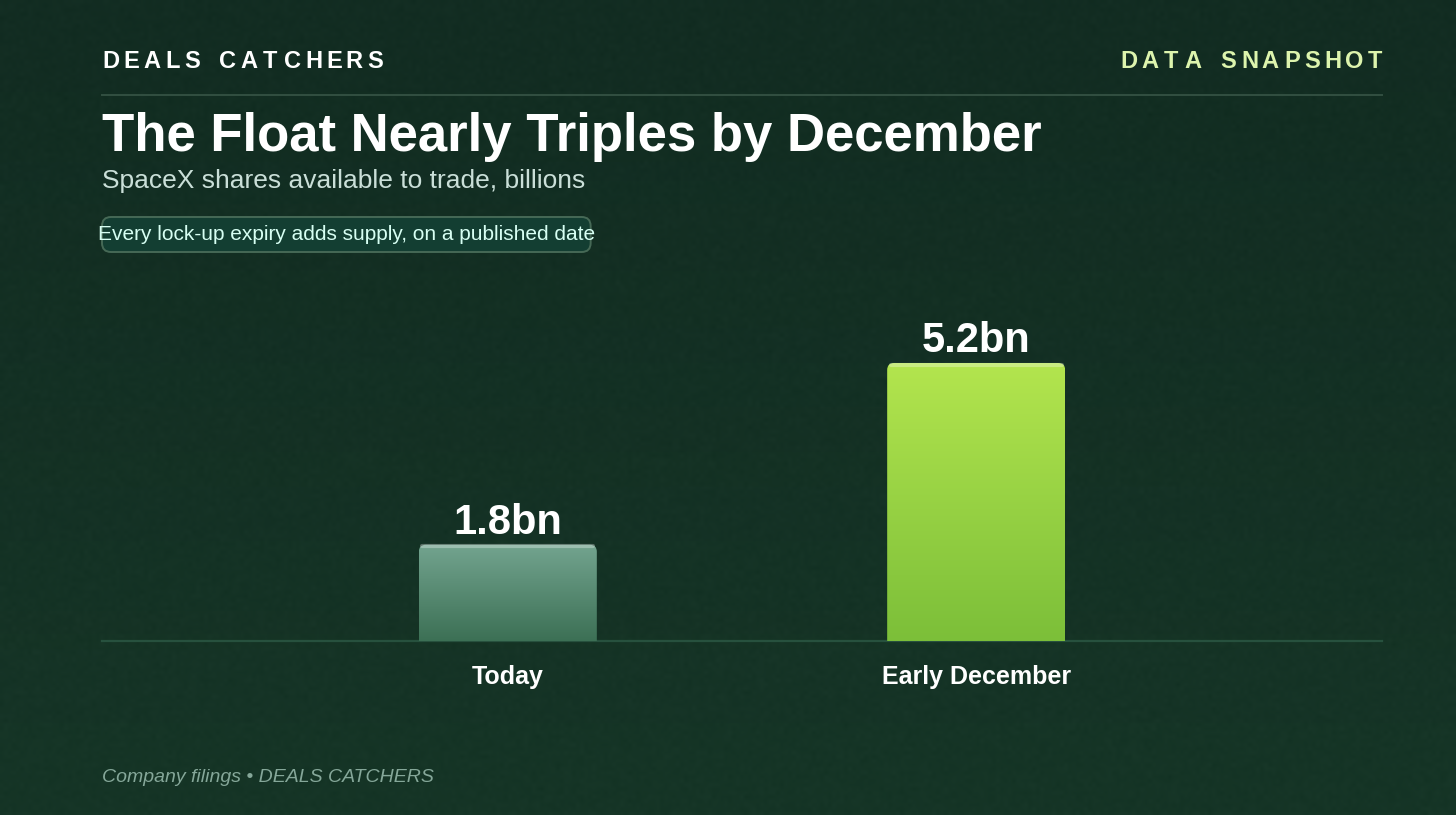
| SpaceX lock-ups release 3.4 billion additional shares by early December. Those dates are published. Supply arriving on a known schedule is one of the few genuinely predictable events in equities. |
| SpaceX trades at 90 times sales. The most expensive stock in the S&P 500 trades at 73. Whatever the business becomes, the multiple is doing a lot of the work today. |
| Two Reg A+ pricing windows close today. A price deadline in that format is the issuer’s own schedule rather than a market event — useful to know whichever way you lean. |
| Anthropic and OpenAI are both laying groundwork for listings. If either arrives with a float as thin as SpaceX’s, expect the same shape: a scarcity rally, then a calendar of expiries. |
|
Forget the hot picks — protect what you’ve already built, and find out how much of a thing is actually for sale before you decide what it is worth. Because the best trade you’ll ever make is the loss you never took.
— Lee
Thanks for reading. See you tomorrow.
✱ Sources & Disclosures
Important disclosures. This is a paid advertisement for RYSE Inc. made pursuant to a Regulation A+ offering and involves risk, including the possible loss of principal. The valuation is set by the Company; there is currently no public market for the Company’s Common Stock. Nasdaq ticker “$RYSS” has been reserved by RYSE; any potential listing is subject to future regulatory approval and market conditions. Past share-price appreciation does not guarantee future returns. SEC qualification does not constitute SEC approval of the merits.
RYSE Inc., 96 Spadina Avenue, Suite 500, Toronto, ON M5V 2J6, Canada
RYSE Inc., 96 Spadina Avenue, Suite 500, Toronto, ON M5V 2J6, Canada