He Committed to Nothing. The Odds Went From 35% to 60%.

Share
He Committed to Nothing. The Odds Went From 35% to 60%.

Deals Catchers
Deals Catchers • August 30, 2026
Mike LeeBy Mike Lee · 30 Aug 2026

Kevin Warsh spoke for thirty minutes on Friday and refused to say what the Fed would do. Rate-hike odds went from 35% to 60% anyway.
Keith Kaplan has invested $17 million into his own AI research and tools.  Here are the stocks you need to buy for the chance to profit.  Ad
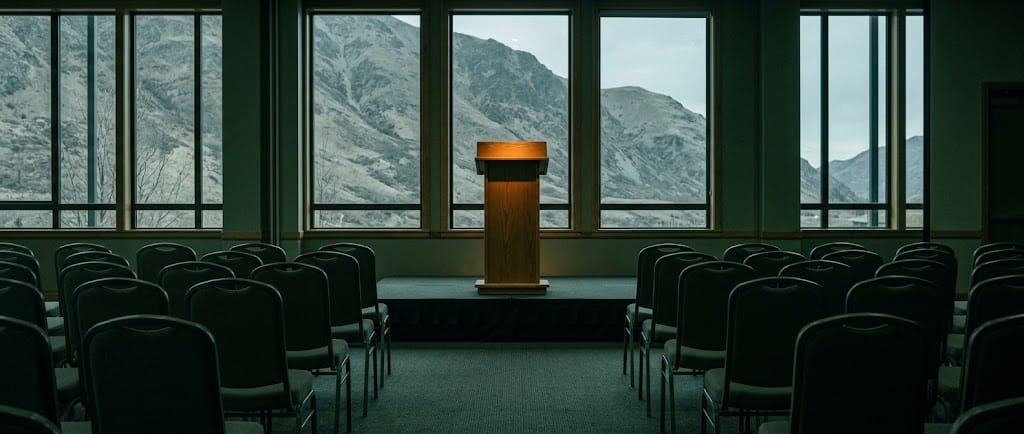
An empty lectern in a mountain conference room
Featured
THE FEDFriday morning
He Refused to Say. The Odds Nearly Doubled.
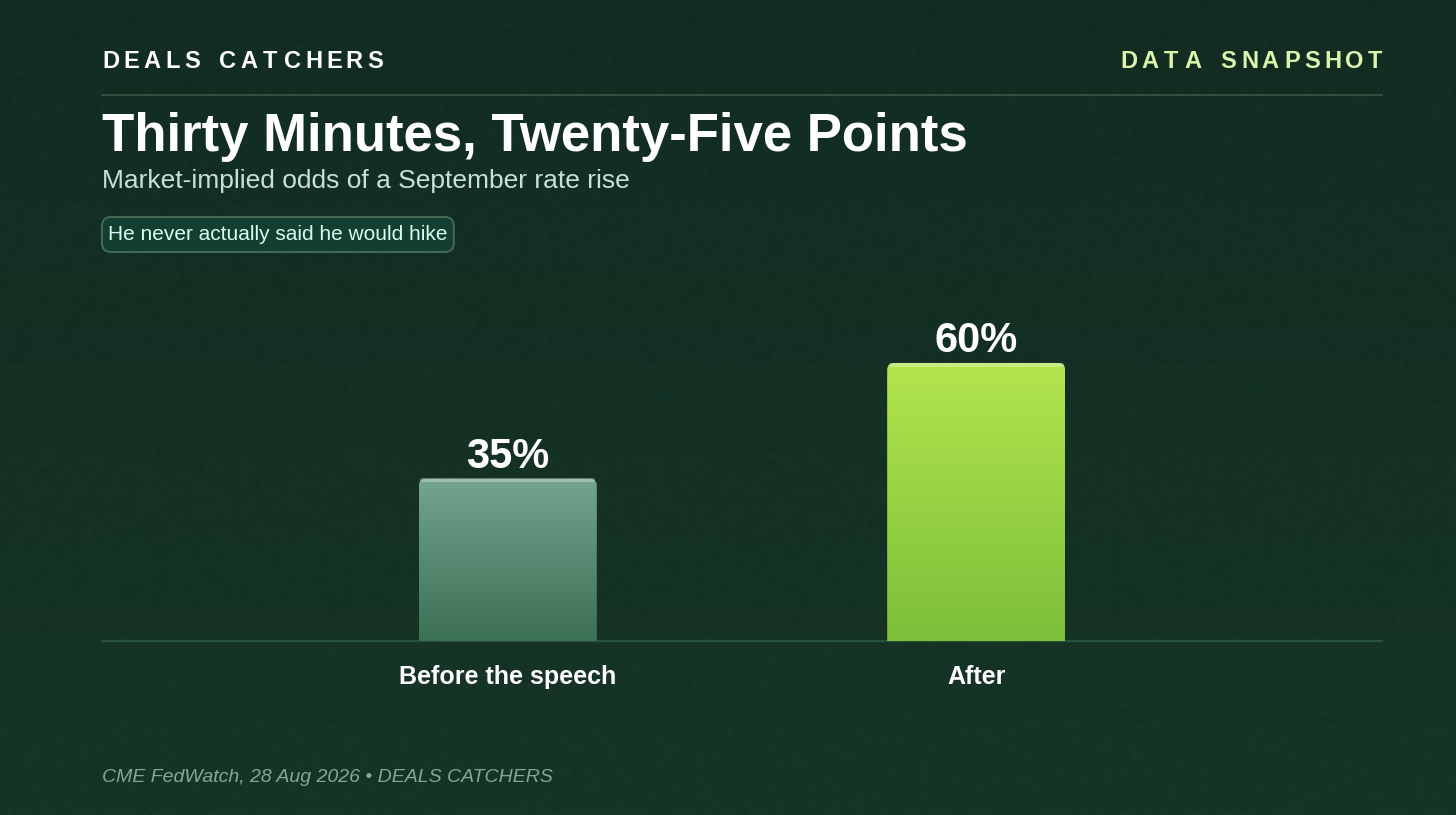
Warsh spent thirty minutes at Jackson Hole avoiding both forward guidance and any reaction function. When he finished, September rate-hike odds had gone from 35% to about 60%.
He did it with two sentences. The Fed, he said, will “have work to do” if policymakers are not confident inflation is heading back to 2%. And on the summer’s softer readings: they were better than expected, but they did not tell him underlying trends had meaningfully improved. No date, no threshold, no promise. Just a refusal to accept the good news as sufficient.
Thirty minutes, twenty-five points
Market-implied odds of a September rate rise.
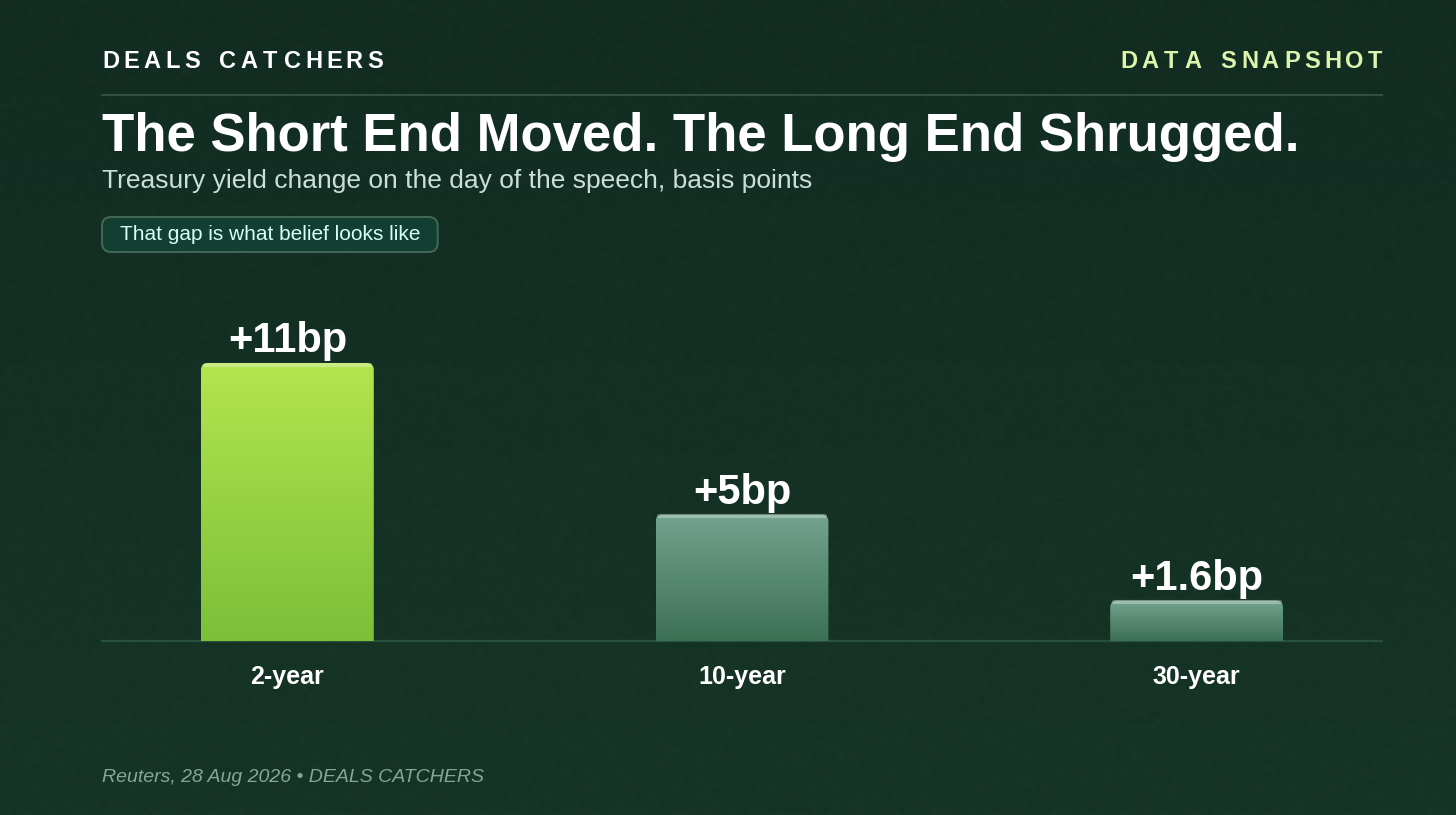
The bond market read it instantly and precisely. The two-year yield jumped 11 basis points to 4.34%, its highest in a month. The ten-year rose five. The thirty-year moved 1.6.
The short end moved, the long end shrugged
Treasury yield change on the day of the speech.
That shape is the whole message. Short rates price what the Fed will do next; long rates price whether it will work. Traders raised their bet on a hike and simultaneously left thirty-year inflation expectations almost untouched — which is the market saying it now believes he will act, and that acting will be enough. A week earlier the same market had pushed the long bond to a two-decade high partly because it doubted exactly that.
There was one line about how he intends to run the place, and it explains the rest. Markets, Warsh said, should not be looking primarily to the Fed for their next trade. That is a chair deliberately removing himself as a source of trading signals — which raises the value of every other input, because the one everybody used to lean on has been withdrawn on purpose.
Here’s why it lands on your desk: twenty-five percentage points of probability repriced inside half an hour, on a speech containing no commitment of any kind. Anyone waiting for an announcement missed it. The information was in the tone, and the market read the tone faster than any human could have read the transcript.
Source: CNBC / Reuters / CME FedWatch
Sponsored
Seventeen Million Into the Tools
Keith Kaplan
Keith Kaplan has invested $17 million into his own AI research and tools. He’s built a platform that 180,000 people worldwide use in the stock market. Now he says there’s a handful of stocks you need to buy before August 31st, to set yourself up for 1,000% potential returns in the near future.
Latest StoriesSee all →
An open pit mine bench in late light
MININGCompany guidance
Record Gold Prices. The Biggest Miner Calls It a Trough Year.
Newmont guided 2026 production to 5.3 million ounces, down about 10% on last year, and its own management called it a trough year. The stock fell 26% from its January high while gold sat near records.
It is not one company having a bad year. Barrick’s fourth-quarter 2025 output fell 19% against the year before, and its first quarter this year fell another 5%. Agnico Eagle’s first-quarter production dropped nearly 6%, on lower grades at Macassa and Meadowbank. Three of the largest gold miners on earth produced less metal in a market paying more for it than at any point in history.
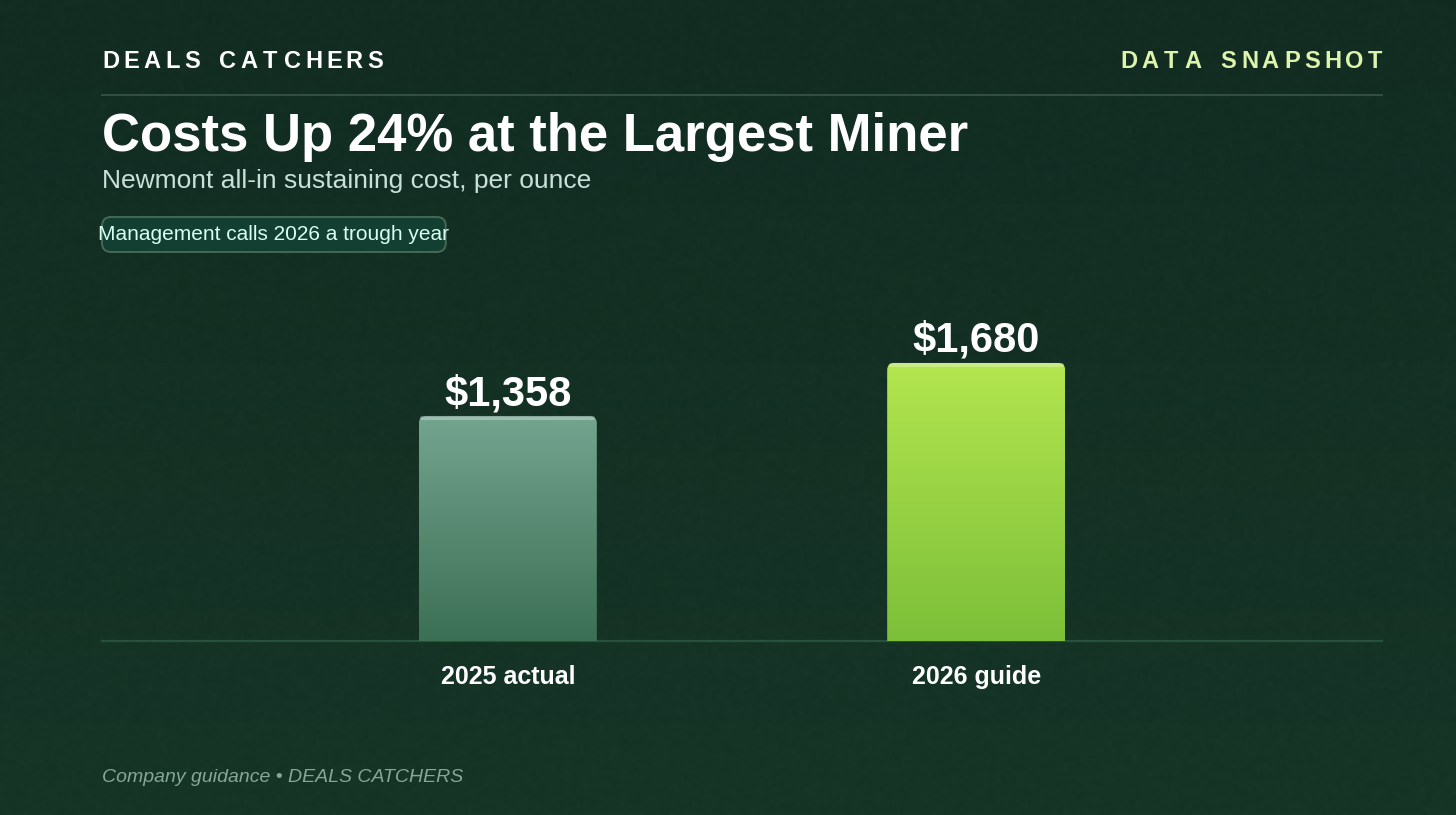
Costs up 24% at the largest miner
Newmont all-in sustaining cost, per ounce.
Costs went the other way at the same time. Newmont guided all-in sustaining costs to $1,680 an ounce for 2026, up from $1,358 in 2025 — a 24% increase driven by lower sales volumes, mine sequencing at Boddington and Ahafo South, higher royalties and deferred capital. Less gold, each ounce costing a quarter more to produce.
Then watch what pressure like that does to behaviour. Newmont served Barrick a formal notice of default over their Nevada joint venture, alleging resource piracy and mismanagement, and the dispute moved into litigation. Three months later they settled by going the opposite direction entirely: both companies vended their excluded Nevada properties into the venture, creating a complex of nearly 100 million ounces, with Newmont paying Barrick a $1.95 billion top-up. Barrick is now preparing to float its North American gold assets as a separate listed company by year end.
The distinction worth holding: sue, settle, pool, spin off. Four corporate manoeuvres in a year, and not one of them puts an additional ounce in the ground. When the biggest operators start rearranging ownership of the same assets rather than finding new ones, that is the reserve problem showing up on the org chart instead of the drill log.
Source: Company guidance / Barrick Q2 2026 results / Zacks
Sponsored
A Mine Is a Shrinking Asset in Slow Motion
Gold
There’s a secret the gold majors don’t like to advertise:

They’re running out of gold.

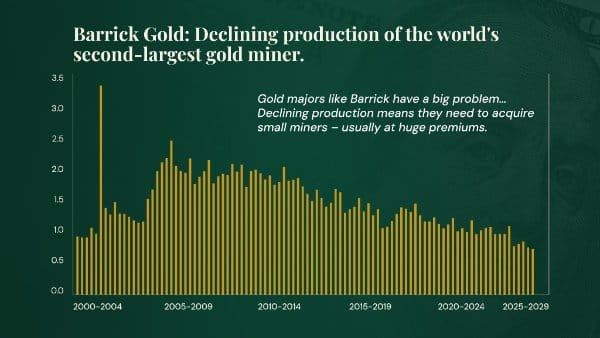
Barrick, the second-biggest miner on earth, watched its production fall from two million ounces…

Down to 719,000.

For a company as big as Barrick… that’s running on fumes.

Go here to learn why gold majors are forced to buy – and get details on my top three buyout targets.

This is not an isolated problem…

In 2023, gold major Newmont paid $15 billion for Newcrest in the largest mining deal in history. Today, Newmont’s production is basically flat. Why?

Because every ounce of gold a major pulls out of the ground makes their mine worth a little less. A gold mine is a shrinking asset – in slow motion.

So, how does a major fix shrinking mine output?

Simple:

It has to buy the best small mining assets… (and here’s why I’m telling you this):

At whatever premium it takes.

Gold majors are sitting on record cash flows – with shrinking production.

That means the coming wave of buyouts isn’t a maybe.

It’s a slam dunk. If majors don’t go out and buy productive junior assets…

They go out of business. So…

Unless you think the world no longer cares to have any more gold mined and brought to market…

The coming wave of acquisitions is just math.
Best,
Garrett Goggin, CFA, CMT
Lead Analyst and Founder, Golden Portfolio
A glass office facade in low sun
BUILDING CODESAlready in force
Automatic Shading Stopped Being Optional
California’s Title 24, the 2024 International Energy Conservation Code and federal rules under 10 CFR Part 434 now embed automatic daylight controls in building code. In the regions they cover, intelligent shading is a requirement rather than an upgrade.
This is the least discussed force in the category and the most durable one. A consumer preference can reverse. A line in an energy code does not — it applies to every newly erected building and every deep retrofit in the jurisdiction, and it keeps applying whether or not anyone finds the product exciting.
The engineering case behind the rule is simple. Motorised shades that track the sun cut heating and cooling load, with estimates of up to 30% energy savings from optimising daylight and reducing what the HVAC system has to fight. Low-emissivity glass makes the effect larger, not smaller, which is why contractors increasingly bundle glazing replacement with automated shade packages and let customers consolidate the permits.
There is a second-order effect worth noticing. Codes written for offices set the manufacturing volumes, and volumes set the price. Every commercial mandate that forces another thousand motors down a production line makes the residential version cheaper — which is how a regulation aimed at office towers ends up changing what a retrofit costs in an ordinary house three or four years later.
Commercial adoption is running at roughly 11% a year against a category growing under 4%, and more than 65% of newly constructed commercial buildings globally now integrate automated shading. Residential lags, as it always does — codes hit offices first and houses later, and the retrofit market is where the delay accumulates.
The distinction worth holding: demand created by regulation behaves differently from demand created by desire. It is slower to arrive, immune to sentiment, and it does not stop when the economy does. Categories with a code behind them are worth more attention than their growth rates suggest.
Source: Title 24 / 2024 IECC / Mordor Intelligence
Sponsored
Google Saw It in Thermostats. Amazon in Doorbells.
Google acquired Nest for $3.2 billion.

Amazon acquired Ring for $1.2 billion.

Both took an ordinary part of the home and made it smart.

RYSE believes another category is ready for the same transformation:

Your windows.

Around 92% of window shades are still manually controlled. RYSE has developed patented retrofit technology designed to automate the shades, blinds, and curtains people already own without requiring them to replace their existing window coverings.

And RYSE already has traction:

100,000+ devices sold.
$20 million+ in revenue.
10 granted patents.
$15 million+ raised from 4,000+ investors.

Now everyday investors have an opportunity to invest in RYSE through its Regulation A+ offering at $2.50 per share.

But that price is set to change August 31.

Google saw potential in smart thermostats. Amazon saw it in smart doorbells.

RYSE sees it in your windows.
SEPTEMBERTwo prints and a decision
Everything Now Rests on Two Numbers
The August jobs report and August CPI both land before the FOMC meets on September 15 and 16. Warsh gave himself no framework on Friday, which means those two releases now carry the entire decision.
That is the practical consequence of refusing to publish a reaction function. Under a chair who signals, a soft jobs number gets interpreted through whatever the Fed has already said it cares about. Under this one, the data arrives unmediated and the market has to do the interpreting itself — which is why a thirty-minute speech with no commitment in it moved probabilities twenty-five points.
Core PCE, the gauge the Fed actually targets, ran at 3.3% in July against 2.8% in February. Chicago Fed President Austan Goolsbee, speaking from the symposium, said he agreed with the chairman’s reading: inflation has been above target, it went the wrong way, and a couple of more benign months does not feel like being out of the woods.
If you are drawing income from savings, the two-year yield at 4.34% is now the number that tells you what the market expects, and it will move on those two prints rather than on anything the Fed says between now and then. There is nothing else scheduled that matters.
Source: Bureau of Economic Analysis / CNBC / Federal Reserve
He’s built a platform that 180,000 people worldwide use in the stock market.  Here are the stocks you need to buy for the chance to profit.  Ad
The Week Ahead
September hike odds sit near 60% after Friday, up from 35% before the speech. One economist put it plainly: a hike probably will not come in September, but it will by October or December.
The dollar index rose 0.6% to 99.66 on the speech. A firmer dollar is the mechanism by which a hawkish Fed exports its policy — it shows up in import prices and in every commodity quoted in dollars.
Barrick plans to float its North American gold assets by year end. A pure-play listing carved out of a major is a rare event, and it puts a public price on assets that have only ever been valued inside a conglomerate.
Newmont’s cost guidance of $1,680 an ounce is the number to watch next quarter. If costs across the sector are rising 24% a year, the record margins everyone is discussing have a shelf life.
Two Reg A+ offerings close their pricing windows tomorrow. A price deadline in that format refers to the issuer’s own schedule, not to a market event — worth knowing whichever way you lean.
 
Stat of the Day
How far September rate-hike odds moved during a thirty-minute speech that contained no commitment at all
35→60%
CME FedWatch
Forget the hot picks — protect what you’ve already built, and watch what a person refuses to say as closely as what they announce. Because the best trade you’ll ever make is the loss you never took.
— Lee
Thanks for reading. See you tomorrow.
✱ Sources & Disclosures
Important disclosures. This is a paid advertisement for RYSE Inc. made pursuant to a Regulation A+ offering and involves risk, including the possible loss of principal. The valuation is set by the Company; there is currently no public market for the Company’s Common Stock. Nasdaq ticker “$RYSS” has been reserved by RYSE; any potential listing is subject to future regulatory approval and market conditions. Past share-price appreciation does not guarantee future returns. SEC qualification does not constitute SEC approval of the merits.

RYSE Inc., 96 Spadina Avenue, Suite 500, Toronto, ON M5V 2J6, Canada
Read more

The Stretch Lasted 36 Years. Heirs Now Have Ten.

The Stretch Lasted 36 Years. Heirs Now Have Ten.

The tape is watching the next industrial project. The inherited-IRA deadline is 101 days out, and a missed withdrawal is now a 25% bill.͏ ͏ ͏ ͏ ͏ ͏ ͏ ͏ ͏ ͏ ͏ ͏ ͏ ͏ ͏ ͏ ͏ ͏ ͏ ͏ ͏ ͏ ͏ ͏ ͏ ͏ ͏ ͏ ͏ ͏ ͏ ͏ ͏ ͏ ͏ ͏ ͏ ͏ ͏ ͏ ͏ ͏ ͏ ͏ ͏ ͏  21 SEPTEMBER 2026 By Mike Lee sponsoredThis Tesla Demo Shocks EveryoneThis Tesla Demo Shocks Everyone"Hi, I'm Jeff Brown...I'm

By Mike Lee
Forty-Five Percent, Against a Record of Twenty-Seven

Forty-Five Percent, Against a Record of Twenty-Seven

AI-linked stocks are 45% of the S&P 500 against a previous record of 27%. Goldman now attributes half the index's earnings growth to the same spending.͏ ͏ ͏ ͏ ͏ ͏ ͏ ͏ ͏ ͏ ͏ ͏ ͏ ͏ ͏ ͏ ͏ ͏ ͏ ͏ ͏ ͏ ͏ ͏ ͏ ͏ ͏ ͏ ͏ ͏ ͏ ͏ ͏ ͏ ͏ ͏ ͏ ͏ ͏ ͏ ͏ ͏ ͏ ͏ ͏ ͏ ͏ ͏ ͏ ͏ ͏ ͏ ͏ ͏ ͏ ͏ ͏ ͏ ͏ ͏  18 SEPTEMBER 2026 By Mike Lee sponsoredThe Hidden Middleman Cut in Every CupSUPPLY CHAIN ANALYSISThe Hidden Middleman Cut Built

By Mike Lee
The Fed Raised Rates, and the Chair Still Will Not Say Where He Stands

The Fed Raised Rates, and the Chair Still Will Not Say Where He Stands

The Fed raised rates for the first time since 2023, unanimously, and then published a dot plot on which nobody agrees about what comes next. The chair again withheld his own.͏ ͏ ͏ ͏ ͏ ͏ ͏ ͏ ͏ ͏ ͏ ͏ ͏ ͏ ͏ ͏ ͏ ͏ ͏ ͏ ͏ ͏ ͏ ͏ ͏ ͏ ͏ ͏ ͏ ͏ ͏ ͏ ͏ ͏ ͏ ͏ ͏ ͏ ͏ ͏ ͏ ͏ ͏ ͏ ͏ ͏ ͏ ͏ ͏ ͏ ͏ ͏ ͏ ͏ ͏ ͏ ͏ ͏ ͏ ͏  17 SEPTEMBER 2026 By Mike Lee sponsoredA Promiscuous Robot (Only Today — Invest Before 9/17 or Miss This Price

By Mike Lee
The List of Weak Banks Already Exists

The List of Weak Banks Already Exists

Every bank above a billion dollars publishes its uninsured deposit ratio every quarter. That number predicted the 2023 failures, and it is free to look up.͏ ͏ ͏ ͏ ͏ ͏ ͏ ͏ ͏ ͏ ͏ ͏ ͏ ͏ ͏ ͏ ͏ ͏ ͏ ͏ ͏ ͏ ͏ ͏ ͏ ͏ ͏ ͏ ͏ ͏ ͏ ͏ ͏ ͏ ͏ ͏ ͏ ͏ ͏ ͏ ͏ ͏ ͏ ͏ ͏ ͏ ͏ ͏ ͏ ͏ ͏ ͏ ͏ ͏ ͏ ͏ ͏ ͏ ͏ ͏  16 SEPTEMBER 2026 By Mike Lee sponsoredWhy Is This NVIDIA Collaborator Robot Called Flippy?Why’s This NVIDIA Collaborator Robot Called Flippy? (Invest by

By Mike Lee