Trump’s $2,000 Tariff Dividend Is Still a Proposal. The Debt Just Crossed $39 Trillion. And Jensen Huang Already Declared the SaaS Era Over

Trump’s Rebate Checks Are Landing — Here’s What They Won’t Say

Trump’s rebate checks are coming. Not today. Not tomorrow. But soon, those envelopes will hit mailboxes across America. And while the headlines celebrate “free money,” the real storm will already be brewing.
Inflation climbing faster than those checks can cover. U.S. national debt ≈ $37 trillion. A potential financial reset that could freeze your savings overnight. By the time that check arrives, its buying power could already be gone.
That’s why patriots don’t wait. They prepare before Washington acts. The new 2026 Gold Reset Guide shows you what’s coming — and how to protect what you’ve worked for.
It’s free. It’s fast. And it could be the smartest move you make this year. Don’t wait for someday. By then, it’s too late.
| Grab My Free Guide → |
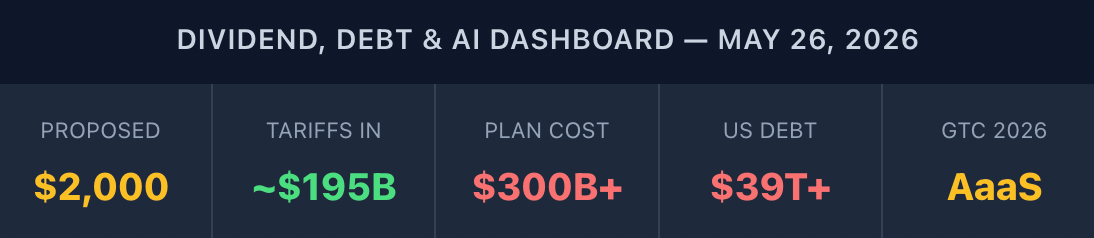
President Trump has proposed sending $2,000 “tariff dividend” checks to most Americans — an idea he’s discussed publicly since November and reaffirmed at the start of the year. The latest timeline targets sometime in 2026, with payments aimed at “moderate income” households (an income cap around $100,000 has been floated by White House adviser Kevin Hassett). It’s a real, on-the-table proposal — the kind of policy that, if it lands, would reshape the household-finance picture for tens of millions of people.
What this means for your retirement accounts: Even on a quiet read, the macro backdrop matters more than any single check. The U.S. national debt crossed $39 trillion last week, with interest costs at roughly $1 trillion a year — about $7,700 per household. CPI inflation sits at 3.8%. The dollar’s share of global foreign-exchange reserves has fallen to around 56% from 71% in 1999. The case for understanding how to protect purchasing power rests on those documented numbers, not on the exact day any rebate envelope arrives.
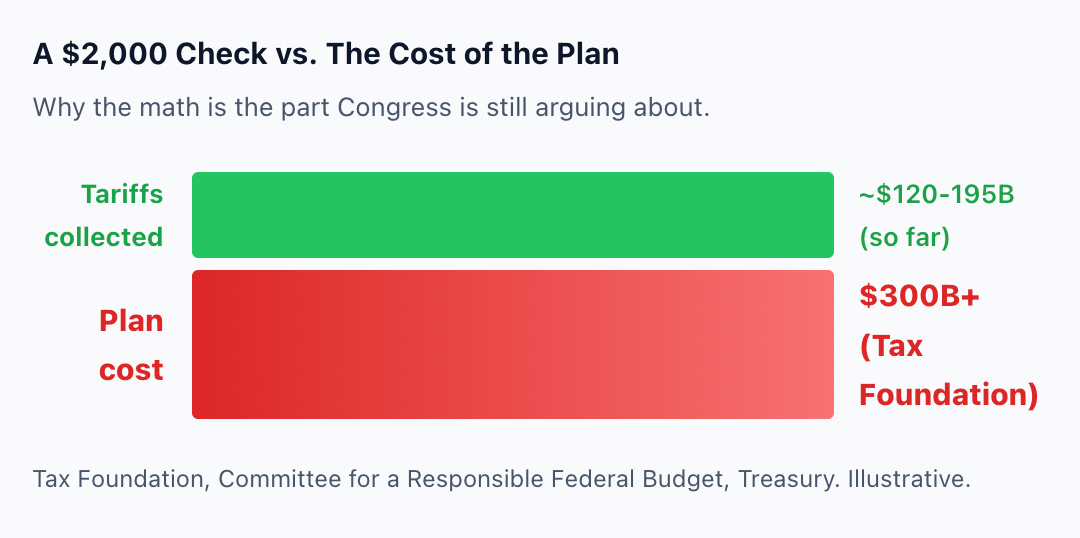
An honest counterpoint: The dividend isn’t a done deal. Treasury Secretary Bessent and adviser Hassett have both said the checks would require Congress to pass legislation first, and the Tax Foundation estimates the program could cost $300 billion or more, against roughly $120-195 billion of tariff revenue collected so far. TD Economics also notes that, if passed, the checks could nudge inflation modestly higher. The proposal is real, but the timing, the size, and even whether it happens at all still depend on Congress — so the smart move is preparing for the macro picture, not betting on one signature.
For readers who want a clear walk-through of how to think about protecting purchasing power against this backdrop, one publisher has put together a free briefing on hard assets. Here it is in their own words.
[AD] Trump’s rebate checks are coming. And while the headlines celebrate “free money,” the real storm will already be brewing — inflation climbing faster than those checks can cover, U.S. national debt nearing record highs, a potential financial reset that could freeze your savings overnight. By the time that check arrives, its buying power could already be gone. The new 2026 Gold Reset Guide shows you what’s coming — and how to protect what you’ve worked for. Grab my free guide.
A Rebate That Buys Less by the Month Is the Real Story Behind the Headline
What this means for your portfolio: A check that may or may not arrive doesn’t change the long-term arithmetic on your savings — the debt, the inflation rate, and the dollar’s slow erosion do. That’s why thinking about hard assets isn’t a bet on any one political moment; it’s a hedge against the trend that’s been running for decades. A free guide to how that protection works is a low-cost way to start the thinking, on your own pace.
Meanwhile, the World’s Most-Watched Chip CEO Just Described Where Software Is Going Next
If the rebate story is about defending what you already have, the other major signal of the year points the other way — toward where new value is forming. At NVIDIA’s GTC 2026 keynote on March 16, CEO Jensen Huang said something that, in a different season, would have led every business front page: “Every SaaS company will become an AaaS — Agent-as-a-Service — company.” He framed it as the “agentic AI inflection point,” raised NVIDIA’s revenue forecast toward $1 trillion by 2027, and called agentic systems “the new computer.” The quote was reported across Fortune, PANews, and others.

An honest counterpoint: A verified macro forecast from a chip CEO is useful as direction, but it doesn’t pick a winner. The agent-interface category is real and emerging; whether any one private company captures it is a separate, much higher-risk question. With that framing firmly in mind, here’s one publisher’s case for a company that says it’s building exactly the layer Jensen described.
Jensen Huang just described Immersed’s exact product at GTC 2026
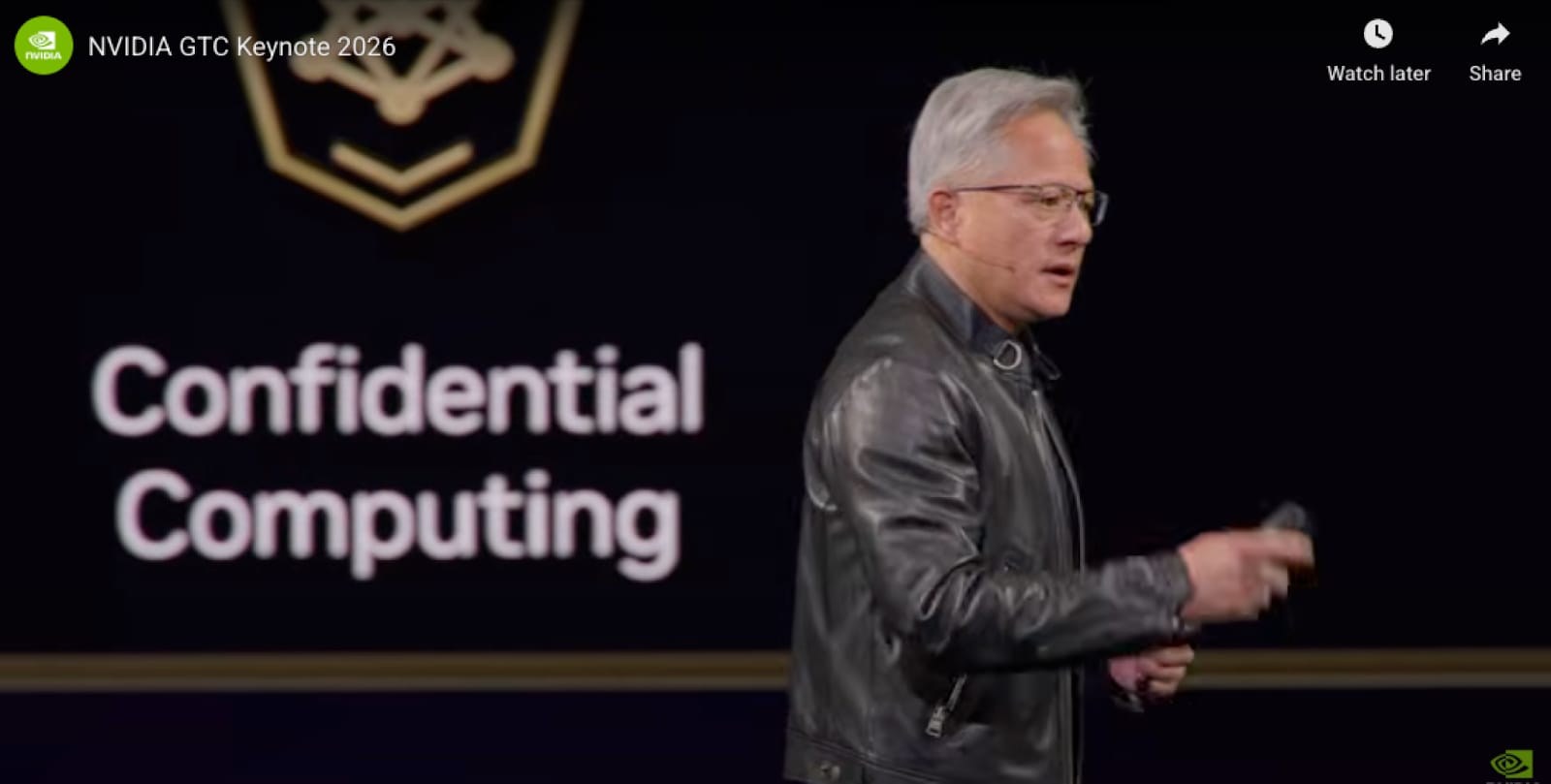
At GTC 2026, the world’s biggest AI conference, Jensen Huang dropped a bombshell: “Every SaaS company will become an AaaS - Agent-as-a-Service - company.”
He also said employees of the future will be “supercharged by teams of AI agents they deploy and manage”, and that 80% of traditional software applications will disappear in the AI factory era. Most investors heard that and thought: “How do I buy more NVIDIA?” The smarter question is: “Who already built what Jensen just described?”
Immersed did. Curator: an AI agent that learns your habits and workflow, and acts. Live. In beta now. Visor: the spatial computer where those agents operate. Already shipping. 1.5M+ users on Apple, Meta, and Samsung platforms. NYSE debut with CNBC’s Jon Najarian already on tape. Backed by Intel’s former CEO, SailPoint’s founder, and Tim Tebow.
Jensen told the world what the future looks like yesterday. Immersed is raising at $0.79/share today. The round is nearly full.
| → Invest Before Jensen’s Vision Becomes Everyone’s Headline |
Immersed is offering securities through the use of an Offering Statement that has been qualified by the Securities and Exchange Commission under Tier II of Regulation A. The valuation is set by the Company and there is currently no public market for the Company’s Common Stock. Please read the offering circular and related risks at invest.immersed.com. Nasdaq ticker “IMRS” has been reserved by Immersed and any potential listing is subject to future regulatory approval and market conditions.
Two Different Signals, One Calm Approach: Protect What You Have, Watch Where Value Is Forming
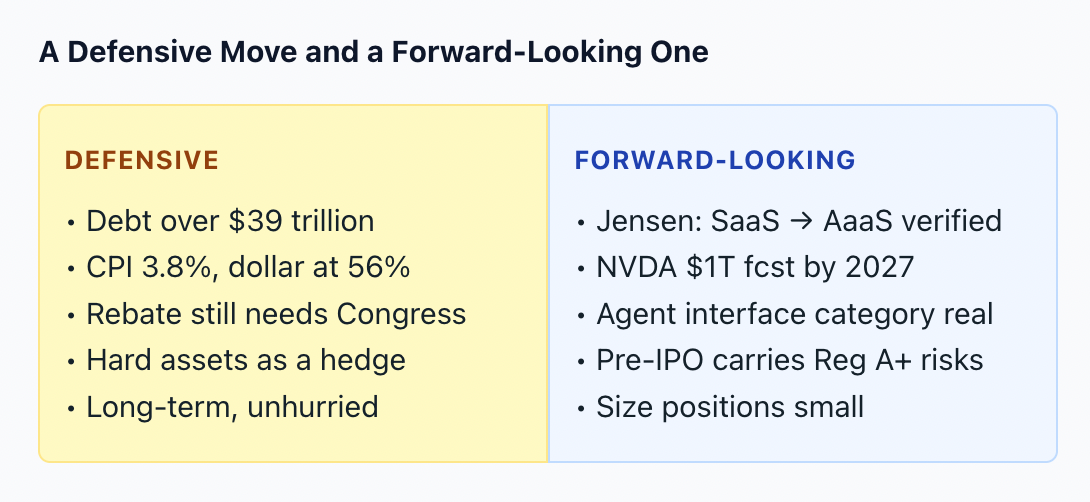
What this means for your portfolio: One signal is about protecting what you’ve already built — the slow erosion of dollars under heavy debt and persistent inflation. The other is about understanding where the next wave of value is forming. They’re different tools for different jobs, and they reward the same mindset: calm, prepared, ahead of the headline. Forget the hot picks — protect what you’ve already built. The advantage almost always goes to whoever does the thinking before everyone else has to.
Jensen's GTC keynote just made Immersed's thesis undeniable
At GTC 2026, Jensen Huang said “every SaaS company will become an AaaS — Agent-as-a-Service — company.” The smarter question is: who already built what Jensen described? Immersed says it did — Curator AI agent live in beta, Visor spatial computer already shipping, 1.5M+ users. Raising at $0.79/share. The round is nearly full.
Bottom Line
President Trump’s $2,000 tariff dividend is a real proposal, with a current timeline aiming at sometime in 2026 and an income cap around $100,000 floated for “moderate income” households. It’s not yet a done deal — Treasury Secretary Bessent and adviser Hassett have both said Congress must pass legislation first, the Tax Foundation pegs the cost at $300 billion or more against $120-195 billion of tariff revenue collected, and TD Economics flags a modest inflation impulse if it passes. The macro backdrop is firmer than the politics: the national debt crossed $39 trillion last week, CPI sits at 3.8%, and the dollar’s share of global reserves is at its lowest level in over two decades.
One publisher frames that backdrop with urgency: while the headlines celebrate “free money,” the real storm is the inflation climbing faster than the checks can cover and a debt approaching record highs — and by the time the envelopes arrive, the buying power could already be gone. The new 2026 Gold Reset Guide is offered free as a walk-through of how to protect what you’ve worked for. You don’t need to predict the rebate timing to find the underlying point useful: heavy debt and persistent inflation have, historically, pushed value from paper toward hard assets over time. That’s a calm, durable case for a hedge.
A different signal arrived from the tech side of the year. At NVIDIA’s GTC 2026 keynote, Jensen Huang said “every SaaS company will become an AaaS — Agent-as-a-Service — company,” raised NVIDIA’s revenue forecast toward $1 trillion by 2027, and called agentic systems “the new computer.” One publisher argues that one company — Immersed — already built the layer Jensen described: a Curator AI agent live in beta, a Visor spatial computer already shipping, 1.5M+ users, backing from Intel’s former CEO and others, and a pre-IPO raise at $0.79/share. The Jensen quote is real and verifiable; whether any one private company is the winner of that trend is a separate, higher-risk bet with the usual Regulation A+ caveats — illiquid shares, company-set valuation, reserved ticker not a guaranteed listing.
Two very different signals, one calm approach. The rebate-and-debt story is about defending what you already have; the agent-economy story is about understanding where new value is forming. Both reward the same mindset — calm preparation rather than headline reaction. Forget the hot picks — protect what you’ve already built. Whether that means holding a portion of savings in hard assets as a hedge, or sizing a small position in an emerging category with eyes open, the advantage goes to the prepared. Because the best trade you’ll ever make is the loss you never took.