🌎 The "Memory Wall" Has Fallen: What Micron’s Numbers Really Tell Us About the Future of Industry

⚡ Micron Just Confirmed the "Super-Cycle" (But The Market Missed the Point)
I. Introduction: The "Signal" vs. The "Noise"
Gentlemen, let’s shut out the noise for a moment.
Turn off CNBC. Close your brokerage app. Ignore the flashing red and green ticks that dominate the daily cycle. As serious investors, we are not day traders chasing a quick scalp. We are macro-analysts looking for structural shifts in the global economy - the kind of shifts that create generational wealth, not just a good quarter.
Yesterday, Micron Technology (MU) released its Q1 earnings report.
To the average retail investor, this was just another earnings beat. The headlines will tell you that revenue was up, earnings per share (EPS) beat expectations, and the stock moved in after-hours trading. They will debate whether the stock is "expensive" or "cheap" based on a P/E ratio that looks backwards at the last twelve months.
That is the "Noise."
The "Signal" - the one that actually matters to us at the DC desk - was hidden deeper in the report. It wasn’t in the amount of money they made; it was in where that money came from, and what it tells us about the physical infrastructure of the digital world.
Micron didn’t just report a good quarter. They confirmed the existence of a "Super-Cycle" that many skeptics have called a bubble.
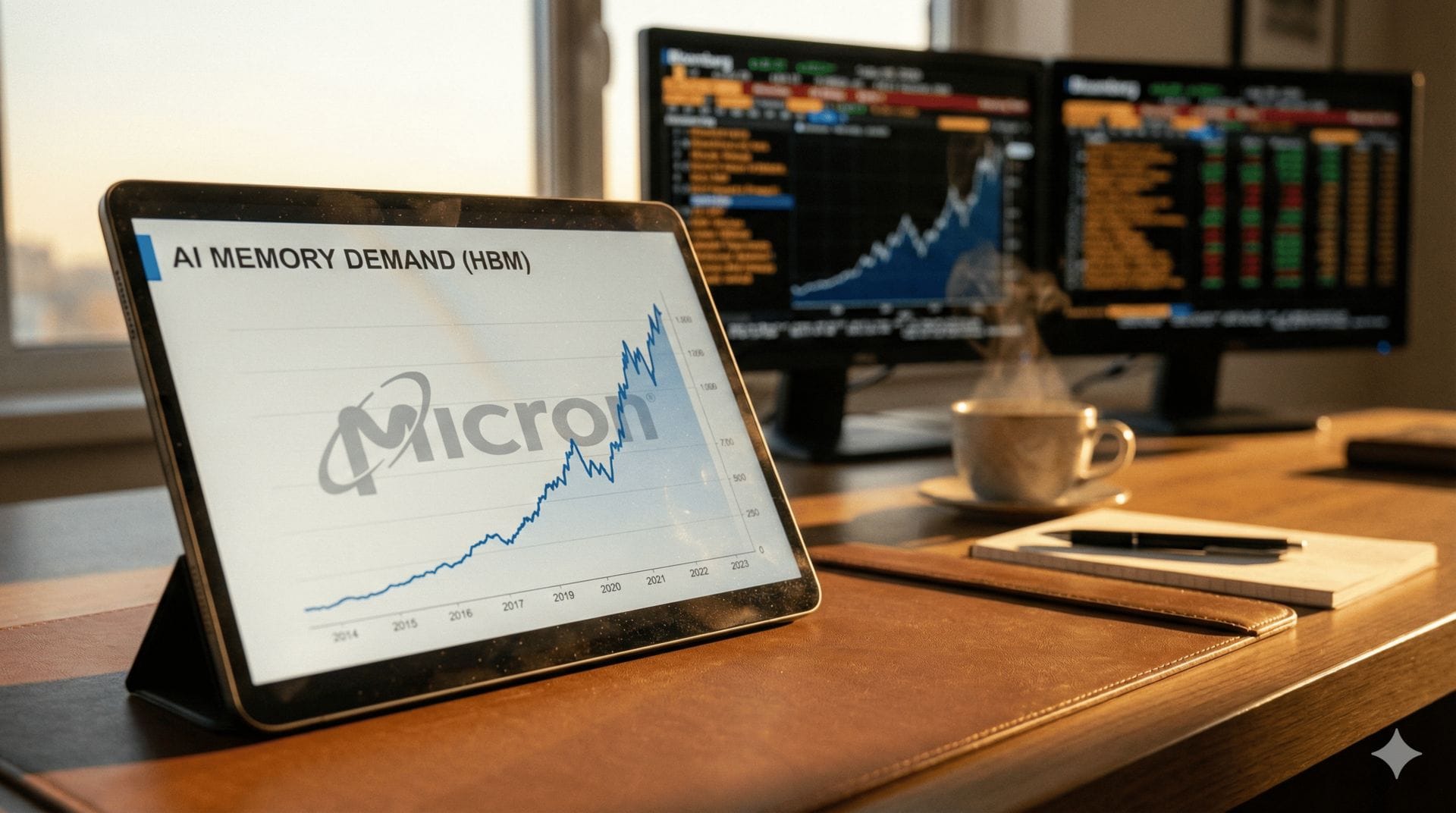
When a company the size of Micron reports a nearly 60% year-over-year revenue jump, swinging from a loss to a multi-billion dollar profit, that is not a "trend." That is an industrial revolution. It confirms that the build-out of the AI infrastructure - the data centers, the training clusters, the inference engines - is not slowing down. It is accelerating.
But here is the critical insight that the mainstream media is missing: We are hitting the "Hardware Ceiling."
The demand for "Digital Intelligence" (chatbots, LLMs, data processing) has become so voracious that it is stripping the world’s supply of High Bandwidth Memory (HBM). We are building brains faster than we can build the bodies to house them.
In this report, we are going to tear down the Micron earnings to understand the "Silicon Signal." We will look at the physics of the "Memory Wall," the economics of the supply shortage, and why this massive explosion in digital capability is inevitably leading to a bottleneck that can only be solved by a pivot to the physical world.
This is not just about buying chip stocks. This is about understanding the roadmap of the next five years.
II. The Anatomy of a Super-Cycle
To understand why yesterday’s news is so pivotal, we have to understand the nature of the semiconductor cycle.
Historically, memory chips (DRAM and NAND) are commodities. They are the "crude oil" of the tech world. When the economy is booming, everyone needs them (for PCs, phones, servers), prices go up, and Micron prints money. When the economy slows, demand drops, supply gluts form, prices crash, and Micron burns cash.
It has been a "Boom and Bust" industry for forty years.
But yesterday, Micron’s CEO Sanjay Mehrotra used a phrase that should make every ear perk up: "Structural Demand."
He is arguing - and the numbers back him up - that we have left the cyclical world and entered a structural one.
The Data:
- Revenue: $13.64 Billion (Beating estimates of $12.83B).
- Growth: ~57% Year-Over-Year.
- Margins: Expanding rapidly as pricing power returns to the supplier.
What does this mean? It means the customers (Microsoft, Google, Meta, Amazon) are no longer buying chips just to meet current demand. They are panic-buying infrastructure to secure their future. They are terrified of being left behind in the AI arms race, so they are buying every wafer Micron can produce for the next 18 months.
This is the "Super-Cycle."
It is reminiscent of the 19th-century railroad boom. In the beginning, the money wasn't made by the people shipping goods; it was made by the steel foundries laying the tracks. Today, Nvidia and Micron are the steel foundries.
But trees don’t grow to the sky.
III. The "Memory Wall": Why Chips Are Not Enough
Here is where the skeptical "Contra-Investor" in you needs to pay attention.
While the numbers are great now, they reveal a looming problem. In computer architecture, there is a concept called the "Memory Wall."
For decades, processors (CPUs and GPUs) have been getting faster at a rate that far outpaces memory speed. You can have the fastest brain in the world (Nvidia’s Blackwell chip), but if it can’t access the data it needs to "think" fast enough, it sits idle.
Micron’s explosive growth in High Bandwidth Memory (HBM) is the industry’s attempt to break through this wall. They are stacking memory chips vertically, like 3D skyscrapers, to feed data to the GPU faster.
But there is a physical limit.
We are approaching the point of diminishing returns in purely digital AI.
- We have LLMs that have read the entire internet.
- We have chatbots that can pass the Bar Exam.
- We have image generators that can create art.
But what value does this actually create in the real economy?
Does a chatbot fix a pothole? Does an image generator fold your laundry? Does an LLM build a house?
No.
The "Digital AI" economy is essentially a massive efficiency engine for white-collar work. It makes writing emails faster, coding faster, and analyzing data faster. But it is trapped behind a screen.
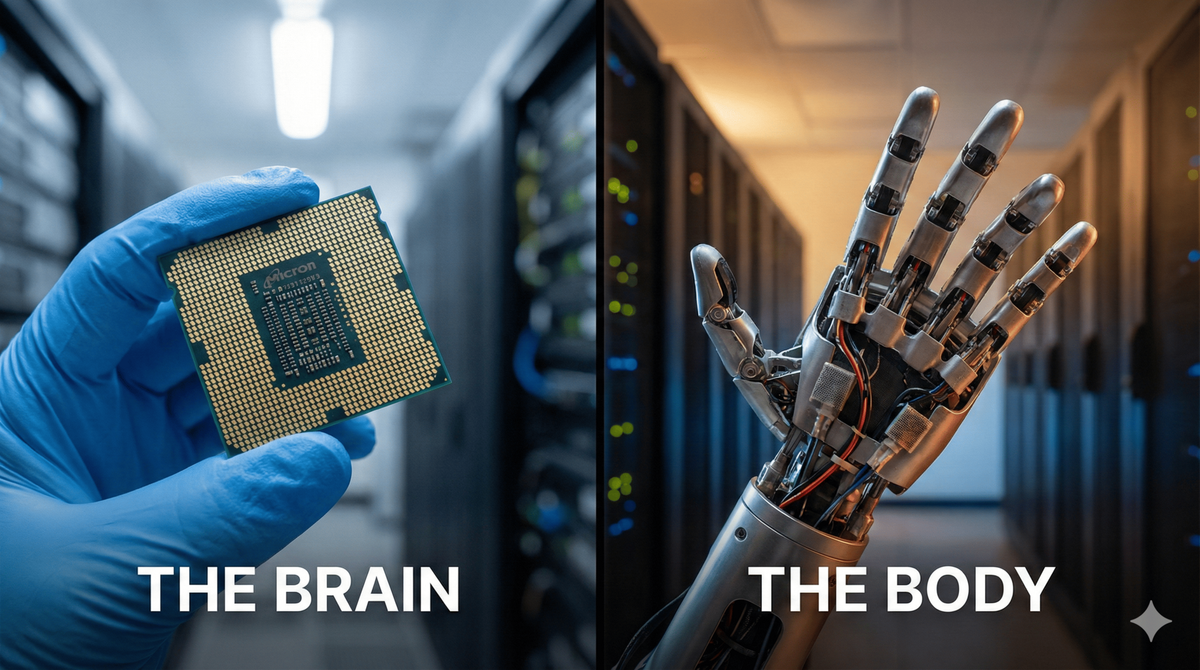
The Micron earnings tell us that we have successfully built the "Brain." We have spent trillions of dollars creating a synthetic intelligence that is now, in many ways, smarter than us.
But a brain in a jar cannot change the physical world.
IV. The Efficiency Gap: Why the Market is Rotating
This brings us to the "Efficiency Gap."
Fortune 500 companies have spent the last three years hoarding these chips. They have built massive data centers. And now, shareholders are starting to ask the hard question: "Where is the ROI?"
If I spend $1 Billion on Nvidia and Micron chips, do I get $2 Billion of value back?
For software companies (Adobe, Salesforce), the answer is yes. But for the "Real Economy" - Manufacturing, Logistics, Healthcare, Construction, Agriculture - the answer is currently no.
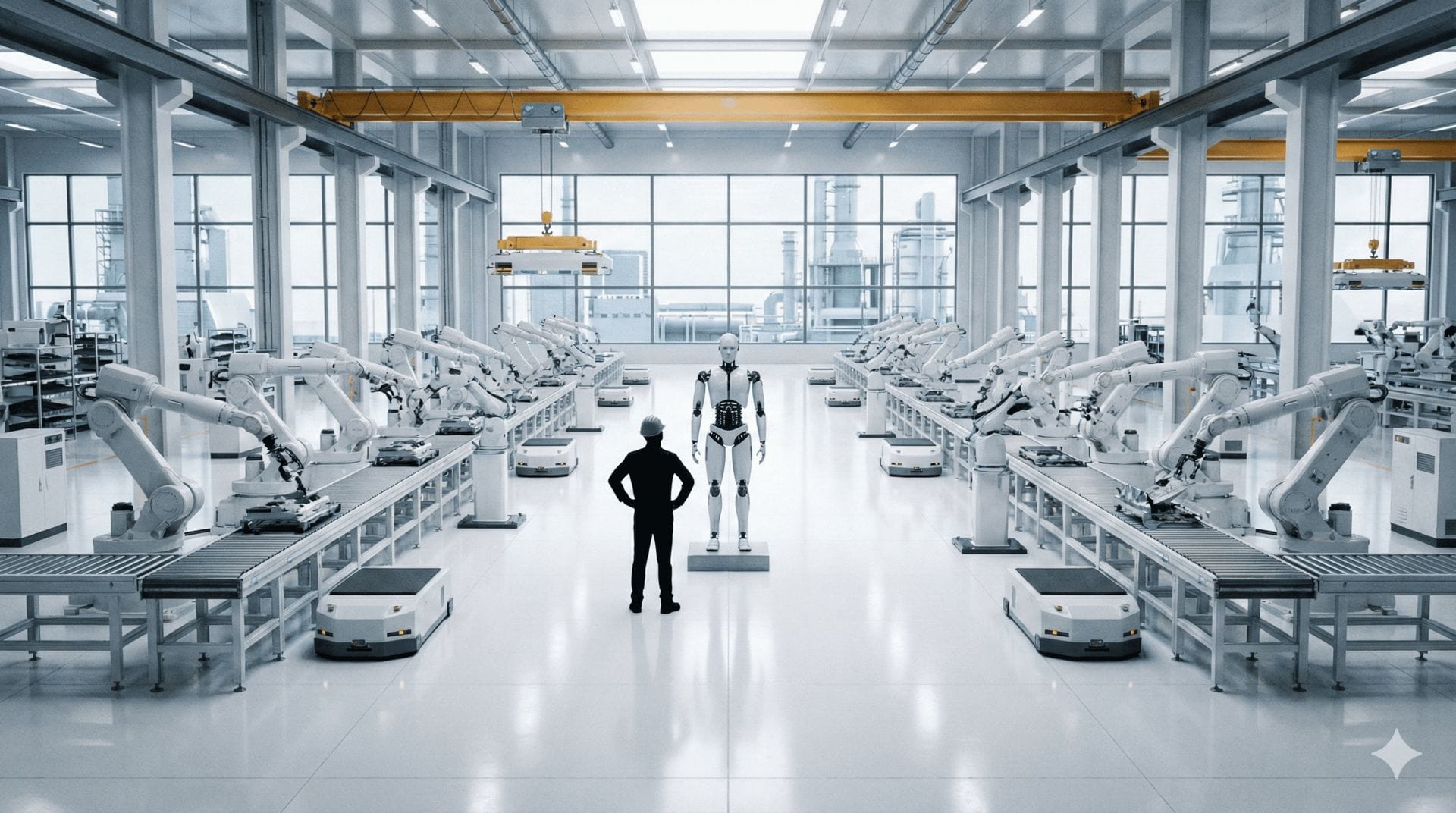
Why? Because a manufacturing line doesn't need a chatbot. It needs a pair of hands.
The "Silicon Signal" from Micron is telling us that the digital infrastructure build-out is hitting peak velocity. When a trend hits peak velocity, the "Smart Money" starts looking for the next bottleneck.
The next bottleneck is not "Intelligence." We have plenty of that now. The next bottleneck is "Agency."
Agency is the ability to act. It is the ability to pick up a box, weld a seam, drive a truck, or care for a patient.
This is why we believe the "Micron Moment" marks the top of Phase 1 (The Digital Phase) and the beginning of Phase 2 (The Physical Phase).
V. The "S-Curve" of Innovation
We often talk about the "S-Curve" in technology adoption.
- The Incubation Phase: Tech is expensive and clunky. (Internet in the 80s).
- The Expansion Phase: Tech becomes usable and infrastructure is built. (Internet in the 90s/00s).
- The Maturity Phase: Tech is ubiquitous and growth slows. (Internet today).
AI is currently in the steep vertical part of the Expansion Phase regarding computing.
But regarding robotics, we are at the very bottom of the S-Curve.
The "Signal" Micron gave us is that the cost of intelligence is dropping to zero. Think about that. Five years ago, a robot had to be programmed with strict, rigid code. "Move arm 10 degrees left. Close gripper. Move arm 10 degrees right." It was brittle. If the box moved an inch, the robot failed.
Today, thanks to the chips Micron is selling, we can run "End-to-End Neural Networks." We can show a robot a video of a human folding a shirt, and the robot can learn to fold the shirt. We don't code the movement; we train the brain.
Because Micron and Nvidia have succeeded in lowering the cost of "Brain Power," we have unlocked the economic viability of "Physical Labor Power."
VI. Conclusion
So, what do we do with this information?
If you hold Micron (MU), congratulations. You rode the wave of the Digital Build-out. Enjoy the gains. But do not mistake a peak for a plateau. The hardware trade is crowded. Everyone knows about HBM. Everyone knows about GPUs. The "Alpha" (the excess return) has largely been squeezed out of the trade.
The skeptical investor - the one who wants to turn $50k into $500k - does not buy the news that is already on the front page of the Wall Street Journal. He buys the news that will be on the front page in 2026.
The Micron earnings have confirmed that the "Brain" is ready. Now, we must turn our attention to the "Body."
We are going to explore the specific company - and the specific man - who is perfectly positioned to capture this second wave. It is not a story about chips. It is a story about the industrialization of autonomy.
Sponsored Content
Elon’s "250X ChatGPT Moment"

Elon’s about to shock the world - again.
He’s about to deploy robots. Real, walking, working robots powered by Tesla’s AI brain.
Jeff Brown - the man who called Tesla at $70 and Nvidia before its 23,000% run - says this is Elon’s “250X ChatGPT moment.”
And he’s naming one $50 stock that makes it possible.
⚡ From Brains to Bodies: Why "Optimus" is the Final Frontier of the AI Trade
I. Introduction: The "Labor Cliff" and the Deflationary Force
If you look at the demographic charts of the developed world - North America, Europe, China, Japan - you see a terrifying line. It is the line of "Working Age Population."
It is collapsing.
We are aging. The Baby Boomers are retiring en masse. Birth rates are below replacement levels. For an economist, this is a nightmare. It means fewer workers to support more retirees. It means persistent wage inflation, labor shortages, and supply chain fragility.
This is the macro-backdrop that makes the "AI Robotics" trade inevitable.
In Part 1, we discussed how companies like Micron have solved the "Intelligence" problem. We have unlimited digital brains. Now, we must solve the "Labor" problem.
The solution is not political. It is technological. We are about to witness the deployment of the first "General Purpose Humanoid Robot."
And there is one company - and one specific supplier - that holds the keys to this kingdom.
II. The Tesla Pivot: It Was Never About Cars
For years, Wall Street analysts (the ones who missed the Micron surge) have treated Tesla as a "Car Company." They argue about margins on the Model Y. They fuss over quarterly delivery numbers. They compare Tesla to Ford and Toyota.
They are missing the forest for the trees.
Tesla is not a car company. It is a Real-World AI Company that happens to sell robots on wheels.
Think about what a self-driving car actually is. It is a robot. It has cameras (eyes). It has a computer (brain). It has actuators (muscles/steering). It has a battery (heart). It has to navigate a chaotic, physical world full of unpredictable humans, weather, and obstacles.
Elon Musk realized something profound years ago: If you can solve self-driving for a car, you have effectively solved the brain for a humanoid robot.
The software stack is the same. Whether the robot is avoiding a pedestrian on the highway or navigating a cluttered warehouse floor, the "Vision Intelligence" is identical.
This is why Tesla is winning the race. Boston Dynamics spent 20 years coding robots to do backflips. It was impressive, but it was "hard-coded." The robot didn't "know" what a box was; it just knew the geometry of the room. Tesla is taking the brain from the car - trained on billions of miles of real-world driving data - and putting it into Optimus.
III. The "End-to-End" Breakthrough
The catalyst for this "250X ChatGPT Moment" that Jeff Brown talks about is a technical breakthrough called "End-to-End Neural Networks."
In the old days of robotics (Phase 1), you had separate code for everything.
- Module A: Identify object.
- Module B: Calculate path.
- Module C: Move arm.
It was slow and buggy.
With "End-to-End" AI (Phase 2), you feed the video into the Neural Net, and the Neural Net outputs the muscle movement directly. It is how a human learns. You don't calculate the physics of a tennis ball when you swing a racket. You just "do it" based on muscle memory and visual intuition.
This breakthrough allows Tesla to train Optimus to do anything simply by showing it examples.
- Want it to fold laundry? Show it 50 videos of folding laundry.
- Want it to sort battery cells? Show it videos of sorting battery cells.
- Want it to wire a panel? Show it videos of wiring.
This is the "Zero-to-One" moment for labor. It turns physical work into a software problem.
IV. The Economics of the Humanoid
Let’s talk numbers. This is where the "Skeptical Investor" usually nods his head.
A human worker in a US factory costs about $50,000 to $80,000 a year (salary + benefits + insurance). They can work 8 hours a day. They get sick. They get tired. They get injured.
Elon Musk targets the price of Optimus at $20,000 to $25,000. Not per year. One time.
The robot costs roughly $2 per hour in electricity to run. It can work 20 hours a day (charging for 4). It doesn't join a union. It doesn't get back pain. It doesn't sue for slip-and-fall.
If Tesla hits this price target - and their history of driving down EV costs suggests they will - the ROI for a factory owner is less than 6 months. After that, the labor is essentially free.
This is the most deflationary force the world has ever seen. It will collapse the cost of goods sold (COGS) for everything from cars to iPhones to houses.
V. The "Supplier" Trade: The Safer Bet
Now, you could just go buy Tesla stock (TSLA). And honestly, that’s probably not a bad idea for the long term.
But Tesla is a $700 Billion+ behemoth. For the stock to double, it needs to add another $700 Billion in value. That takes a lot of energy.
The "Whale" move - the strategy Jeff Brown advocates - is to look at the Supply Chain.
Every single Optimus robot needs a specific set of components to function.
- It needs Actuators (the muscles).
- It needs Batteries (the power).
- It needs Inference Chips (the brain - likely Tesla’s own FSD chip).
- But most importantly, it needs SENSORS.
The robot cannot act if it cannot see. Tesla’s entire philosophy is "Vision Only." They don't use Lidar. They don't use Radar. They use cameras and advanced imaging sensors to mimic the human eye.
Jeff Brown has identified a specific supplier - currently trading around $50/share - that is critical to this vision stack. This company makes the advanced sensors that allow the AI to perceive depth, speed, and texture in real-time.
Without this component, Optimus is blind.
Investing in the supplier is often smarter than investing in the OEM (Original Equipment Manufacturer).
- When Apple launched the iPhone, Apple stock did great. but the suppliers of the touch-screens and the chips did even better in percentage terms because they started from a smaller base.
- When the Gold Rush happened, the guys selling the shovels (the suppliers) made the consistent money, while the miners took the risk.
VI. Conclusion: The Window is Closing
We are standing on the precipice of a new era. The "Micron Signal" told us the digital foundation is complete. The chips are here. The data centers are built.
Now, the energy is shifting to the deployment. Elon Musk is preparing to reveal the mass-production version of Optimus. When that happens - when the world sees thousands of these bots walking off the line - the narrative will shift overnight.
The market will suddenly realize that the "Labor Crisis" has a solution. Capital will flood into robotics.
You have a choice. You can wait until the robots are walking down the street and the supplier stock is trading at $150. Or you can act on the intelligence now, while the market is still distracted by the chip trade.
The "Physical AI" revolution is here. Don't let it leave you behind.
Sponsored Content
Something Interesting For You
Jensen Huang’s Shocking Announcement |
URGENT: This Altcoin Opportunity Won’t Wait – Act Now |
Tesla’s Robot Army Is Real |
We are interested in your opinion and concerns
Please share them in the Poll
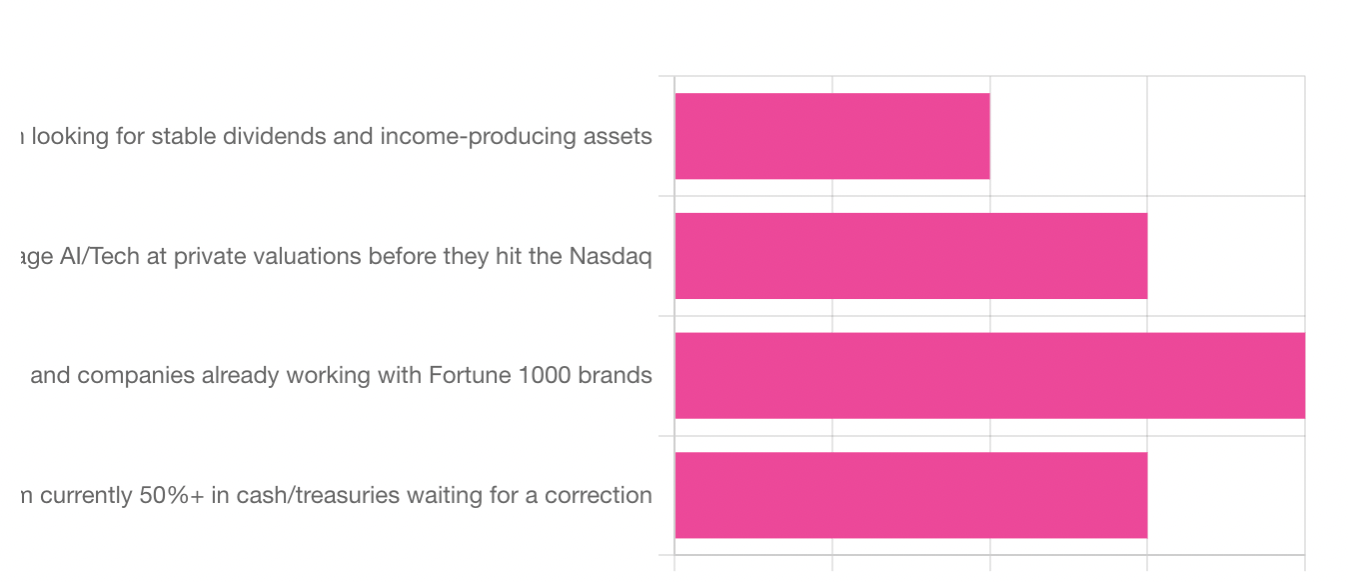
Where do you think the biggest ROI will be in 2026? |
Your Feedback about yesterday’s Poll