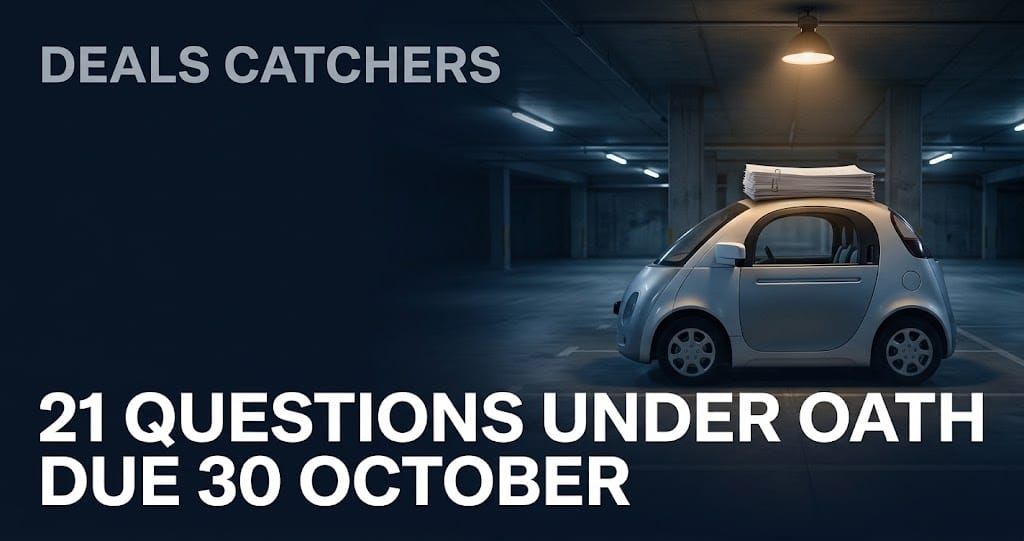
Tesla Owes Washington 21 Answers About the Cybercab by 30 October
 |
23 OCTOBER 2026
 By Mike Lee
sponsored Inside the Cybercab |
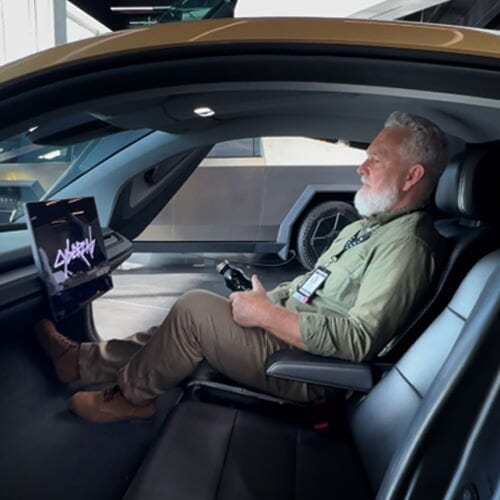 This man just got inside a Cybercab, Elon Musk’s new car that has no steering wheel or pedals. What happens next will shock everyone. |
Three Numbers to Start
21 | requests in a federal order that Tesla must answer under oath by 30 October, on how it certified the Cybercab. |
−$2.12B | Meta’s free cash flow in the third quarter, after $34.91 billion of capital spending. |
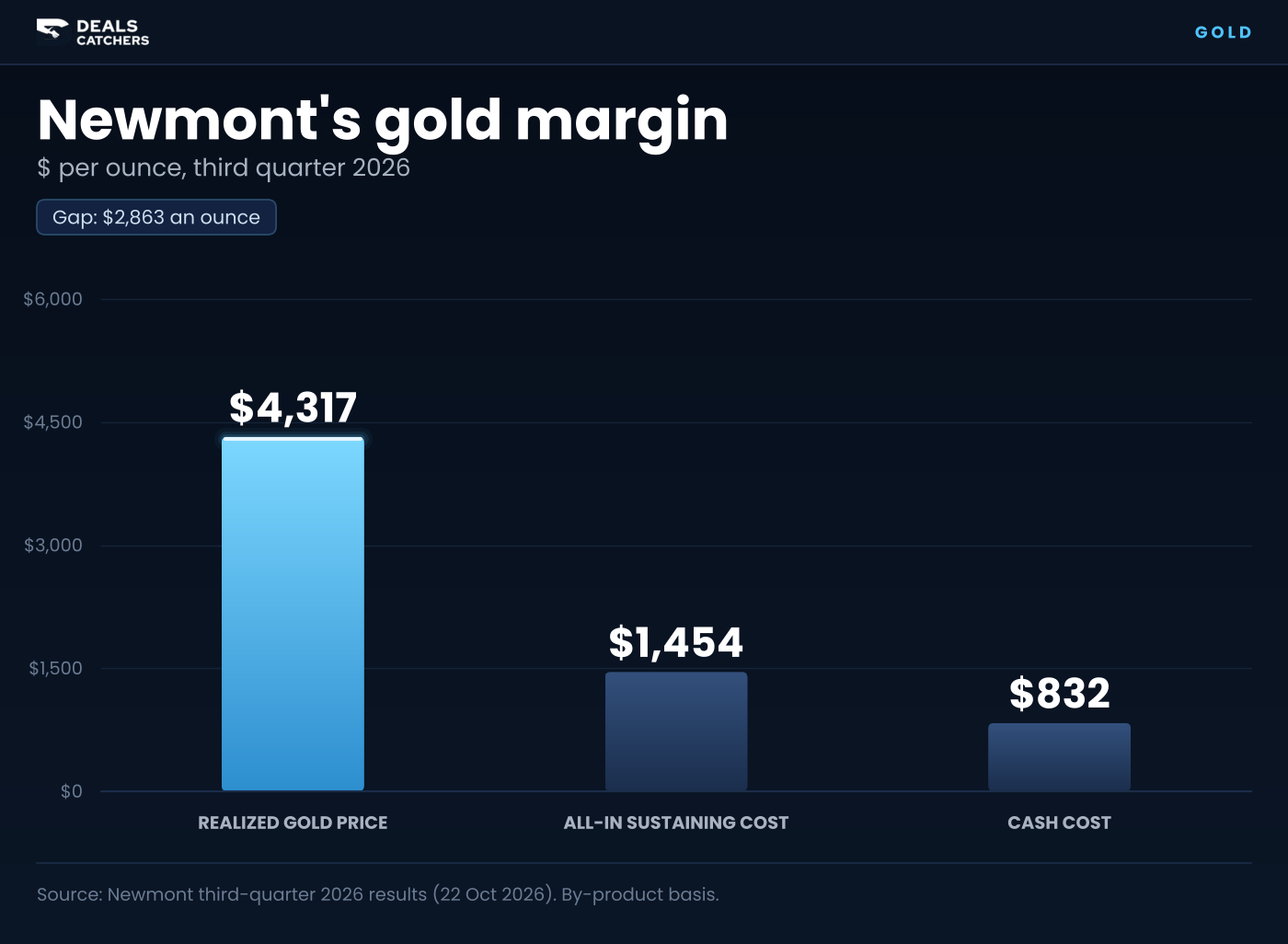
$4,317 | the average price Newmont got for an ounce of gold in the third quarter. Its all-in sustaining cost was $1,454. |
ad This man just got inside a Cybercab, Elon Musk’s new car that has no steering wheel or pedals. See the Exclusive Footage |
Tesla Owes Washington 21 Answers About the Cybercab by 30 October
The National Highway Traffic Safety Administration opened an audit on 3 September, the day of the Cybercab’s commercial launch in Austin. It wants to know how Tesla certified that a car with no steering wheel, no pedals and no side mirrors meets federal safety standards. On 10 September the agency’s chief counsel, Peter Simshauser, signed a special order that turned the audit into a legal demand: 21 requests, answered under oath, with an affidavit from a company officer. Tesla asked for eight more weeks, to 20 November, citing the “voluminous nature of the request.” NHTSA gave it 30 days, so the answers are due on 30 October.
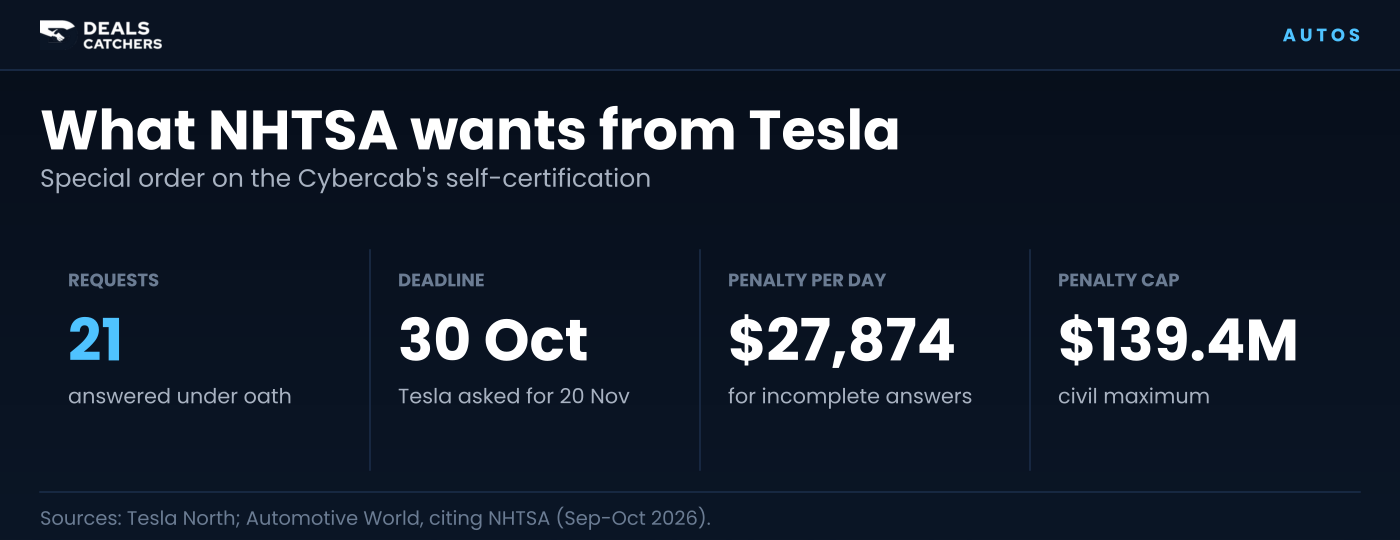
The brake rule is the sharpest question. Federal standard 135 says the service brakes “shall be activated by means of a foot control,” and the Cybercab has none. NHTSA has said a car without one could not certify to that standard. The order also asks about turn signals, mirrors and rearview cameras, and whether a passenger can move the car from the touchscreen. An incomplete or false answer can cost $27,874 a day, up to about $139.4 million. NHTSA has not found a violation, and nothing in the order stops the rides.
Zoox took the other road. On 30 July NHTSA granted the Amazon-owned company a two-year exemption from eight federal standards for its robotaxi, which also has no steering wheel or pedals, capped at 2,500 vehicles a year. Chief executive Aicha Evans called it the “first-ever commercial exemption for a purpose-built robotaxi.” Zoox says paid rides start first in Las Vegas. Tesla holds no exemption and did not apply for one; it certified the Cybercab itself. NHTSA proposed easing some manual-control rules in June, but the current standards bind until a final rule replaces them, and the brake change may not take effect before 2028.
Tesla is still planning to grow. On Wednesday’s call AI chief Ashok Elluswamy said Dallas comes next month, and engineering chief Lars Moravy said, “We are trying to get Cybercabs to customers by the end of this year, 2026.” For now every Cybercab goes into Tesla’s own robotaxi fleet. A buyer would get two seats, a battery of about 48 kilowatt-hours and a preliminary EPA range of about 293 miles. The car charges only at DC fast chargers through a hidden port, so a home wall charger will not work. Tesla also cut its 2026 capital spending forecast to $20 billion from $25 billion. The shares closed at $386.47 on Wednesday, up 3.41%, and fell about 4% early on Thursday.
Jeff Brown’s note at the top of this letter starts with a man climbing into a Cybercab. Tesla’s sworn answers on that car are due in a week.
AI Companies Spend Their Cash Instead of Paying It Out
Meta reported third-quarter revenue of $64.60 billion on Wednesday, up 26%, and net income of $9.86 billion. It spent $34.91 billion on capital projects, including finance leases, so free cash flow came out at minus $2.12 billion. Meta bought back no stock in the quarter, against $3.33 billion a year earlier, though it still paid $1.36 billion in dividends. It expects to spend $135 billion to $145 billion this year and gave no revenue forecast for 2027. Meta also plans a one-time stock dividend: one new non-voting Class C share for each Class A and Class B share. The shares fell 2.7% early on Thursday.
The rest of the AI trade pays little cash either. Nvidia pays a quarterly dividend of one cent a share, although it returned $41.1 billion through buybacks and dividends in its last fiscal year. Tesla has never paid a cash dividend. An income investor who owns these shares collects almost nothing in the mail.
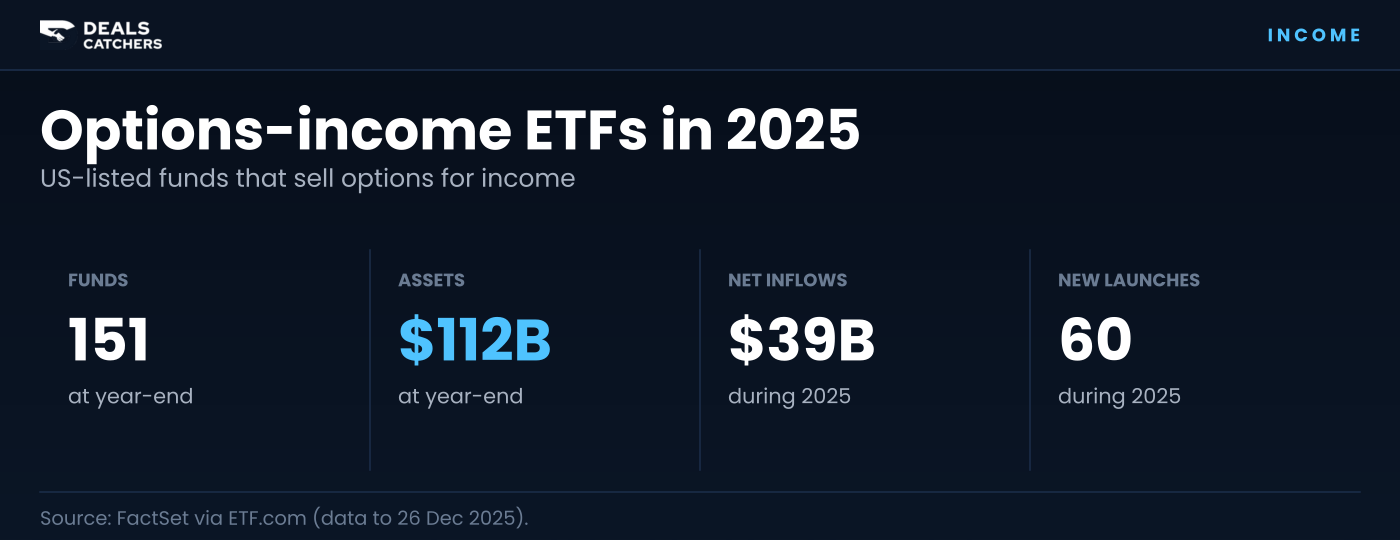
Option-income funds sell the volatility instead. A fund holds the shares, or tracks them, writes call options against them and pays out the premium. The buyer of each call keeps any gain above the strike price, so the fund trades part of the upside for cash now. FactSet counted 151 options-income ETFs at the end of 2025, holding $112 billion, after $39 billion of net inflows and 60 new launches in the year.
Weekly payouts are newer still. Roundhill launched its first five WeeklyPay ETFs on 19 February 2025, tied to Nvidia, Tesla, Apple, Coinbase and Palantir. Its launch announcement warns that distributions may exceed the fund’s income and gains, and that frequent payouts may raise an investor’s tax bill.
Read the advertised rate with care. One large issuer announced weekly payouts for 12 such funds on 13 October. Their annualized distribution rates ran from 23.40% to 60.64%, and eight of the 12 showed a negative 30-day SEC yield, a measure that leaves out option income. The issuer’s own notice says the distribution rate “does not represent its total return” and that payouts may include a return of the investor’s own capital, which “may decrease an ETF’s NAV and trading price over time.”
Treasuries set the floor for comparison. The 10-year note closed at 5.09% on 16 October, according to the Treasury’s yield curve, and slipped to about 5.03% on Thursday morning, a one-month low. Consumer prices rose 3.7% in the year to September.
Tim Plaehn, chief income strategist at Investors Alley, says one small fund pays him cash from AI stocks every Thursday. His presentation is below.
sponsored Weekly Cash From AI |
I've just found a way to collect $1,051 in a single month from artificial intelligence stocks. Not from selling shares. Not from trading options. Just from owning one small fund, and letting it deposit cash into my account every Thursday. That's a 34% annualized distribution rate from AI stocks that pay no dividends. I recorded a full presentation explaining exactly how this works... And how you could collect your first payout as soon as this Thursday. To your income, Tim Plaehn Chief Income Strategist Investors Alley |
Newmont Sold Gold at $4,317 and Spent $1,454 to Mine It
Newmont, the world’s largest gold miner, reported on Thursday that it produced 1.3 million ounces in the third quarter and sold them at an average of $4,317 an ounce. Its all-in sustaining cost, which counts mining, overhead and the capital needed to keep mines running, came to $1,454 an ounce. That leaves $2,863 an ounce before taxes, interest and new projects. Adjusted net income reached a third-quarter record of $2.31 billion, and free cash flow was $1.91 billion, $7.3 billion so far this year.
The company is handing much of it back. Newmont returned about $1.9 billion to shareholders since its last report, and it has bought back more than 115 million shares since February 2024, about a tenth of the company. The fourth quarter looks tighter at both ends. Spot gold traded near $4,088 on Thursday morning, 5.7% below its price a month earlier, and Newmont expects its all-in sustaining cost to rise to about $1,900 an ounce.
Big miners pay for ounces that someone else found. Newmont will pay Barrick $1.95 billion this quarter under a revised Nevada joint-venture deal that adds the Fourmile, Fiberline and Mike deposits. It has budgeted $525 million this year for exploration and advanced projects. Its Red Chris expansion in British Columbia shows the pace of a new mine: an investment decision in early 2027, construction from 2027 and commercial production in 2033.
The note below says a $6 miner has found 114 tons of gold in the hills near Mount Rushmore. It names the stock for free.
sponsored Gold Near Mount Rushmore |
 A tiny $6 miner just hit on one of the biggest gold finds in American history... at Mount Rushmore. Thanks to a breakthrough new technology, this little firm just unearthed 114 tons of gold in the hills there. Now it's set to rake in hundreds of millions of dollars a year. |
What Is Scheduled
27 Oct | Boeing, Visa, UPS and Coca-Cola report results. |
28 Oct | the Fed’s rate decision. Microsoft and Alphabet report. |
29 Oct | third-quarter GDP and September PCE prices. Amazon and Eli Lilly report. |
30 Oct | Tesla’s sworn answers to NHTSA are due. |
ad What happens next will shock everyone. Watch the Footage |
Twenty-One
21 | questions Tesla must answer under oath by 30 October. The note at the top of this letter starts inside the car they are about. |
Forget the hot picks — read the regulator’s questions before you buy the ride. Because the best trade you’ll ever make is the loss you never took. Mike LeeDeals CatchersThanks for reading. Have a good weekend. |
Forwarded this? Get it every morning. |