Starlink Just Connected 3 Billion People — The Application-Layer Play Nobody Is Talking About

An Under-$1 Pre-IPO AI Investment Still Open to Retail Investors
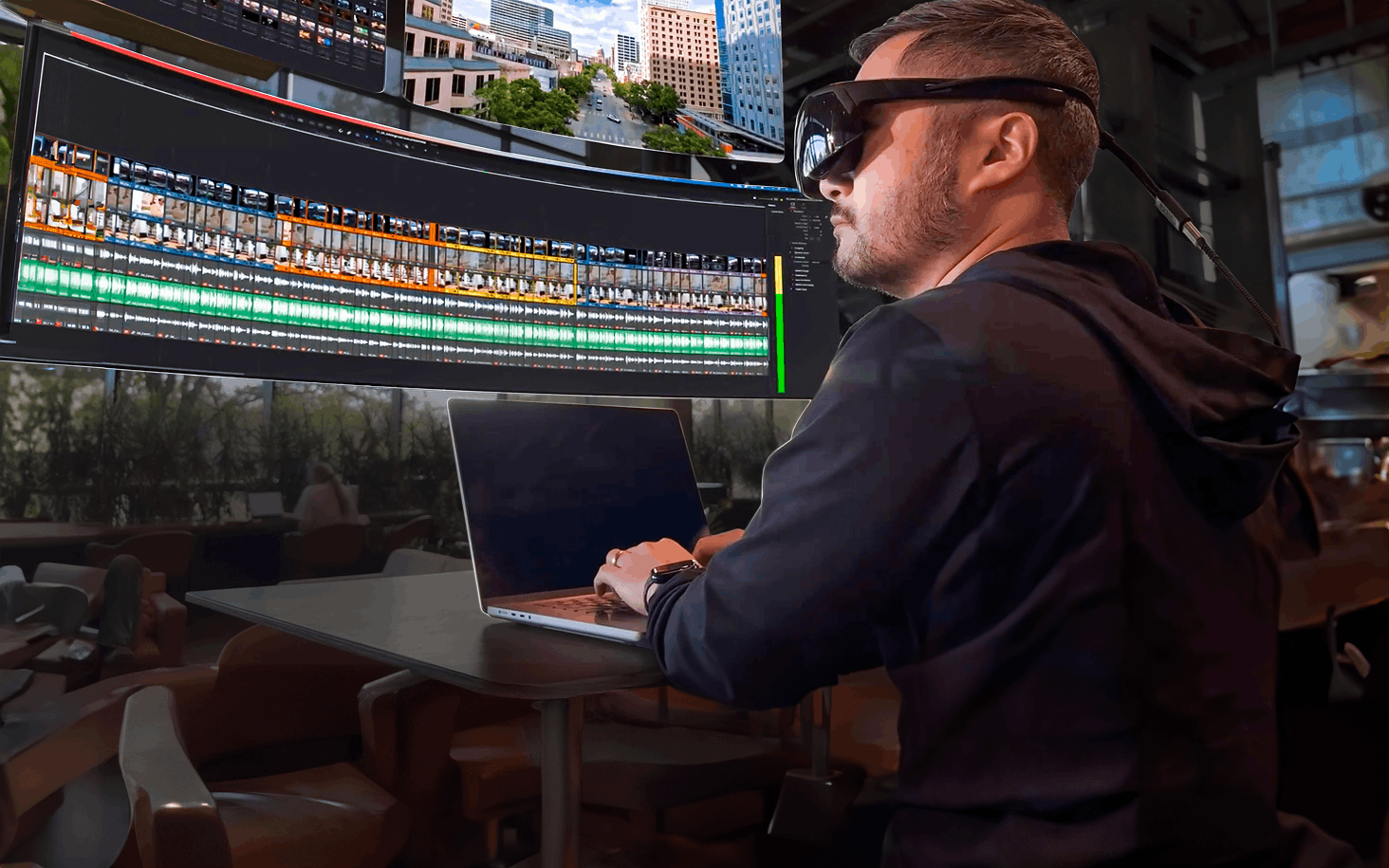
By the time most investors hear about a company, it’s already public and priced like it. Immersed is different. It’s a private company operating at the intersection of AI, spatial computing, and productivity, with more than 1.5 million users already working inside its platform.
Major technology partners include Meta, Intel, and Qualcomm. The company has also reserved a Nasdaq ticker ($IMRS) and is currently allowing new Pre-IPO investors in at $0.72 per share.
Opportunities at this stage tend to disappear quickly once the broader market takes notice.
| Invest Before the Pre-IPO Round Closes → |
Immersed is offering securities through the use of an Offering Statement that has been qualified by the Securities and Exchange Commission under Tier II of Regulation A. The valuation is set by the Company and there is currently no public market for the Company’s Common Stock. Please read the offering circular and related risks at invest.immersed.com. Nasdaq ticker “IMRS” has been reserved by Immersed and any potential listing is subject to future regulatory approval and market conditions.
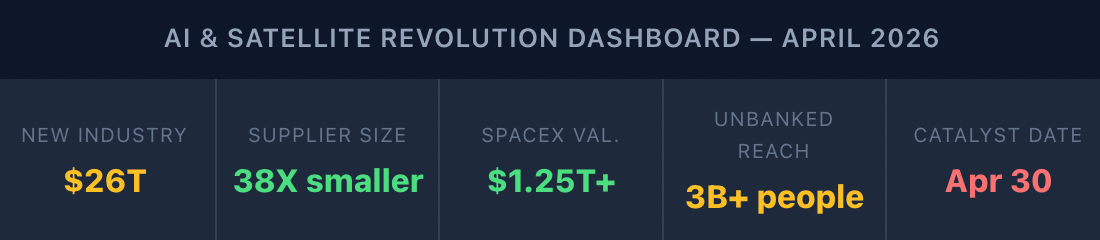
When Starlink completes its global coverage deployment, 3 billion people who have never had reliable internet will be connected for the first time. Apple enabled Starlink satellite support on T-Mobile iPhones. SpaceX is deploying up to 15,000 next-generation Direct-to-Cell satellites. The SpaceX-EchoStar deal added $20 billion in spectrum. No cell towers needed. No fiber optic cables. No government telecom monopolies. Just satellites and smartphones.
This is the biggest connectivity explosion in human history — and the investment thesis is not SpaceX at 110x sales. It is the application layer. When 3 billion unbanked people in rural Africa, Southeast Asia, South America, and the Pacific Islands gain smartphone access via satellite for the first time, the platforms that help them earn, save, transact, and access financial services will see user bases multiply exponentially.
But connectivity is only half the story. The other half is what people do once they are connected — and the interface they use to interact with the digital world. The next computing platform after the smartphone is spatial computing, and the companies building the applications for it are in the same position the early smartphone app makers were in 2008.
By the time most investors hear about a company, it’s already public and priced like it. Immersed is different. It’s a private company operating at the intersection of AI, spatial computing, and productivity, with more than 1.5 million users already working inside its platform. Major technology partners include Meta, Intel, and Qualcomm. The company has also reserved a Nasdaq ticker ($IMRS) and is currently allowing new Pre-IPO investors in at $0.72 per share. Invest Before the Pre-IPO Round Closes (AD).
The Application Layer Is Where the Real Money Is Made
Every infrastructure buildout in history follows the same pattern. First comes the physical layer — the railroads, the fiber optic cables, the satellite constellation. Then comes the application layer — the companies that build products on top of the infrastructure. And it is the application layer, not the infrastructure itself, that captures the majority of the economic value.
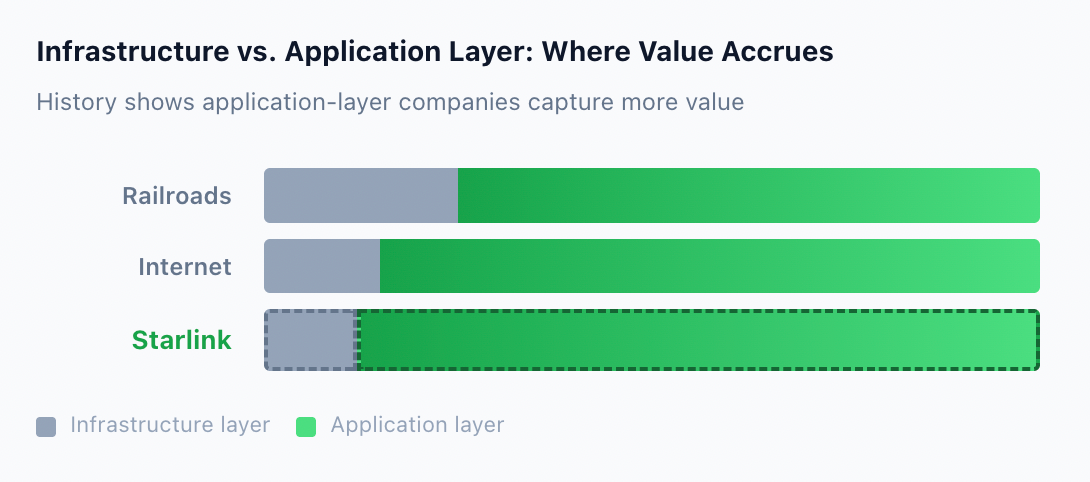
The internet is the clearest example. The companies that built the physical backbone — the fiber providers, the ISPs, the telecom carriers — made money. But the companies that built applications on top of that backbone — Google, Amazon, Facebook, Netflix — captured orders of magnitude more value. The infrastructure was necessary but commoditized. The applications were where the monopolies formed.
Starlink is the new infrastructure layer. It provides connectivity to every human on the planet. But SpaceX will be valued as an infrastructure company — which is why it trades at 110x revenue and still may be fairly valued. The application-layer companies that profit from every new Starlink connection are where the asymmetric returns will be.
The SpaceX IPO Will Reprice the Entire Ecosystem
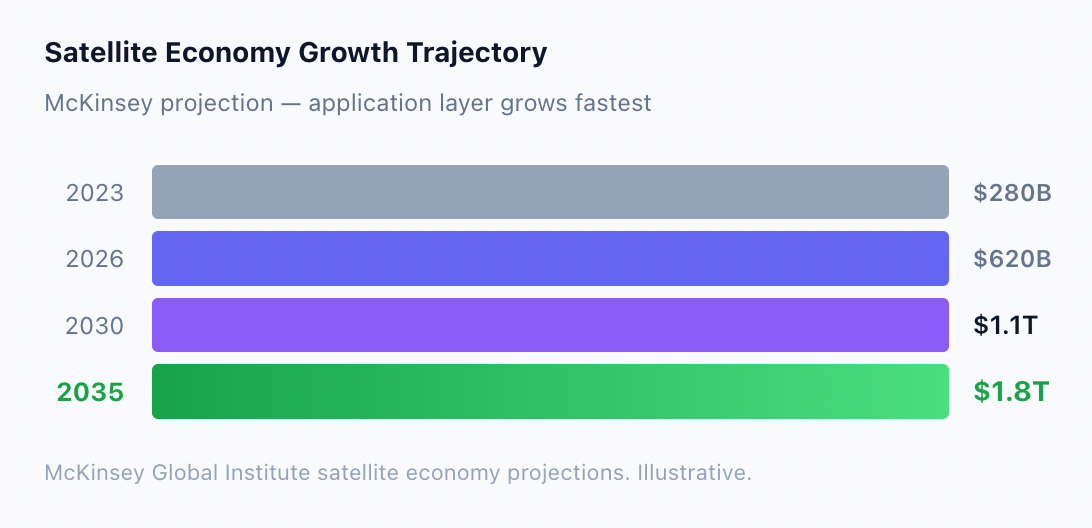
The SpaceX IPO at $1.75 trillion (targeting June 2026) will formalize the scale of the satellite economy. McKinsey projects the broader satellite economy will reach $1.8 trillion by 2035. But by the time the IPO prices, the application-layer companies already positioned in 170+ countries — already generating revenue, already serving tens of millions of users — will have already begun to reprice.
The window before the S-1 goes public is the moment of maximum asymmetry. The smart money is not buying SpaceX on IPO day. It is buying the companies that profit from every new Starlink user — before the crowd arrives.
One Company Already Positioned in 170+ Countries Is Offering Pre-IPO Shares
There is a company that has already done the hard work of building a platform that reaches hundreds of millions of users across 170+ countries. It has already generated over $1 billion in value for its users. It has already achieved 32,481% revenue growth. And it has done all of this before global satellite coverage eliminates the dead zones that previously limited its reach.

With SpaceX eliminating dead zones, this company’s addressable market does not just grow — it multiplies. 3 billion unbanked people in rural populations worldwide suddenly become reachable. The infrastructure constraint that held this platform back is being removed by Starlink, and the market has not yet repriced the stock to reflect this.
The company is currently offering pre-IPO shares before a potential Nasdaq listing. The window is open, but the last round sold out with 59,000+ total investors. Once word spreads — it could be too late.
When Starlink goes global — one Potential IPO play wins big
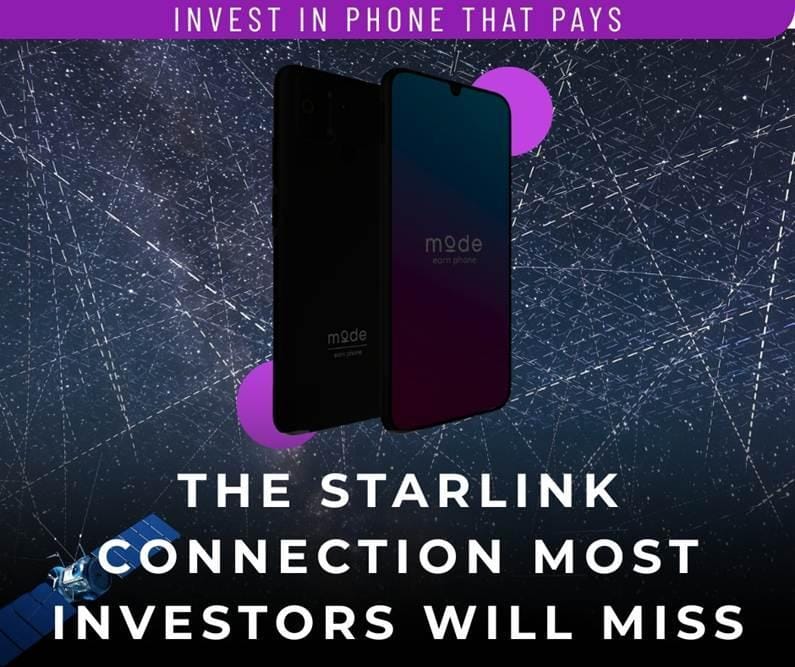
When Starlink completes its global takeover… It’s set to connect 3 billion people who’ve never had reliable internet. That’s the biggest connectivity explosion in human history.
Wall Street is focused on SpaceX. But the smartest money is looking at a backdoor play almost no one’s talking about.
A Potential IPO company already positioned to profit from every single new Starlink user — in 170 countries — before they ever go public.
And if you act fast, you can invest now at $0.50/share.
Click here for the full details.
But don’t wait. Their last round sold out with 59,000+ total investors. Once word spreads — it could be too late.
| Click Here Before This Round Closes → |
Please read the offering circular and related risks at invest.modemobile.com. This is a paid advertisement for Mode Mobile’s Regulation A+ Offering. Mode Mobile recently received their ticker reservation with Nasdaq ($MODE), indicating an intent to IPO in the next 24 months. An intent to IPO is no guarantee that an actual IPO will occur. The Deloitte rankings are based on submitted applications and public company database research, with winners selected based on their fiscal-year revenue growth percentage over a three-year period. Pro forma revenue and EBITDA, includes full year numbers of the businesses acquired throughout 2025.
Why Application-Layer Companies in 170+ Countries Win Big
The economics are straightforward. Every time SpaceX lights up a new region with satellite coverage, every application-layer company positioned in that region gains users at zero marginal acquisition cost. The user was already there, phone in hand, waiting for a connection. Starlink provides the connection. The application captures the user.
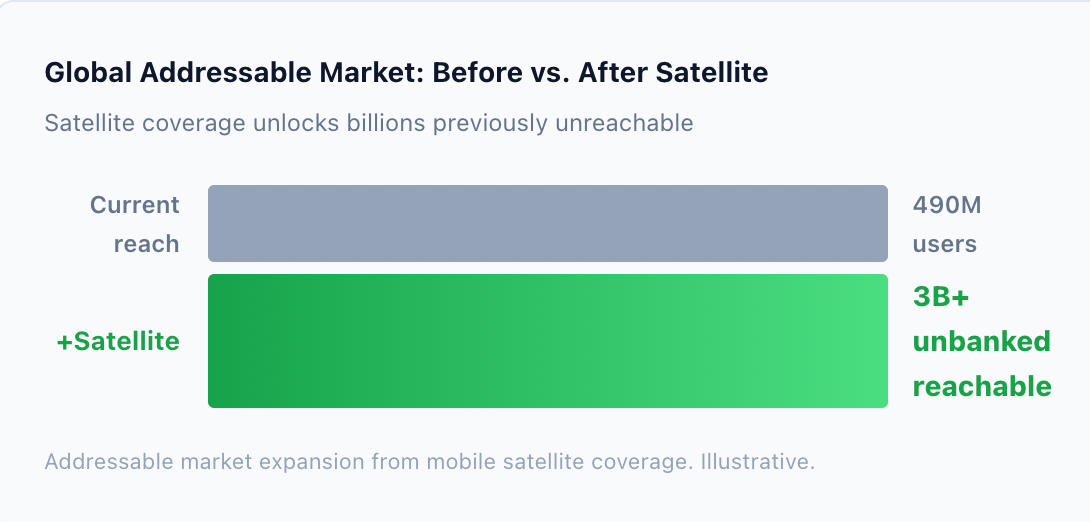
For companies already serving 170+ countries with established platforms, the satellite rollout does not require a new go-to-market strategy. It simply removes the last barrier to adoption in the markets where growth potential is highest. Rural populations in emerging economies represent the largest untapped user base on the planet. And they are about to come online all at once.
The Other Application Layer: Spatial Computing
The mobile application layer captures value from people connected via smartphones. But there is a second application layer forming around the next computing platform: spatial computing. Over 1.5 million professionals are already working full-time in virtual workspaces — logging 40 to 60 hours per week inside headsets instead of in front of monitors.
The companies that prove software demand first and then release dedicated hardware are following the same playbook Apple used with iTunes before the iPhone. The platform shift from monitors to spatial computing is not coming — it is happening right now, in offices and remote workspaces around the world.
The intersection of satellite connectivity and spatial computing is where the two macro shifts converge. A professional in Lagos or Jakarta or Lima who gains reliable internet via Starlink can now join a spatial computing workspace just as easily as someone in San Francisco. The geographic barrier and the infrastructure barrier are being removed simultaneously — and the companies building the applications for this new world are at the earliest stage of their growth curves.
Position in the Application Layer Before the S-1 Goes Public
The SpaceX IPO will reprice the entire satellite ecosystem. But by definition, the repricing rewards the investors who were positioned before the filing, not after. The application-layer companies that are already generating revenue, already serving tens of millions of users, and already offering pre-IPO access at prices the public market will never see again — these are the positions that matter right now.
The window is open. The S-1 is approaching. And the difference between being early and being late in a repricing event of this scale is measured in multiples, not percentages.
Share this with someone who is planning to buy SpaceX on IPO day. The real opportunity is not the infrastructure — it is the application layer that profits from every new connection.