Microsoft’s $80 Billion Bet - Inside the Factory Building the Future of AI
The tech giant is spending more on AI infrastructure than ever before - building not just data centers, but the physical engine of a new digital economy.



SHORT INTRO
For decades, Microsoft’s power lived in code - Word, Windows, and software licensing.
But now the company is going physical.
Behind closed gates across the U.S. and abroad, it’s building something far larger than a data center - a factory of artificial intelligence.
Sources confirm the company will spend nearly $80 billion in fiscal 2025 on new AI-enabled infrastructure.
It’s a move that could redefine both the energy map and the balance of power in global tech.
Hello and welcome to your November 8 world briefing. Today we’re breaking down Microsoft’s quiet construction boom - the “AI foundries” that CEO Satya Nadella says will shape the next phase of computing - and why analysts are calling this the beginning of Exegesis AI, a system designed to extract meaning, not just data.
Microsoft’s $80 Billion Expansion
According to Reuters, Microsoft plans to invest roughly $80 billion in AI-enabled data centers over the next year - its largest capital push ever.
The facilities are designed to handle the explosive demand for training and running large-scale AI models.
Unlike traditional cloud farms, these new complexes will integrate specialized chips, liquid-cooling systems, and renewable-energy grids - creating what executives privately describe as AI factories.
“Compute Isn’t the Bottleneck - Energy Is”
In a recent Times of India interview, Nadella said that the challenge isn’t processing power anymore - it’s energy and efficiency.
As generative AI models grow, they demand enormous amounts of power.
To stay ahead, Microsoft is designing new systems that blend hardware, cooling, and custom chips to reduce energy waste and costs.
That focus explains why its upcoming campuses look more like industrial plants than server halls.
The Rise of the “AI Agent Factory”
The Verge recently profiled Microsoft’s internal “AI Agent Factory,” led by former Facebook engineer Jay Parikh.
Its mission: build customizable AI assistants for businesses and consumers.
The effort unites physical infrastructure (the data factories) with digital production (AI agents).
Together, they form the early blueprint of what insiders now call Exegesis AI - a system that can synthesize, reason, and act across domains.
TODAY’S BREAKTHROUGH FEATURED BY BROWNSTONE RESEARCH
Microsoft Did WHAT?!
Look what’s happening behind me…
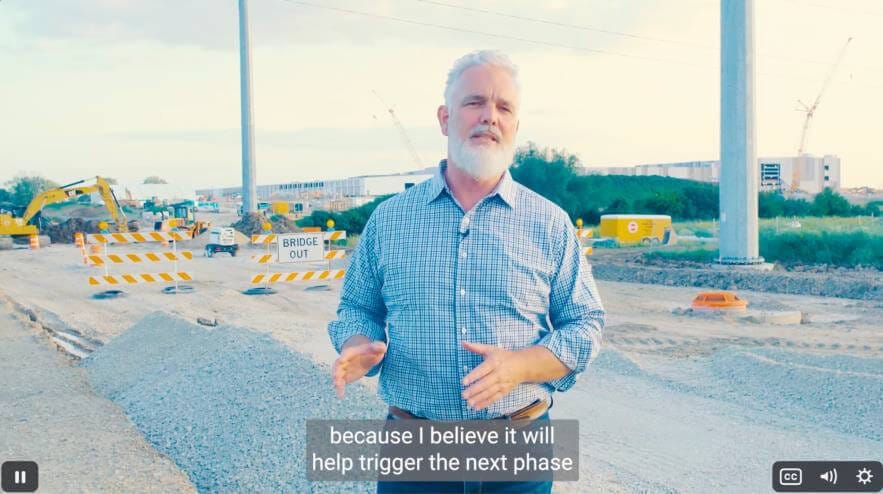
Microsoft is building a factory.
Not a software update. Not a new gadget.
An actual factory — massive, humming, and unlike anything America’s ever seen from them.
We got close. We filmed it.
And what we captured will make you rethink what’s coming next.
Because while everyone assumes Microsoft is just pushing Office and Windows, they’re laying down the foundation for a whole new power structure.
One that I called “Exegesis AI” and that could make or break fortunes in the months ahead.
Don’t just take my word for it - see the footage yourself.
And how to claim a stake!
“Compute is no longer the bottleneck. The real challenge is energy, scale, and responsibility.”Satya Nadella, CEO of Microsoft
Why It Matters
This isn’t just a tech upgrade.
It’s a re-industrialization of intelligence.
Microsoft isn’t selling software anymore - it’s manufacturing cognition.
And whoever controls these factories could soon control the flow of digital intelligence itself.
The scale also raises geopolitical questions:
- Can power grids handle the demand?
- Will AI infrastructure become a strategic national asset?
- And how will smaller players compete when building a single facility can cost billions?
Taken together, Microsoft’s expansion signals the birth of a new economic layer - where data becomes the raw material, and machine reasoning the final product.
If the 20th century ran on oil and silicon, the 21st will run on meaning extracted from information.
“Exegesis AI” isn’t just a project - it’s a paradigm shift.
CLOSING THOUGHTS
The story of Microsoft’s secret factories isn’t about machines replacing people - it’s about infrastructure replacing assumptions.
Just as the first industrial factories transformed manufacturing, these new AI complexes may soon transform cognition itself.
Whether this ushers in a renaissance or a reckoning depends on how - and who - builds what comes next.