Meta Just Quit Enterprise XR. Apple Cut the Price to $2,499. And the Digital Dollar Debate Has a New Twist Nobody Expected.

An Under-$1 Pre-IPO AI Investment Still Open to Retail Investors
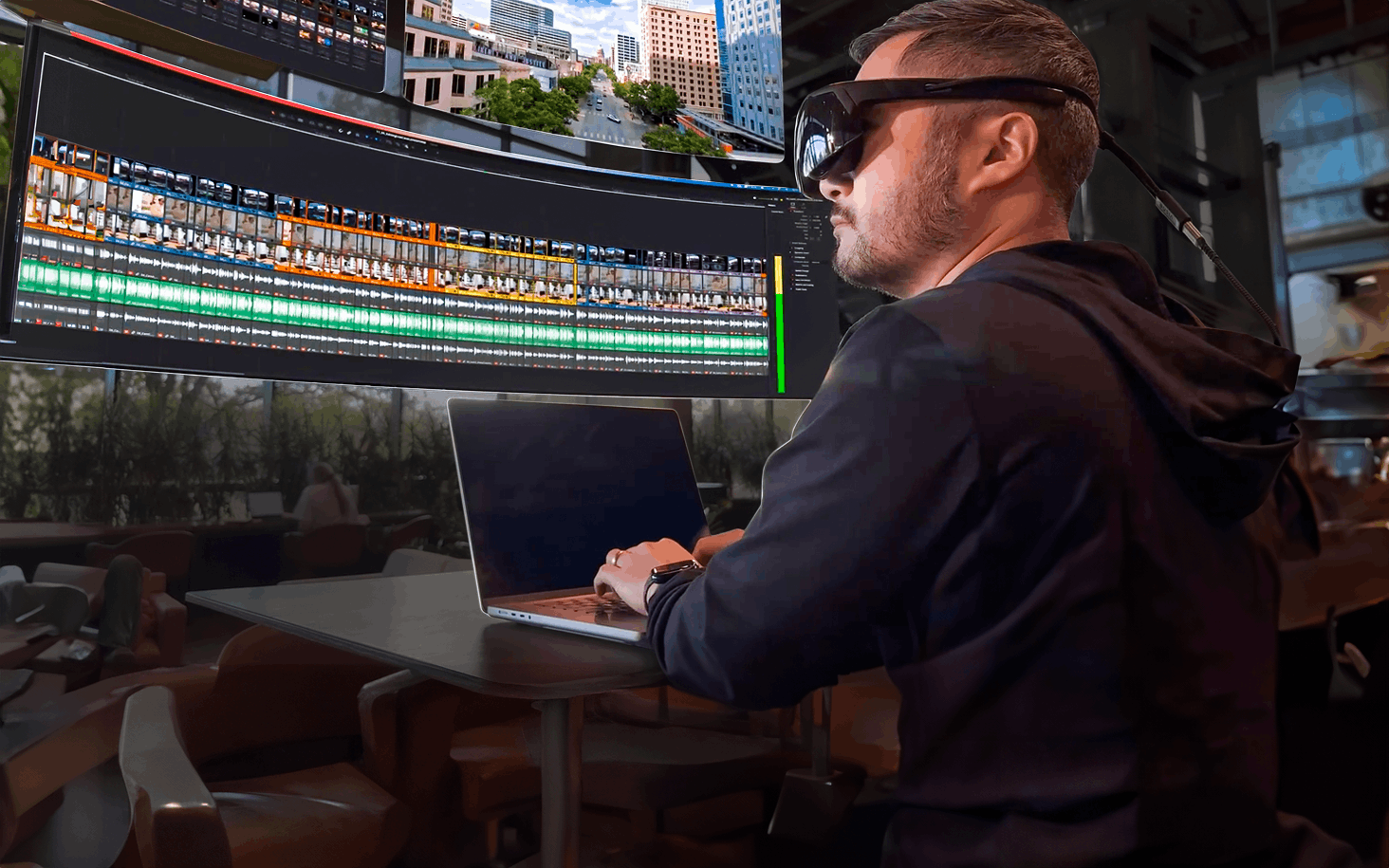
By the time most investors hear about a company, it’s already public and priced like it.
Immersed is different. It’s a private company operating at the intersection of AI, spatial computing, and productivity, with more than 1.5 million users already working inside its platform.
Major technology partners include Meta, Intel, and Qualcomm. The company has also reserved a Nasdaq ticker ($IMRS) and is currently allowing new Pre-IPO investors in at $0.72 per share.
Opportunities at this stage tend to disappear quickly once the broader market takes notice.
| 👉 Invest Before the Pre-IPO Round Closes |
Disclaimer: Immersed is offering securities through the use of an Offering Statement that has been qualified by the Securities and Exchange Commission under Tier II of Regulation A. The valuation is set by the Company and there is currently no public market for the Company's Common Stock. Please read the offering circular and related risks at invest.immersed.com. Nasdaq ticker “IMRS” has been reserved by Immersed and any potential listing is subject to future regulatory approval and market conditions.

In February 2026, Meta made a decision that should have been front-page news but barely made a ripple: the company exited enterprise Quest sales entirely. After spending over $50 billion on the metaverse and XR hardware, Meta effectively conceded the enterprise spatial computing market. The company that dominates consumer VR — with over 20 million Quest units sold — decided that enterprise productivity was not its fight. Treeview’s April 2026 market report called it “the most significant development” of the year, noting it “opened a direct lane” for competitors in Western enterprise markets.
Simultaneously, Apple launched Vision Pro 2 in February at $2,499 — a $1,000 price cut from the original — powered by the M5 chip with 2x faster on-device AI inference. IDC confirmed that enterprise adoption has outpaced consumer adoption since Vision Pro’s launch. But Apple only shipped 390,000 units in 2024 and 85,000 in 2025 (production halted at Luxshare). Even at $2,499, Vision Pro 2 remains a premium tool — too expensive for mass enterprise deployment, too heavy for all-day use, and too limited in its ecosystem for the Fortune 500 teams that need more than demos.
The market gap that Meta created and Apple failed to fill is enormous. Enterprise XR adoption is accelerating — IDC projects it to be the primary growth driver through 2026. Companies are using spatial computing for training, collaboration, digital twins, remote support, and data visualization. McKinsey projects widespread adoption by 2026. But the hardware that enterprises actually need — lightweight, affordable, productivity-first, with 4K+ per eye and all-day battery — does not come from Apple or Meta. The companies building that exact product are still in their pre-IPO phases.
The gap between what enterprises need and what the incumbents deliver is where the opportunity sits.
(AD) By the time most investors hear about a company, it’s already public and priced like it. Immersed is different. It’s a private company operating at the intersection of AI, spatial computing, and productivity, with more than 1.5 million users already working inside its platform. Major technology partners include Meta, Intel, and Qualcomm. The company has also reserved a Nasdaq ticker ($IMRS) and is currently allowing new Pre-IPO investors in at $0.72 per share. Opportunities at this stage tend to disappear quickly once the broader market takes notice. Invest Before the Pre-IPO Round Closes.
The $250 Billion Market That Apple Validated but Cannot Fill
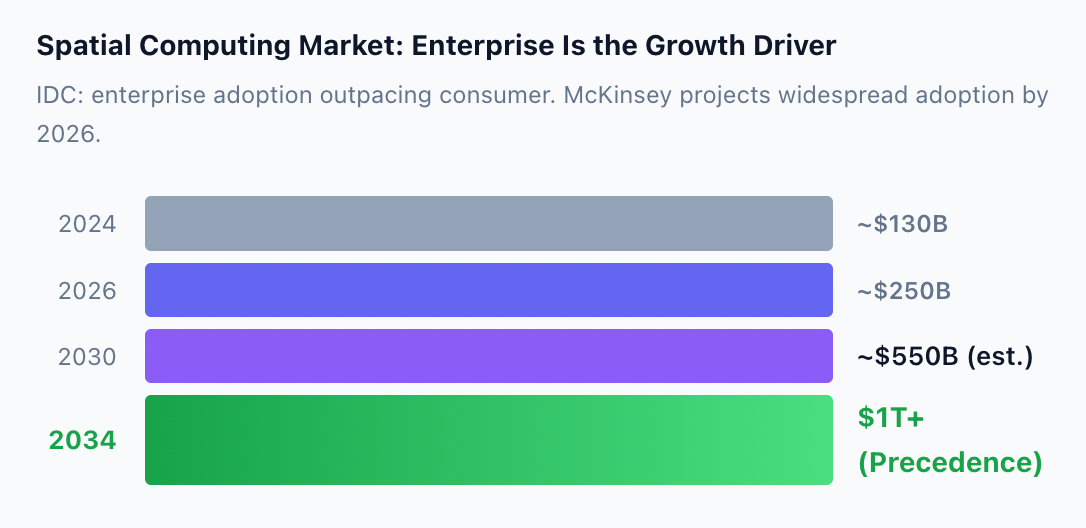
The AI Magicx report from April 2026 documented the shift: enterprise buyers went from “interesting demo” to “show me the ROI.” VisionOS 26 introduced spatial scenes — persistent 3D environments that blend with physical workspaces. NVIDIA launched CloudXR 4.0 for streaming heavy spatial workloads from the cloud. And the companies building devices that are lighter, cheaper, and more powerful than anything Apple or Meta offers are the ones positioned to capture the enterprise market that both incumbents have validated but neither can fill.
134 Countries Are Building Digital Currencies. The U.S. Banned It. But the Infrastructure Is Already Live.
While the spatial computing market evolves, a parallel shift in financial infrastructure is creating a different kind of urgency for American savers. 134 countries are now actively exploring or developing Central Bank Digital Currencies. China’s digital yuan is operational and expanding, with pilot programs that programmed currency to expire — forcing citizens to spend on the government’s schedule. The European Central Bank is running pilot programs for a digital euro. Nigeria’s eNaira is live. The Bahamas’ Sand Dollar is circulating.
In the U.S., the picture is more complicated than most people realize. Trump signed Executive Order 14178 in January 2025, prohibiting agencies from “establishing, issuing, or promoting a CBDC.” The House passed the Anti-CBDC Surveillance State Act by a vote of 219-210 in July 2025. Treasury Secretary Bessent testified before Congress in February 2026 that “a central bank digital currency is anathema to the creation of the US as a digital asset capital.” Rep. Tom Emmer called a digital dollar “government surveillance.” Rep. Warren Davidson called CBDC “an existential threat to Western civilization.”

But here is the detail that concerns privacy advocates: FedNow — the Fed’s real-time settlement system — launched in July 2023 and remains fully operational. JPMorganChase and Wells Fargo are major clients. The Fed has conducted pilot programs (Projects Hamilton, Cedar, and Agora) to build technical capacity. The ban on CBDC is an executive order, not a constitutional amendment. It can be reversed by any future administration with one signature. The infrastructure for a digital dollar exists. The policy currently prevents its deployment. But policies change. And the 134 countries moving forward are building the global precedent that makes an American reversal more likely with each passing quarter.
The Technology That Protects Your Productivity and the Strategy That Protects Your Savings Are Both Available Right Now
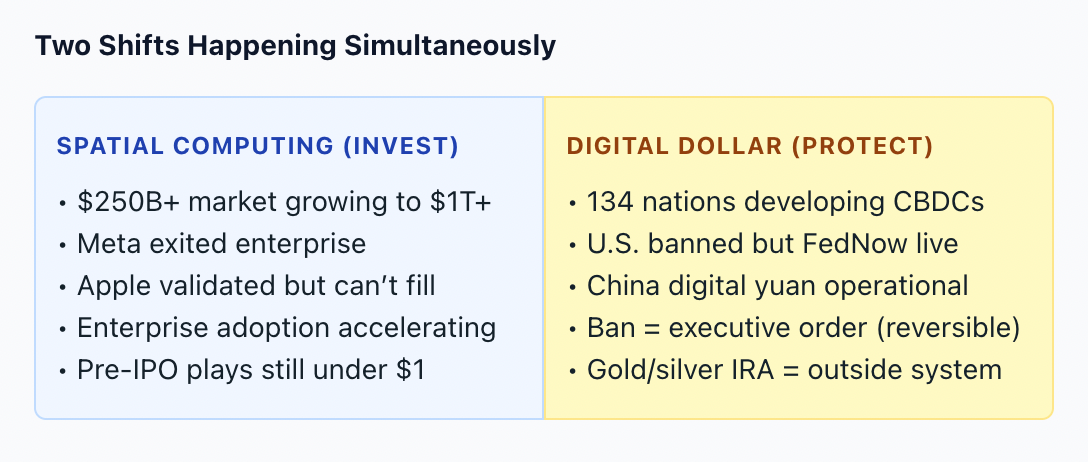
The two stories converge on a single principle: the Americans who will be strongest financially in the coming decade are the ones who position on the right side of both shifts simultaneously. The spatial computing market is being built right now — and the companies filling the enterprise gap that Meta abandoned and Apple cannot fill are available at pre-IPO pricing. The digital dollar infrastructure is being built globally — and the Americans who move a portion of their savings into assets that sit outside any government-controlled digital system (physical gold and silver held in IRAs) are positioned regardless of whether the ban holds or is reversed by a future administration.
China Did It. Europe’s Next. Now It’s America’s Turn.
China already did it. Europe just announced plans. And now the U.S. is rolling out its own version of a digital currency.
It started with Executive Order 14067, and now the Fed is testing a Digital Dollar that could end financial privacy in America forever.
What does that mean for you? Every purchase could be monitored. Every account could be frozen. Your freedom to spend could vanish overnight.
Now American savers are searching for safe, legal alternatives. That’s why this FREE Wealth Protection Guide from American Alternative Assets is so urgent.
It reveals how you can protect your IRA or 401(k) by legally moving into gold and silver—no taxes, no penalties.
The digital currency wave is coming. Make sure your savings are out of reach.
| Click here to claim your free guide → |
The Twist: The U.S. Banned the Digital Dollar but Built the Rails Anyway
The Congressional Research Service’s March 2026 report on CBDCs documented a contradiction at the heart of U.S. policy. Trump banned CBDC development. But FedNow — the real-time settlement infrastructure that could serve as the backbone for a future digital dollar — is live and growing. The Fed conducted Projects Hamilton (with MIT), Cedar, and Agora to build technical capacity. The infrastructure exists. The political will to deploy it does not — today. But executive orders are not permanent. Administrations change. And 134 countries building the global precedent makes an American reversal more likely with time, not less.
The Americans who understand this are not waiting for certainty. They are positioning now — moving a portion of their retirement savings into physical gold and silver held inside tax-advantaged IRAs, legally and without penalties. These assets sit entirely outside any digital payment infrastructure, government-controlled or otherwise. No executive order can freeze physical gold held in an IRS-approved depository. No CBDC rollout can monitor transactions that happen in the physical world. The protection is structural, not political. It works regardless of which party controls the White House.
Stop the Rollout: Protect Your Wealth from the Global Digital Push
China already did it. Europe just announced plans. 134 countries are building digital currencies. The U.S. banned it — but FedNow is live and the ban is one executive order from reversal. Protect your IRA or 401(k) by legally moving into gold and silver — no taxes, no penalties.
Bottom Line
Meta exited enterprise XR sales in February 2026 after spending $50 billion on the metaverse. Apple launched Vision Pro 2 at $2,499 with the M5 chip, but only 475,000 total units have shipped. IDC confirms enterprise adoption is outpacing consumer adoption, and McKinsey projects widespread enterprise XR adoption by 2026. But the hardware enterprises actually need — lightweight, affordable, productivity-first, replacing 5+ monitors — does not come from Apple or Meta. The market gap is documented, growing, and being filled by pre-IPO companies that most investors have never heard of.
By the time most investors hear about a company, it’s already public and priced like it. Immersed is different. It’s a private company operating at the intersection of AI, spatial computing, and productivity, with more than 1.5 million users already working inside its platform. Major technology partners include Meta, Intel, and Qualcomm. The company has also reserved a Nasdaq ticker ($IMRS) and is currently allowing new Pre-IPO investors in at $0.72 per share. Opportunities at this stage tend to disappear quickly once the broader market takes notice.
Meanwhile, 134 countries are actively developing Central Bank Digital Currencies. China’s digital yuan is operational with programmable features including expiration dates. It started with Executive Order 14067, and the Fed tested a Digital Dollar infrastructure that remains fully operational through FedNow. The U.S. banned CBDC development via Executive Order 14178 — but that ban is an executive order, not a constitutional amendment. Treasury Secretary Bessent called CBDC “anathema,” but the rails are already built. The digital currency wave is coming. Make sure your savings are out of reach.
The Americans positioned on the right side of both shifts — investing in the spatial computing companies filling the enterprise gap that Meta abandoned, and protecting their savings in physical gold and silver held outside any digital payment infrastructure — are the ones who will be strongest regardless of what happens next. The spatial computing market is $250 billion and growing to $1 trillion. The digital dollar infrastructure is live and expanding globally. Both create urgency. Both have available positioning. And both windows close on their own schedules.