
Business Idea: Corn Puff Production
Why small-town America could use a snack factory revival — and what it takes to make it work.

SHORT INTRO
Life in small-town America is about resilience and reinvention. Families watch food prices rise while wages remain flat, and many are searching even today for a second income stream. Not every business requires Silicon Valley money—sometimes opportunity hides in something as humble as a corn puff. With modest investment, discipline, and the right market fit, a small snack factory can become a reliable community employer.
Hey there!
You’re reading Deals Catchers — a smart newsletter about spotting opportunities and turning them into real income. Every issue brings you practical ideas, market insights, and strategies that help everyday people build income streams, side hustles, and companies that actually work. Simple, actionable, and straight to the point. Let’s dive in.
— Team Deals Catchers
MAIN PART
Market Overview
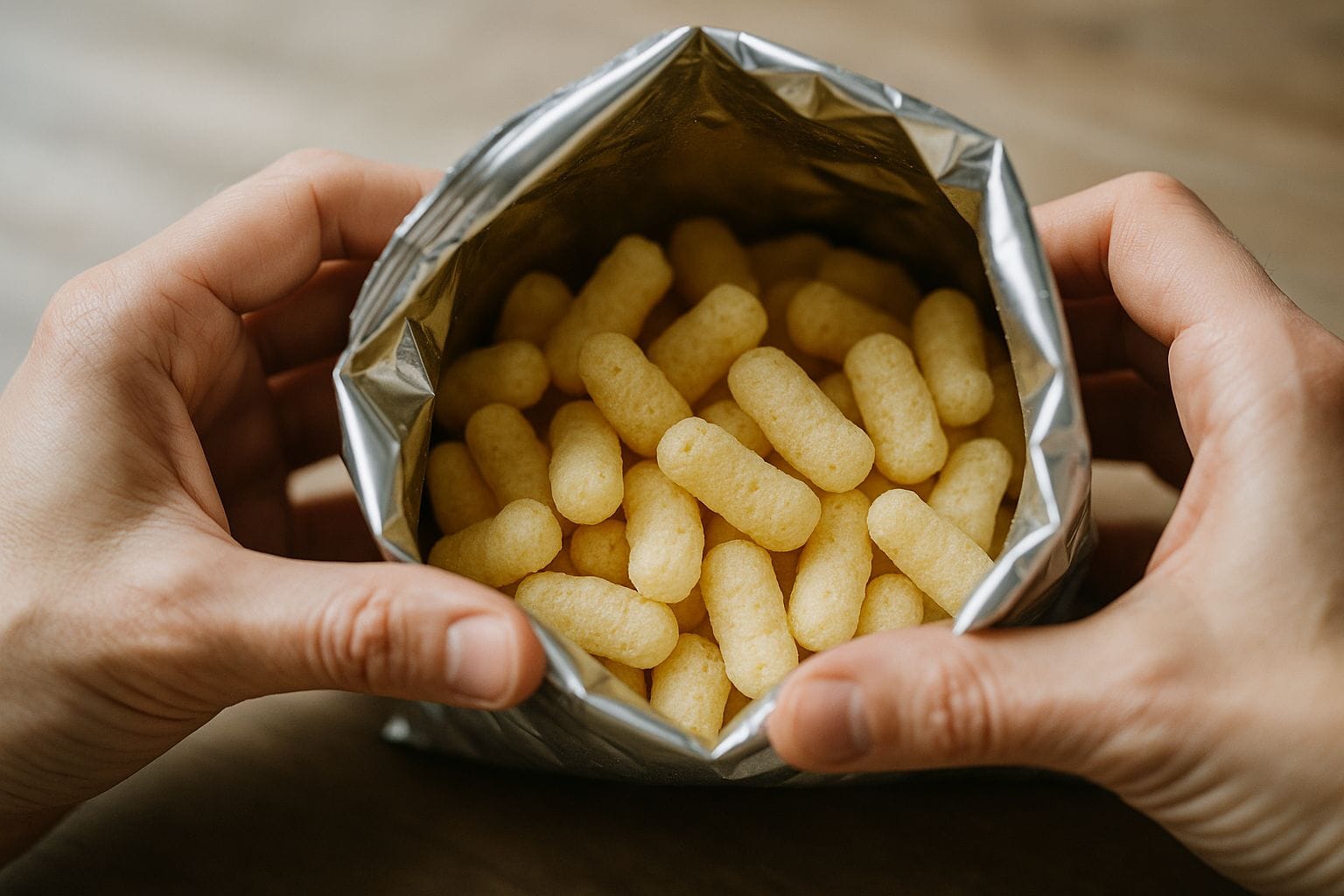
Corn snacks — the airy, crunchy “puffs” many of us grew up eating — aren’t daily staples like bread or milk. Still, U.S. demand for packaged snacks has grown steadily. Kids love them and adults buy them for convenience. While large players dominate shelf space, regional brands and artisanal producers can capture local loyalty by emphasizing quality, flavor variety, and local sourcing.
Startup Costs & Facility Setup
A micro-production facility in the U.S. typically requires a meaningful, but not prohibitive, upfront investment. Expect $150,000–$250,000 total to cover a small warehouse lease, extrusion equipment, mixers, packaging machines, initial permits, and a cushion for working capital. Lease rates vary widely by region; suburban warehouse space often ranges $3,000–$5,000/month. For a modest line, plan on 1,500–2,500 sq ft (production + small storage + basic office).
TODAY’S EXAMPLE
Herr’s Snacks
A long-running, family-owned snack company based in Pennsylvania. Herr’s began small and grew into a regional powerhouse with a wide snack portfolio, including corn-based products. Their evolution shows how consistent product quality, local relationships, and steady reinvestment can scale a regional snack maker into a trusted brand.
👉 More about them here.
Production Process & Equipment
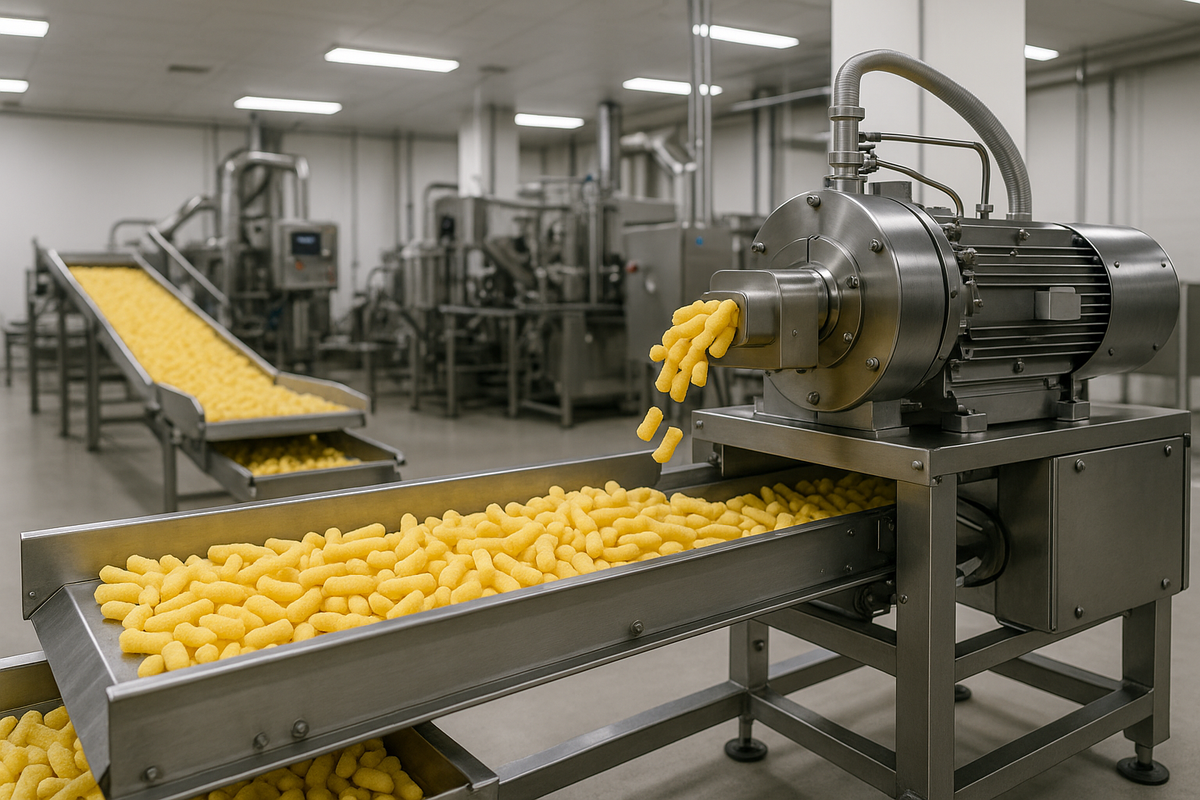
The core of production is the extruder: cornmeal is mixed, heated under pressure, extruded into puff shapes, dried, coated with flavoring, and packaged. Typical line equipment includes: mixer, mill for powders, dosing systems, oil applicator, coating drum (for dusting sugar or flavors), drying units, and an automated packer. Choose an extruder capacity based on your sales plan — 30 kg/hr for a micro-line up to 250 kg/hr for regional ambitions.
Ingredients & Formulation
A basic recipe for one metric ton uses roughly: 720 kg cornmeal, 130 kg vegetable oil, 130 kg powdered sugar (or alternative seasonings), and small amounts of salt and flavorings. Product quality hinges on consistent cornmeal and precise extrusion parameters — that’s why a food technologist or experienced operator is essential.
Staffing & Operations
A small line can run with a compact team: three extruder operators working shifts, a production technologist, a mechanic/maintenance person, packers, warehouse staff, and a sales/marketing lead. Outsource bookkeeping and security contracts as needed. Payroll depends on local wage levels — budget conservatively for competitive hourly pay and benefits to retain skilled operators.
Distribution & Sales Strategy
Large supermarket chains charge slotting fees and favor known brands. For a new producer, prioritize local routes: independent grocers, convenience stores, regional distributors, farmer’s markets, and foodservice. Direct-to-consumer via Amazon or Shopify can supplement retail. Invest in sampling events and local marketing — targeted spend of $2k–$3k/month on sampling, local ads, and POS materials often accelerates store pickups.
Financials & Margins
Raw ingredient costs for a ton of product may be $1,200–$1,500, while retail value can exceed $5,000 — leaving room for packaging, freight, payroll, and margin. The key constraint for small producers is utilization: machines and overhead need steady runs. A small plant running near capacity can reach breakeven in 12–18 months; conservative planning assumes up to 18 months in case of slow initial uptake.
Regulatory & Tax Considerations
U.S. food producers must register with the FDA (where applicable), comply with local health department rules, implement HACCP/food-safety systems, and carry product liability insurance. Choose a legal structure (LLC or S-Corp commonly) to protect personal assets; tax treatment differs by choice — consult a CPA to model pass-through vs. corporate tax effects. Budget for inspections, certification costs, and insurance premiums as part of operating expenses.
Risks & Growth Paths
Risks include commodity price swings (corn/oil), seasonal demand fluctuations, and distribution barriers. Growth options: add flavor SKUs, launch healthy/organic variants, scale capacity (additional extruders), or co-pack for other brands. Expanding into larger snack categories or direct retail branding increases revenue potential beyond a small local footprint.
“In small towns, big dreams often hide in simple things. A bag of corn puffs may not look like much — until you realize it could employ ten people and feed a whole community’s growth.”
CLOSING THOUGHTS
Launching a corn puff production line isn’t about competing with multinationals — it’s about spotting a niche, serving your community, and building a steady, tangible business. For entrepreneurs in small-town America, it represents both an income stream and a way to create local jobs. If you’ve ever dreamed of turning a simple idea into lasting value, this could be the time to take the first step.