
Amazon Is Replacing 600,000 Jobs With Robots and Spending $200 Billion to Do It. Here’s What the Verified Numbers Actually Say

Amazon’s Robot Announcement Just Shocked Wall Street

Amazon just made a shocking announcement. They’re deploying a new generation of AI-powered robots — machines that could replace 10 million jobs and pump $1.2 trillion into the U.S. economy.
According to Morgan Stanley, automation is about to trigger the biggest capital shift since the Internet. And buried beneath the headlines is one tiny $7 company — supplying the tech Amazon and Nvidia both desperately need to finish their “trillion-dollar robot.”
When this goes mainstream, the gains could be historic. Timing matters. The rollout begins this year.
| Click here to see the details before this story hits CNBC → |
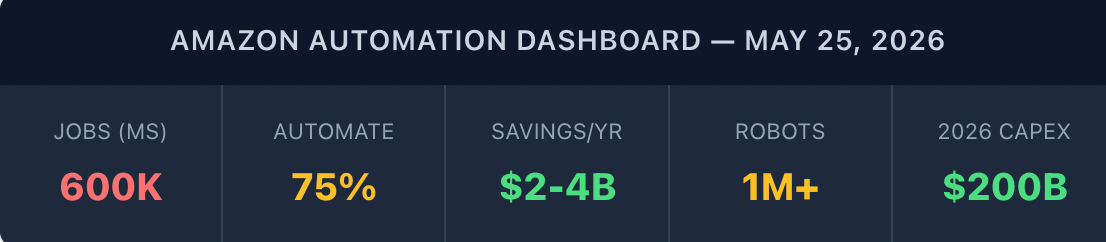
Amazon’s automation push is real, and the documented numbers are large enough on their own. According to internal strategy documents reported by the New York Times in October 2025, Amazon plans to replace roughly 600,000 jobs with robots in the coming years and is working toward automating 75% of its operations. Morgan Stanley analyst Brian Nowak estimated the shift could translate to $2 billion to $4 billion in annual recurring savings by 2027. CEO Andy Jassy said in July 2025 that Amazon already runs more than 1 million robots across its facilities.
What this means for your retirement accounts: The scale of the capital behind this is the real story. Amazon’s projected capital expenditure for 2026 is around $200 billion, with a large share going to AI and robotics. Its most advanced robotic warehouse, in Shreveport, Louisiana, reportedly cut fulfillment costs by about 25%, and the company plans roughly 40 next-generation robotic warehouses by the end of 2027. This is one of the largest corporate capital reallocations underway right now — and where that much money flows, valuations move with it.
An honest counterpoint: The story is not a clean one-way tidal wave. The same Morgan Stanley that modeled the savings also argued in February 2026 that AI will change job types and create new roles, not simply erase them. And Amazon’s own rollout has been uneven: it paused its Blue Jay robot project in January 2026 and cut about 100 robotics-division staff in March. The direction is real; the timeline and the magnitude are genuinely contested — even among the analysts most often quoted.
The louder pitches take this real trend and attach much bigger numbers to it. Here is today’s, in the advertiser’s own words — with the caution that its figures go well beyond what the underlying Morgan Stanley reporting actually states.
[AD] Amazon just made a shocking announcement. They’re deploying a new generation of AI-powered robots — machines that could replace 10 million jobs and pump $1.2 trillion into the U.S. economy. According to Morgan Stanley, automation is about to trigger the biggest capital shift since the Internet. And buried beneath the headlines is one tiny $7 company — supplying the tech Amazon and Nvidia both desperately need to finish their “trillion-dollar robot.” The rollout begins this year. Click here to see the details before this story hits CNBC.
Separate the Verified Numbers From the Marketing Numbers. The Gap Is the Whole Point.
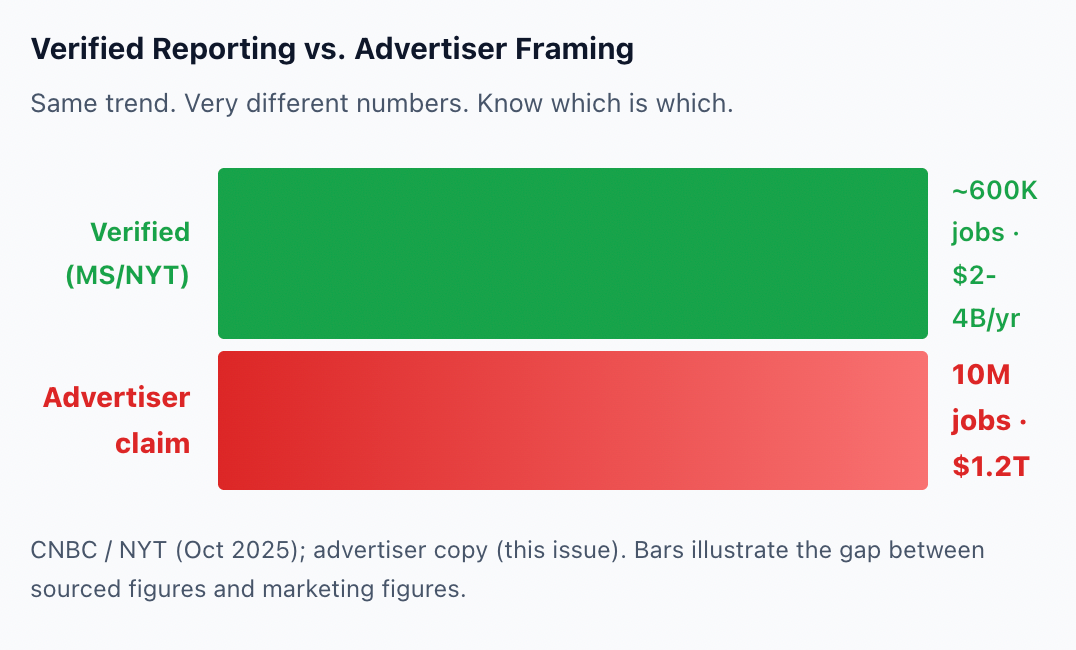
What this means for your portfolio: None of this means there’s no opportunity in the automation buildout — there clearly is real capital moving. It means the discipline is to anchor on what’s verifiable and treat the eye-popping figures as the advertiser’s, not as established fact. A specific “$7 company” supplying both Amazon and Nvidia is the advertiser’s claim to make and yours to investigate before believing. The trend is real; the specific stock pick and its return potential are marketing until you’ve verified them yourself.
When Capital Shifts This Fast, the Protection Is Knowing How to Manage Risk — Not Just Chasing the Winner
Here is the part the robot headlines skip. Even if the automation thesis is exactly right, the path will be volatile — uneven rollouts, paused projects, big winners and big losers along the way. For most investors near or in retirement, the durable edge is not picking the one perfect supplier stock. It is knowing how to structure a position so that a wrong guess doesn’t do lasting damage to the account. That is a learnable skill, and it matters more in fast-moving themes like this one than in any single ticker.

Why this matters if you’re retired or near retirement: Theme-chasing without a risk framework is how people get hurt in markets like this. The investors who last are the ones who understand position sizing, defined-risk setups, and keeping a single bad trade small — the unglamorous mechanics that protect capital when a hot story turns volatile. If you’re going to participate in fast-moving themes at all, learning those mechanics first is the protection that actually compounds. On that note, here is a free educational resource worth a look.
Copy and Paste Options Trades (Free Guide Inside)

Most options books teach theory. This one shows you the trades. Step-by-step examples. Real setups. The exact moves a 50-year market veteran uses to keep things simple — and keep his account protected.
You can follow along in your own brokerage account. Or just read it for education. Either way, it’s free today (normally $29.97).
| Get Your Copy Now → |
One Real Trend, Two Very Different Asks: Verify the Pitch, and Build the Skill to Manage the Risk
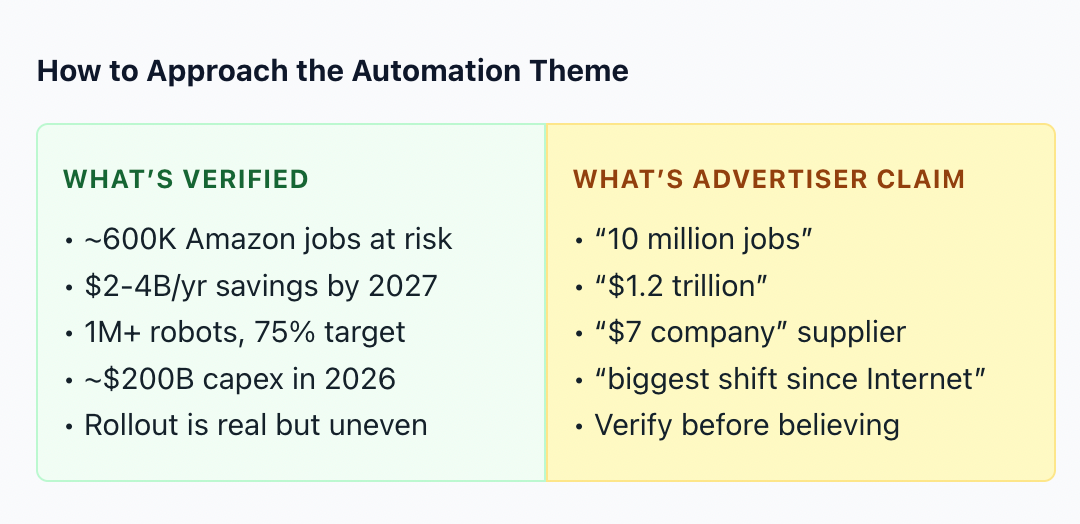
What this means for your portfolio: Both of today’s items point back to the same discipline. The automation pitch asks you to act on a specific stock; the verified facts say the trend is real but the headline numbers are inflated, so investigate before you commit. The options guide asks you to build a skill; that one is low-cost and, used for education, genuinely useful — because knowing how to size and protect a position is what keeps a volatile theme from doing real damage. Forget the hot picks — protect what you’ve already built. The trend will still be here after you’ve done the homework.
Copy and Paste Options Trades (Free Guide Inside)
Most options books teach theory. This one shows you the trades — step-by-step examples, real setups, the exact moves a 50-year market veteran uses to keep things simple and keep his account protected. Follow along in your own account, or just read it for education. Free today (normally $29.97).ost people never invest before the IPO. RYSE is changing that. Reserved Nasdaq ticker $RYSS, $15M+ in revenue, 4,000+ existing investors, 80,000+ devices in homes, 100+ Best Buy locations, 10 granted patents, and a non-dilutive $3.2M USD cleantech grant.
Bottom Line
Amazon’s automation drive is real and large. Internal strategy documents reported by the New York Times show a plan to replace roughly 600,000 jobs with robots and automate 75% of operations, while Morgan Stanley estimates $2 billion to $4 billion in annual savings by 2027. Amazon already runs more than 1 million robots, plans about 40 next-generation robotic warehouses by 2027, and is set to spend roughly $200 billion in capital in 2026. That is one of the largest capital reallocations in corporate America right now. It is also uneven: the company paused its Blue Jay robot in January and cut robotics staff in March, and Morgan Stanley itself argues AI will create new roles as well as remove old ones.
The first pitch built on that trend reaches further than the reporting does. It frames Amazon’s push as machines that could replace 10 million jobs and pump $1.2 trillion into the U.S. economy, calls it the biggest capital shift since the Internet, and points to one tiny $7 company supplying the tech Amazon and Nvidia both need to finish their “trillion-dollar robot.” Those figures are the advertiser’s, and they run well past the ~600,000 jobs and $2-4 billion in savings that Morgan Stanley and the Times actually documented. The trend is verifiable; the headline numbers and the specific stock are claims to investigate before acting on.
The second item asks for something different and lower-risk: building a skill. Most options books teach theory; this free guide shows step-by-step setups a 50-year market veteran uses to keep things simple and keep his account protected. You can follow along in your own account or just read it for education, and it’s free today (normally $29.97). In a theme as volatile as automation, knowing how to size a position and define your risk is worth more than any single hot ticker — because the mechanics of protecting capital are what let you participate without getting hurt.
One real trend, two very different asks. The automation buildout is happening, the capital behind it is enormous, and the verified numbers are striking enough without inflation. The discipline is to separate what’s documented from what’s marketed, to investigate any specific stock pick before believing the return story, and to build the risk-management skill that keeps a volatile theme from doing lasting damage. Forget the hot picks — protect what you’ve already built. Because the best trade you’ll ever make is the loss you never took.