
The Corporate Cortés Moment


While everyone is watching the consumer AI chatbots and the endless parade of Silicon Valley hype, the real story is the brutal, irreversible corporate restructuring happening in the shadows. The mainstream media is entirely focused on the software—the shiny digital toys. But if you look at the physical infrastructure, the reality is a lot darker and much more profitable for those who know where to look.
Moody's Analytics Chief Economist Mark Zandi just said the quiet part out loud. We are rapidly approaching a "Cortés moment" in corporate AI adoption. You remember Hernán Cortés, right? He burned his ships when he reached the New World so his men couldn't retreat. That's exactly what Fortune 500 boards are doing right now. They are burning the ships. There is no turning back.
Zandi warned that artificial intelligence might just be providing air cover for massive, less honorable layoffs. But here's the kicker: it doesn't even matter if it's an excuse. The market is rewarding the bloodletting. Look at Block. Their stock price surged after they slashed headcount, sending a massive, flashing signal to every other CEO on Wall Street. Fire your people, blame it on "AI efficiencies," and watch your equity pop. They will be rewarded if they follow suit.
The mainstream narrative says AI is a tool to empower workers. It's a blunt instrument to reset corporate balance sheets, and the smart money is already positioning for the fallout.
The Fragile Job Market Illusion
Let's talk about the jobs data, because the narrative they're feeding you is a complete illusion. Last month, the Bureau of Labor Statistics told us the U.S. economy added 130,000 jobs in January. The market expected 65,000. Wall Street popped the champagne, and the retail crowd bought the dip, convinced the economy is bulletproof.
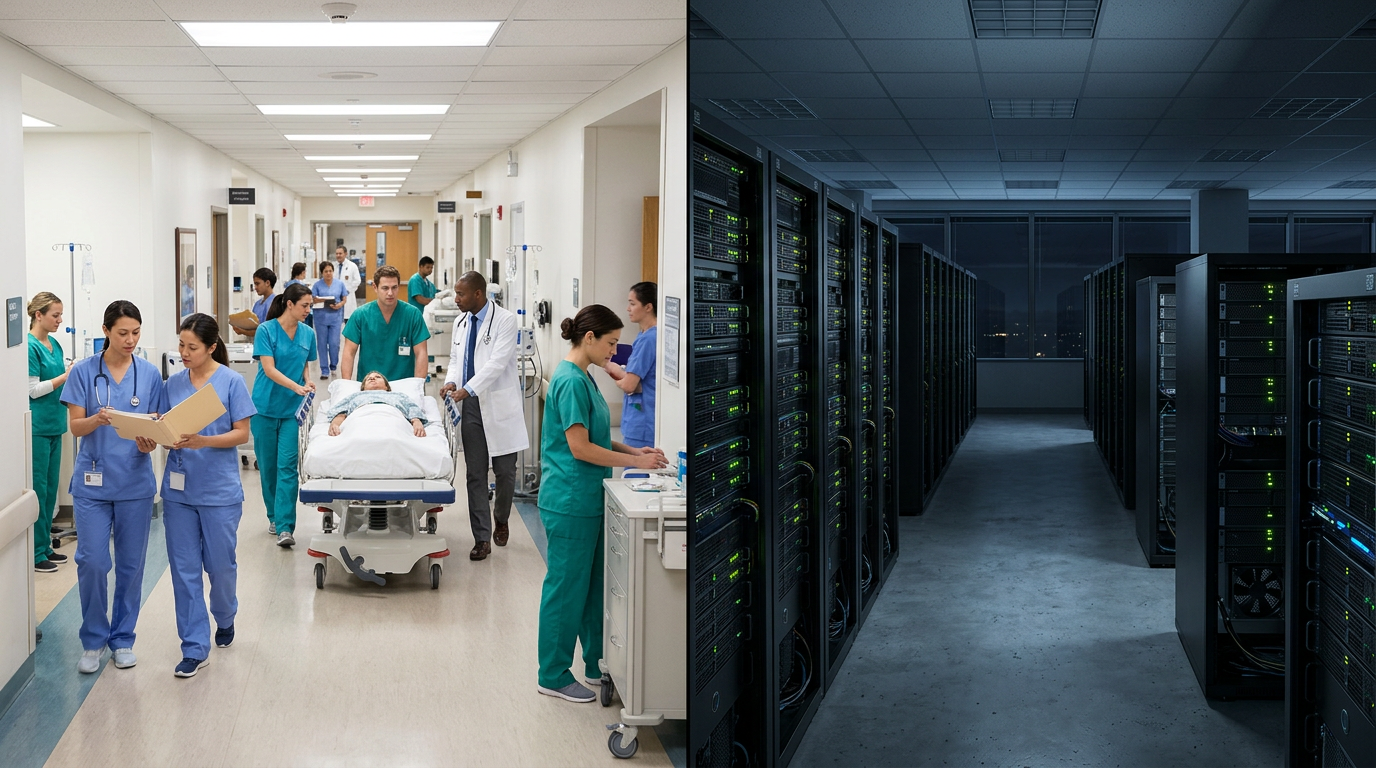
If you dig into the actual numbers, the foundation is completely rotten. Zandi called it out directly: the job market remains "fragile and highly vulnerable." Why? Because nearly all of the job growth in January—and frankly, over the past year—has been isolated in a single sector: healthcare.
Without healthcare, the U.S. economy would have actually *lost* a bunch of jobs over the last twelve months. This is exactly what I mean by the asymmetric edge. The smart money isn't reading the headline; they're reading the revisions. And the revisions are terrifying.
Once the BLS factored in their downward adjustments, the reality is that the U.S. has seen virtually zero job growth since last April. The BLS just quietly admitted that U.S. employers only added 181,000 jobs last year. That is a massive, violent downward revision from their previous estimate of 584,000 jobs. They missed by over 400,000 jobs, and the media barely blinked.
"Soak in the January job gains," Zandi warned on X. "I suspect there won't be many more months with job gains like this in 2026."
And here's the truly terrifying part: this jobs collapse is happening *before* artificial intelligence has even meaningfully impacted productivity. The AI job slaughter is, as Zandi puts it, "dead ahead."
We are sitting on a powder keg. White-collar workers are about to get gutted by this Cortés moment, and the government's own data is already showing the cracks. If you are investing in consumer-facing retail stocks or banking on a strong middle class to drive earnings in 2026, you are going to get slaughtered. The consumer is broke, the jobs are a mirage propped up by hospital hiring, and the corporate sector is preparing to replace middle management with server racks.
This is the pivot. You cannot invest in the broad market when the underlying consumer base is being systematically hollowed out by a one-two punch of stealth job losses and incoming AI automation. When Zandi says the impact of AI on jobs could soon begin to show up in the data, he isn't making a wild guess. He's looking at the capital expenditures. Companies are spending billions on physical AI—sensors, actuators, enterprise-grade server clusters—to prepare for a future where they simply don't need humans sitting in cubicles. They are building the plumbing of the future economy, and they are funding it by firing you.

The $21 Trillion Trap and The Golden Backdoor
But here is where the institutional narrative completely falls apart. Wall Street wants you to think this AI transition is a smooth, inevitable march to infinite profitability. It's not. It's an infrastructure arms race, and it is being fueled by a dangerous mountain of debt.
Moody's just issued a brutal warning about AI over-investment and rising debt, cautioning that the potential risks to credit markets extend far beyond just the equity investors.
Everyone is so obsessed with the stock prices of the big AI darlings that they are completely ignoring the credit markets. The credit markets are the actual plumbing of the financial system. If the plumbing backs up, the whole house floods. Right now, companies are taking on massive leverage to buy the hardware required for this Cortés moment. They are terrified of being left behind, so they are over-investing. They are buying chips, data center space, and automation robotics on credit, hoping the productivity gains will pay off the debt.
But the math isn't mathing. Look at the recent AI analysis from March 5th. Out of 44 analysts, we just saw a major institutional downgrade in the sector—moving from a Buy to Neutral, slashing the price target from $732 down to $676. The consensus is cracking. While 37 analysts still cling to a "Buy" rating out of pure inertia, the low targets are dropping to $655.15. Why? Because the upfront capital required to build this physical AI infrastructure is astronomical, and the timeline for a return on investment is stretching out.
Now, pour gasoline on this fragile debt fire: tariffs.
While everyone is watching the Federal Reserve, the real macroeconomic wrecking ball is global trade policy. Moody's explicitly warned that the ripple effects from tariffs can have devastating consequences. We aren't just talking about a minor earnings miss. We are talking about increased costs for businesses trying to build out their AI server farms, higher prices for consumers who are already broke, and growing financial distress across the markets.
When you slap tariffs on the raw materials, semiconductors, and specialized hardware required to build out industrial automation, the cost of the "Cortés moment" skyrockets. Companies that borrowed billions at floating rates to fund their AI transition are suddenly getting squeezed by supply chain costs.
This is how credit events happen. The mainstream media is distracting you with chatbot updates, while the smart money is quietly securing their capital. The corporate debt taken on to fund this AI revolution is colliding head-on with tariff-induced inflation. It is a slow-motion train wreck in the credit markets, and when it snaps, the consumer won't be the only one hurting. Corporate balance sheets are going to bleed.
You have to understand how these macro shifts work. The 54-Year Cycle dictates that massive technological leaps always come with a corresponding debt crisis. The over-investment phase always leads to a washout. The companies that survive won't be the ones with the flashiest software; they will be the ones that own the hard assets, the physical plumbing, and the un-cancellable infrastructure contracts.
Front-Running the Physical Infrastructure
So, how do we play this? If the labor market is a mirage, consumer spending is doomed, and the AI software space is a debt-fueled bubble waiting to pop, where does the smart money go?
You step away from the public equity slaughterhouse. You look for the backdoors.
While everyone is watching the public markets deal with the fallout of tariff ripple effects and credit distress, the real story is the institutional capital flowing into the suppliers. The asymmetric opportunity isn't in buying the overvalued tech giants that just got downgraded to $676. The real trade is in the market structure itself—specifically, the private equity loopholes and pre-IPO opportunities that retail investors usually ignore.
I'm talking about the hard tech companies manufacturing the physical AI sensors, the industrial automation actuators, and the satellite networks like SpaceX that operate completely outside of the traditional telecom grid. These are the companies providing the picks and shovels for the Cortés moment. They don't care if a software company defaults on its debt, because their contracts are locked in at the infrastructure level.
By utilizing Reg A+ exemptions and other private market structures, smart money is securing equity in these physical asset companies before they ever hit the public exchanges. They are front-running the inevitable shift from digital hype to physical automation. You have to stop thinking like a retail trader trying to perfectly time a stock chart. You need to think like an infrastructure architect. The money has already been printed, the ships have already been burned, and the transition is locked in.
The Final Takeaway
The window to position yourself ahead of this macroeconomic reset is closing rapidly. Zandi told you the truth: the job losses are dead ahead, and there won't be many more months of upbeat data to hide behind.
When the BLS stops being able to use healthcare hiring to mask the collapse of the white-collar economy, the mainstream panic will set in. When the tariffs fully hit the supply chains and the credit markets buckle under the weight of AI over-investment, the liquidity will dry up.
You don't want to be holding the bag on consumer brands or over-hyped software stocks when that happens. You want to be holding the physical infrastructure. You want to be positioned in the pre-IPO hard tech that powers the global supply chain, insulated from the public market volatility.
Stop letting the financial media treat you like a child. The data is right in front of you. The 181,000 revised job numbers. The credit downgrades. The explicit warnings from Moody's about financial distress. The pieces are all on the board.
Your move is to secure the backdoors into the assets that actually matter. Look past the software. Buy the plumbing. Because when the dust settles on this corporate Cortés moment, the only thing left standing will be the infrastructure. Get your capital out of the line of fire. Start looking at the private equity structures and the hard asset suppliers that the institutions are quietly accumulating. The big money has already made its bet. Now it's time to make yours.