The $382 Billion Bomb Shelter: What the Smart Money is Actually Doing

While everyone on the mainstream networks is breathlessly watching the latest tech rally and chasing momentum stocks, the real story is happening in the quiet, boring SEC filings out of Omaha. The "plumbing" of the market is flashing red, and the smartest capital allocator in history is quietly evacuating the premises.
Warren Buffett is hoarding cash. Not just a little cash to smooth out operations. He is sitting on a staggering $382 billion war chest. It is the largest pile of cash held by any company in the world.
This isn't an accident. It’s a deliberate, logic-based signal. They want you to believe the market is a perpetual motion machine. But the smart money—the money that actually understands market structure, monetary policy, and historical cycles—is walking out the back door. Here is what they are actually doing, and how you can position yourself before the retail crowd realizes they’ve been left holding the bag.
Buffett’s 13-Quarter Selling Streak and Record Cash
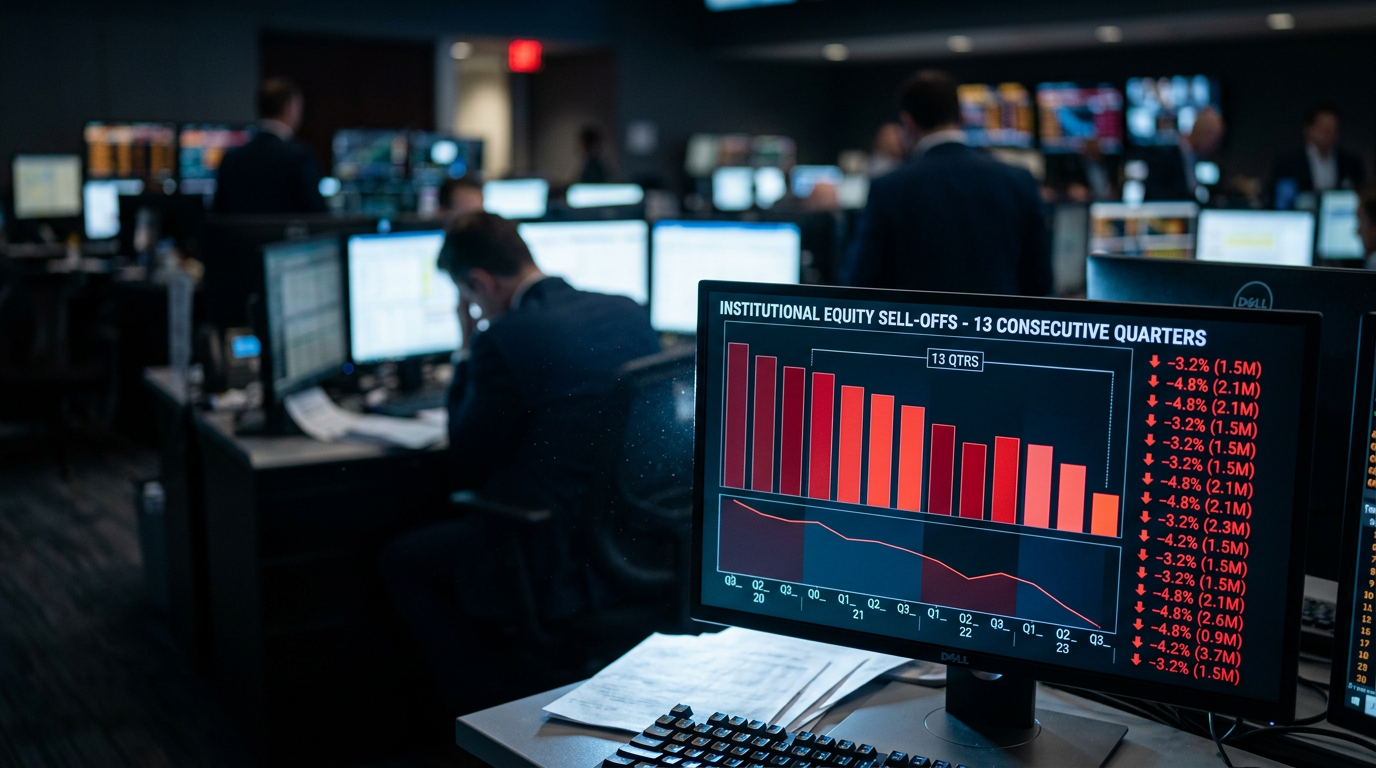
Let’s look at the raw numbers, because the math doesn't lie. Buffett has been a net seller of stocks for 13 consecutive quarters.
Think about that for a second. That is more than three straight years of selling more than he’s buying. It’s the longest streak of its kind in his entire career. He isn't just trimming around the edges; he is taking a meat cleaver to his most famous positions.
His stake in Apple, once valued at close to $200 billion, has been aggressively slashed down to roughly $50 billion. He has gutted his position in Bank of America, a stock he held and championed for years. Over this stretch, Berkshire Hathaway’s cash and short-term treasury position has swelled from roughly $100 billion to somewhere between $373 billion and $382 billion, depending on the exact daily treasury yields.
Cash now makes up more than 30% of the company’s total assets. That’s the highest allocation in at least three decades.
When the guy who famously said to "be greedy when others are fearful" starts raising cash at a pace that dwarfs anything in his company's history, you need to pay attention. He’s not out there screaming about a crash on cable news. He’s just quietly telling you, through his actions, that the current market valuations are a joke. He simply isn't finding enough things worth buying at today’s prices.
Succession, Earnings Drop, and “Dry Powder”
This massive liquidation is happening right in the middle of a massive corporate transition. In May 2025, Buffett announced that Greg Abel would take over as CEO in 2026. We are in that window right now.
And the transition isn't exactly a smooth ride for the stock. Berkshire’s latest earnings report didn't impress the Wall Street analysts. In the fourth quarter, operating profit plummeted by 30%, dropping to $10.2 billion. The market, in its usual short-term panic, reacted by dropping Berkshire's Class A and B shares by as much as 5.3%. It was the most significant decline since the succession announcement.
But if you’re a serious investor, you don't give a damn about a quarterly earnings miss at a conglomerate this size. The real narrative here is capital allocation.
Greg Abel recently sent a blunt message to the market, calling this $370 billion-plus pile of cash exactly what it is: "dry powder." He made it unequivocal that the company's "fortress-like balance sheet" is completely intentional.
They are looking at the Shiller CAPE ratio—which measures market valuation—and seeing it sit at levels we haven't seen since the dot-com bubble. When valuations are that bloated, the margin of safety disappears. So, they wait. They have the luxury of operating businesses like Geico and BNSF Railway that generate billions in cash every quarter. They can afford to sit on their hands. You probably can't.
Why Hold So Much Cash—and What Comes Next

Back in 2008, Buffett himself called cash a "terrible long-term asset." And he was right. When you park money in short-term treasuries or savings accounts, inflation is quietly eating away at its purchasing power. It is a guaranteed loss in real terms.
So why would the smartest guys in the room willingly take a guaranteed loss on nearly $400 billion?
Because the alternative is worse. Losing 3% or 4% to inflation is painful, but it’s a hell of a lot better than losing 40% in a broad market correction because you were stupid enough to buy overpriced tech stocks at the top of a 54-year cycle.
But this cash hoard isn't a permanent strategy. It is a waiting room. The smart money is looking for the "plumbing" trades. They are looking for the physical infrastructure—the hard assets, the industrial automation, the physical AI sensors, and yes, the gold developers—that will power the next phase of the economy. When the market narrative finally breaks, and the tech momentum fatigues, that $382 billion is going to be deployed violently into assets that are trading at a deep discount to their intrinsic value.
If you watch Berkshire's cash flow in the coming quarters, you'll see the signal. A decisive drop in that cash balance means they found the bottom.
What This Means for Non-Berkshire Investors
There is a massive disconnect right now between what institutional money is doing and what retail investors are being told to do.
Retirees are being spoon-fed the idea that they need to stay fully invested in a 60/40 portfolio, riding the wave of whatever growth stocks are currently leading the S&P 500. But the distinction between Buffett’s situation and that of a typical retiree matters a great deal.
Berkshire is a machine. It generates massive cash flow regardless of what the stock market does. They can park $373 billion and wait years for the right pitch. If you are a retiree, or just an active investor trying to protect your wealth, you don't have infinite time.
Look back at 2021. Berkshire's cash allocations hit near-record levels right before the market peaked and then slid 20% in 2022. Buffett didn't predict the crash with a crystal ball. He just looked at the math, refused to deploy capital at elevated valuations, and kept his powder dry. When everyone else was panic-selling into the decline, he had the cash to buy the bottom.
If the most successful investor of the last century decides the best use of his money is to build a bunker, you need to ask yourself if your portfolio is built for the fallout.
Positioning for the Next Phase: Hard-Asset “Plumbing” Trades
The mainstream market in 2026 is a trap. The valuations are stretched, the momentum is entirely dependent on a handful of AI narratives, and the underlying infrastructure of the economy is being ignored.
This is exactly where asymmetric opportunities are born. You don't find an edge by buying the same overvalued consumer brands as everyone else. You find it by looking for the loopholes—the Reg A+ private equity deals, the pre-IPO infrastructure plays, and the hard assets that the institutions are quietly accumulating.
You need to position yourself where the capital is going to flow *next*, not where it has already been. Wait for the market to correct before you figure out your defensive strategy. And definitely don't wait for the 13F filings to drop months after the smart money has already made their move.
The cash is piling up. The transition is happening. The smart money is already moving into the physical assets that will survive the reset. Look at the math on those gold developers mentioned above. That’s the kind of logic-based, high-ROI setup that ignores the mainstream noise. Get your capital out of the overvalued hype, find the plumbing trades, and build your own fortress before the dry powder ignites.