The $24 Trillion Rule Change: How Wall Street is Rigging the SpaceX IPO

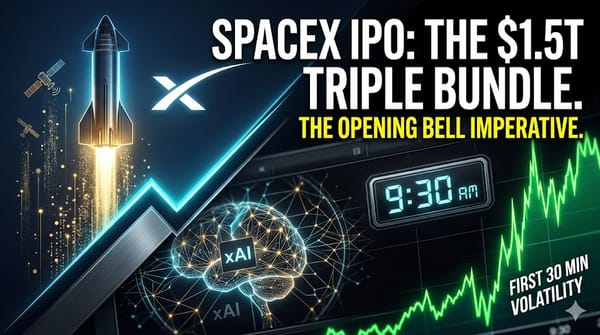
Mainstream financial news is feeding you retail hype. They talk about Elon Musk and rocket launches. They hype up the June 2026 timeline for the SpaceX IPO. They sell the Mars narrative and the sheer spectacle of it all.
It’s a great story. It’s also a complete distraction.
The retail crowd obsesses over grabbing shares on opening day. But the real story is the infrastructure. It is happening quietly in the back rooms of S&P and Nasdaq.
Here is the reality of modern markets. Retail hype doesn't drive stock prices anymore. Passive, mandated capital flows drive them. Index funds drive them. And right now, index providers are rewriting the rules for a single company.
S&P Global wants to fast-track SpaceX into the S&P 500. Why does this matter? Because roughly $24 trillion is tied to the S&P 500. When a company joins that index, every passive fund must buy the stock. It’s called "forced buying." It is the most powerful force in finance.
The mainstream wants you to focus on rockets. I want you to focus on the plumbing. You must understand this $24 trillion tidal wave. It is the only way to find an edge before the trap springs on dumb money.
The "Fast Entry" Loophole and the $1.75 Trillion Problem
Look, let’s get into why this is happening.
Under current rules, a company must meet strict tests for the S&P 500. They must be based in the U.S. They need a market cap of at least $22.7 billion. Crucially, they must be public for at least 12 months.
That 12-month rule protects the index from IPO swings. It is a cooling-off period. But SpaceX isn’t a normal company. The old rules are breaking under its sheer mass.
Reports say SpaceX wants a $1.75 trillion valuation for its debut. Let that sink in. At $1.75 trillion, SpaceX becomes the sixth-largest public company in America.
What if the S&P 500 and Nasdaq force SpaceX to wait 12 months? Those indexes will suffer massive tracking errors. You can't claim to track the U.S. economy while ignoring its sixth-largest company. The index providers need SpaceX way more than SpaceX needs them.
So, what happens when rules don't fit reality? Smart money changes the rules.
Nasdaq just proposed a "Fast Entry" rule. This trick cuts the one-year wait to under 30 days. It applies to any new megacap company in the top 40. S&P is working to do the exact same thing.
They are building a custom backdoor for SpaceX. Future giants like OpenAI will use it too. If this passes, billions in forced buying will hit the market within weeks. Index funds won't care about the price. They have to buy to stay aligned.
If you buy on day one, you just provide exit liquidity for institutions. The real play isn't blindly buying the IPO. It's knowing the market structure that guarantees demand.
The "Fast Entry" Loophole and the $1.75 Trillion Problem

When I see a massive shift in market plumbing, I look past the asset. I look at the toll collectors. I watch the companies that own the market infrastructure.
S&P is tweaking rules to capture SpaceX's IPO volume. Meanwhile, its parent company, S&P Global (SPGI), is arming up. They aren't just an index provider. They are a data cartel. They know these new megacap listings require next-level analytics.
Just hours ago, S&P Global bought Drift AI. It is an AI-powered Excel tool. They are plugging it right into their S&P Capital IQ Pro platform. They also rolled out ProntoNLP analytics. And they added over 4 million securities to their fixed-income datasets.
Why does a giant like S&P care about an AI Excel plugin? Because financial modeling is getting complex. SpaceX makes money from Starlink, defense contracts, and commercial launches all at once. The old static models just break down.
Wall Street analysts set the price targets that move markets. They rely on S&P Capital IQ. By buying Drift AI, S&P Global puts AI directly into their workflow. They are making their platform faster and utterly essential.
Some analysts recently downgraded SPGI. They claim AI makes the data industry too competitive. But look at S&P's actual moves. They aren't retreating. They are buying the AI tools that threaten them. They are building a wider moat. They are securing their spot as the ultimate tollbooth for data.
We have $24 trillion in passive money sloshing around. The people selling maps and shovels are printing cash. S&P Global is making sure they own the map.
The Death of Fluff and the Flight to Hard Tech
This shift toward hard infrastructure isn't happening in a vacuum. It is part of a massive capital rotation. Money is leaving theoretical promises. It is moving into tangible, measurable reality.
Do you want proof of this rotation? Look past the stock market. Look at the debt markets. The bond market is the ultimate truth-teller. Equity guys sell dreams. Bond guys price risk.
Right now, the global sustainable bond market is facing a brutal reality check. It was the poster child for the zero-interest ESG hype cycle. S&P Global Ratings just released a new outlook. They expect sustainable bond issuance to completely flatline. It will stall between $800 billion and $900 billion in 2026.
Patrice Cochelin is a director at S&P. He said the quiet part out loud. The era of rapid expansion is over. Rising debt and shifting policies are crushing issuers. The market flat-out refuses to fund fluff anymore.
Analysts are making it clear. The market now demands real, measurable outcomes over mere growth. You can't just slap a "green" label on a slide deck anymore. The days of raising a billion dollars at 1% interest are dead.
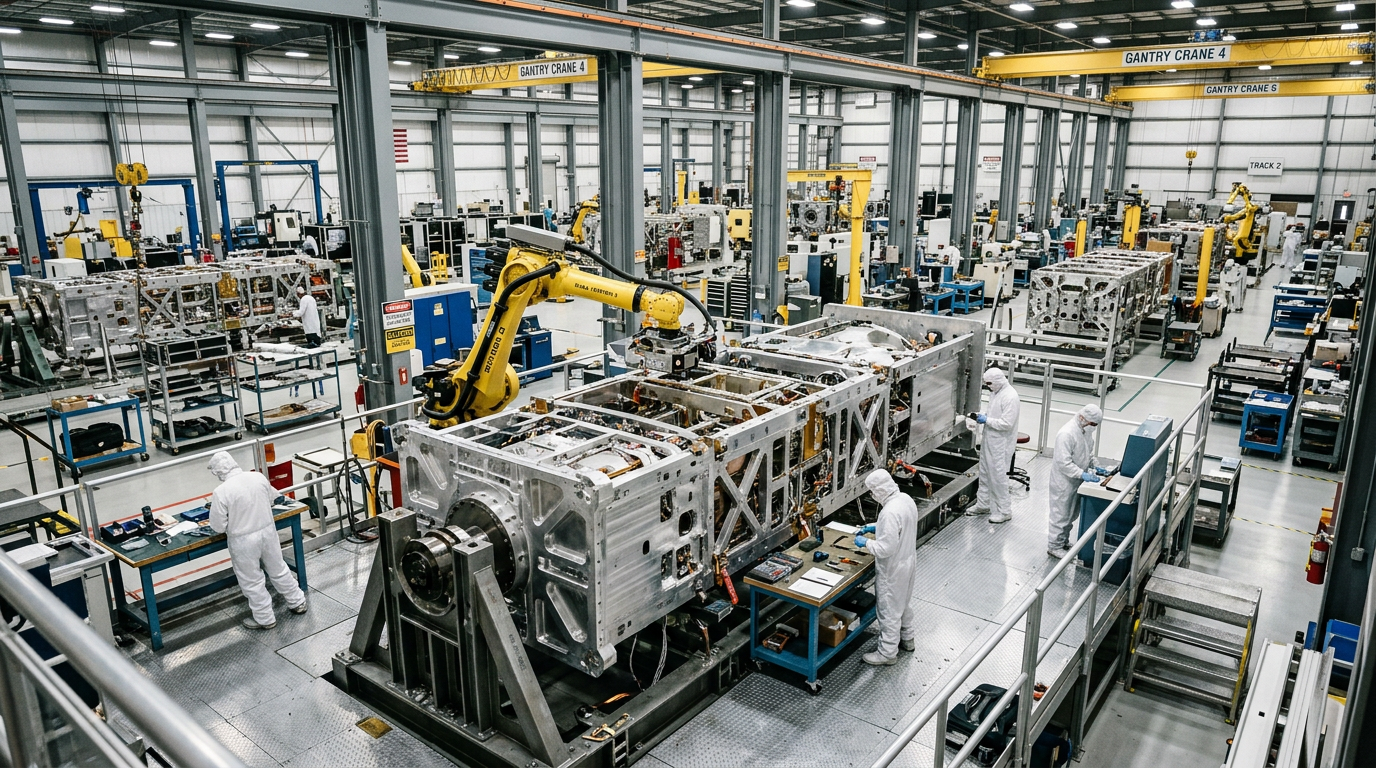
This is why institutional capital is salivating over SpaceX. It is why they will change S&P 500 rules to get it. SpaceX isn't a software app. It isn't a theoretical brand. It is heavy, physical infrastructure. They are putting thousands of metal boxes into orbit. They are laying the physical pipes for global AI data.
Smart money is ditching soft-tech and ESG promises. They are plowing directly into hard-tech monopolies. The rule changes at Nasdaq and S&P are just legal tools. They exist to help move that massive pile of capital.
The Playbook: Don't Be Retail Liquidity
So, how do you actually play this? How do you position yourself when the house rewrites the rules?
First, kill the urge to act like retail dumb money. The SpaceX IPO will eventually drop. The media frenzy will be deafening. Every retail trader with a smartphone will try to buy at the open.
Here's the thing. If you buy on day one, you pay a massive premium. You are feeding the institutional algorithms.
Instead, look for asymmetric angles. Look at the market structure.
S&P and Nasdaq will likely push through these "Fast Entry" rules. But that $24 trillion in passive buying won't happen on IPO morning. It will happen in a specific window. It hits after the inclusion is announced, but before the index rebalances. That is where institutional front-running happens.
You also need to look at secondary winners. Look at data providers like S&P Global. They monetize these complex megacap listings through AI tools like Drift AI. Look at the physical suppliers. They build components for Starlink and Falcon rockets. These companies are already public. They make massive revenues from SpaceX's expansion.
The mainstream wants you to look at the sky. I'm telling you to look at the ground. Look at the index rules. Look at the forced buying mandates. Look at the data cartels controlling the information flow.
The rules of the $24 trillion game are changing right now. If you understand the plumbing, you don't have to guess. You know which way the water will flow. You just wait at the end of the pipe.