The $175 Billion Corporate Backdoor (And The $2,000 Check Illusion)

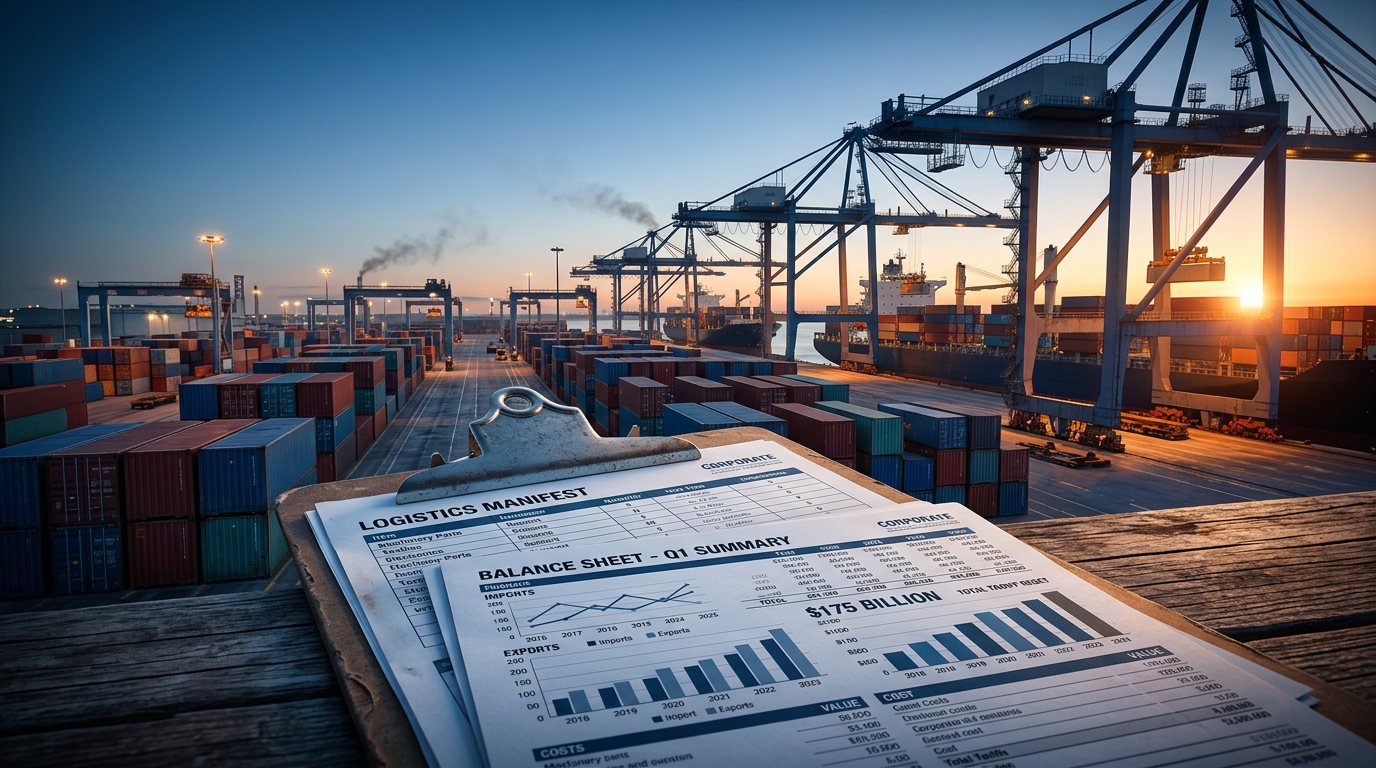
While everyone is watching the mailbox for a two-grand handout, the real story is a $175 billion corporate backdoor that Washington is desperately trying to manage—and the massive fiscal hole they just blew in the national budget. The mainstream media is distracting you with breathless coverage of "free money" and campaign promises. They are treating this like a consumer stimulus story. It isn't.
This is an infrastructure story. It is a story about the plumbing of global trade, the legal limits of presidential power, and how institutional capital always finds a way to get paid first while the retail guy gets left holding the bag. If you want to understand what is actually happening with your money, you have to look past the headlines and look at the actual mechanics of the system.
Here is the sober, unvarnished truth about the great tariff reset of 2026.
SCOTUS ruling and the $175B refund liability
Let’s start with the hard facts. On February 20, the Supreme Court dropped a bomb on Washington. They ruled that President Trump lacked the authority to enact tariffs under the International Emergency Economic Powers Act (IEEPA).
Just like that, roughly $175 billion in collected tariffs were ruled illegal.
That is not a typo. Economists at the University of Pennsylvania's Penn Wharton Budget Model estimate the IEEPA-based tariff collections sit somewhere between $175 billion and $179 billion. That is real money. That is cash that companies paid on goods that eventually made their way into your Amazon cart, your local grocery store, and the hardware aisle down the street. You paid for those tariffs through higher prices. The cost was passed down to you, baked into the margin of everything you bought.
So, naturally, millions of Americans are looking around and asking: "Where's my refund?"
It’s a logical question. If the government illegally collected billions in taxes that ultimately came out of your pocket, you should get it back, right? But here is the thing... the plumbing of the U.S. government doesn't work that way. The system isn't designed to track the extra fifty cents you paid for a hammer and send it back to you.
The Trump administration initially tried to delay the whole refund question for three months. They wanted time to figure out how to handle a liability this massive. The court rejected that approach outright. Now, the government is being forced to provide weekly updates to the U.S. Court of International Trade on their progress in building a refund system.
But if you are sitting at home expecting a direct deposit from the Treasury anytime soon, you need to pump the brakes. The mainstream narrative is completely missing who actually gets this money.
CAPE portal: refunds flow to importers, not consumers

The system the government is currently building is called the CAPE portal. And it is strictly a business-to-government (B2G) mechanism.
From what I observe, the government is scrambling to return billions in illegally collected tariffs, but that money flows to the corporate importers first. They are the ones who technically wrote the checks to Customs and Border Protection. They are the ones who hold the legal standing to get the refund.
Right now, there is absolutely no mechanism for direct consumer relief through this portal. Whether any of that $175 billion ever reaches you depends on a convoluted web of class-action lawsuits still being filed, corporate boardroom decisions about price rollbacks, and a political process that is far from settled. Spoiler alert: corporations don't usually roll back prices just because their costs went down. They pocket the margin. That is how the game is played.
Yet, despite this reality, the political machine is spinning a different tale. You’ve probably seen the emails. The Trump campaign sent out messages in late February talking about "rebate" checks. Newsweek covered it extensively. The language is incredibly careful. Trump was quoted saying: "I’m looking into these checks very seriously … I haven’t made the commitment yet, but I may make the commitment."
It’s classic political strategy. Andrew Lokenauth, founder of Fluent in Finance, called it exactly what it is. He noted that the timing says alot, with checks potentially hitting mailboxes right before the midterm elections when voters are already pissed off about high prices. He thinks the proposal is more political strategy than sound fiscal policy.
The $2 trillion budget hole and the $2,000 check math
Let’s talk about the math, because the math is where the smart money focuses. The fiscal problem this Supreme Court ruling creates for Washington is catastrophic.
You have to remember how the current budget was built. The Republican tax bill—the One Big Beautiful Bill Act—was constructed partly on the assumption that massive tariff revenue would help fund tax cuts over the next decade. Republican estimates put that projected revenue at over $2 trillion for the 2025–2034 period.
With the IEEPA tariffs now struck down by the highest court in the land, that revenue is gone. Vaporized.
So how exactly is the government going to fund a $2,000 rebate check for every eligible American? They can't. The funding source and the legal authority for such payments remain entirely unclear. Ryan Monarch, an associate professor of economics at Maxwell, laid it out perfectly. Current tariff collections fall massively short of what would be required to cover checks for all eligible Americans.
The cost depends entirely on who is deemed eligible, and the administration hasn't even defined that yet. Any funding not covered by what the tariffs have actually raised would have to come through Congressional authorization. As Monarch put it, "It’s not something the president can just wave a magic wand and disperse the money as they see fit."
Congress holds the purse strings. And Congress is staring down a $175 billion immediate liability and a $2 trillion hole in their ten-year projections. The idea that they are going to authorize hundreds of billions more for pre-midterm rebate checks without issuing massive amounts of new debt is a fantasy.
This is the kind of structural reality the mainstream financial press glosses over. They love the headline of a $2,000 check. They hate explaining the mechanics of Congressional authorization and B2G refund portals. But if you want an edge, you have to understand the plumbing.
Replacement tariffs under Sections 122, 232, and 301
Because the government is bleeding cash, they are moving aggressively to rebuild their tariff framework using different legal authorities. This is the pivot you need to watch.
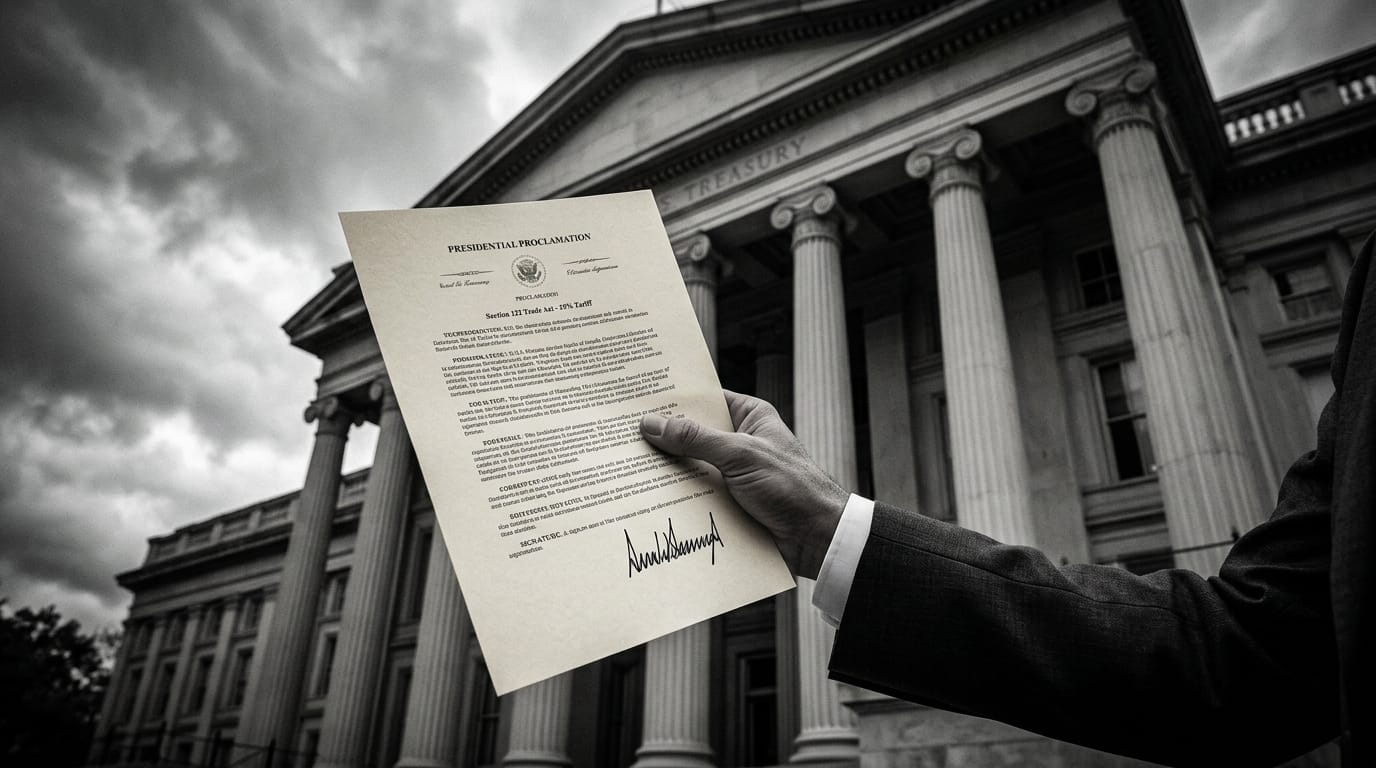
On the exact same day the Supreme Court ruled the IEEPA tariffs illegal, President Trump signed a proclamation imposing a new 10% global tariff. This time, he used Section 122 of the Trade Act of 1974. The very next day, he raised it to 15%, which is the maximum allowed under that specific statute.
Treasury Secretary Scott Bessent is out there arguing that a combination of tariffs under Sections 122, 232, and 301 will maintain the government's tariff revenue levels in 2026. But the legal challenges to these replacement tariffs are already underway. In March 2026, twenty-four states filed a lawsuit challenging the new Section 122 tariffs.
These investigations and legal battles could eventually provide the basis for new tariffs that are neither time-limited nor capped at 15%. For you, the consumer, this means any price relief you might have felt from the Supreme Court ruling is going to be incredibly temporary. If Section 301 tariffs are imposed this summer at rates similar to the old IEEPA levels, the cost-of-living impact is going to return in full.
Even if the refund money never reaches you, you need to understand what you are paying into this system. The Tax Foundation estimates that Trump's tariffs would amount to an average tax increase of $1,000 per U.S. household in 2025, rising to $1,300 in 2026 if the policies remained in place.
Taylor Kovar, CEO of 11 Financial, pointed out the absurdity of the whole situation. He noted that what we end up with is a scenario where consumers pay more throughout the year, and then maybe get some of that money back in a lump sum check. From a broader economic perspective, it’s a circular system. The exact same people funding the tariffs at the cash register are the ones supposedly receiving the checks.
Marcus Sturdivant Sr. asked the real question: Even if people get a check, will they pay down debt, or just buy a liability that exacerbates their problems? These checks, if they ever materialize, are only a temporary fix to a structural inflation problem.
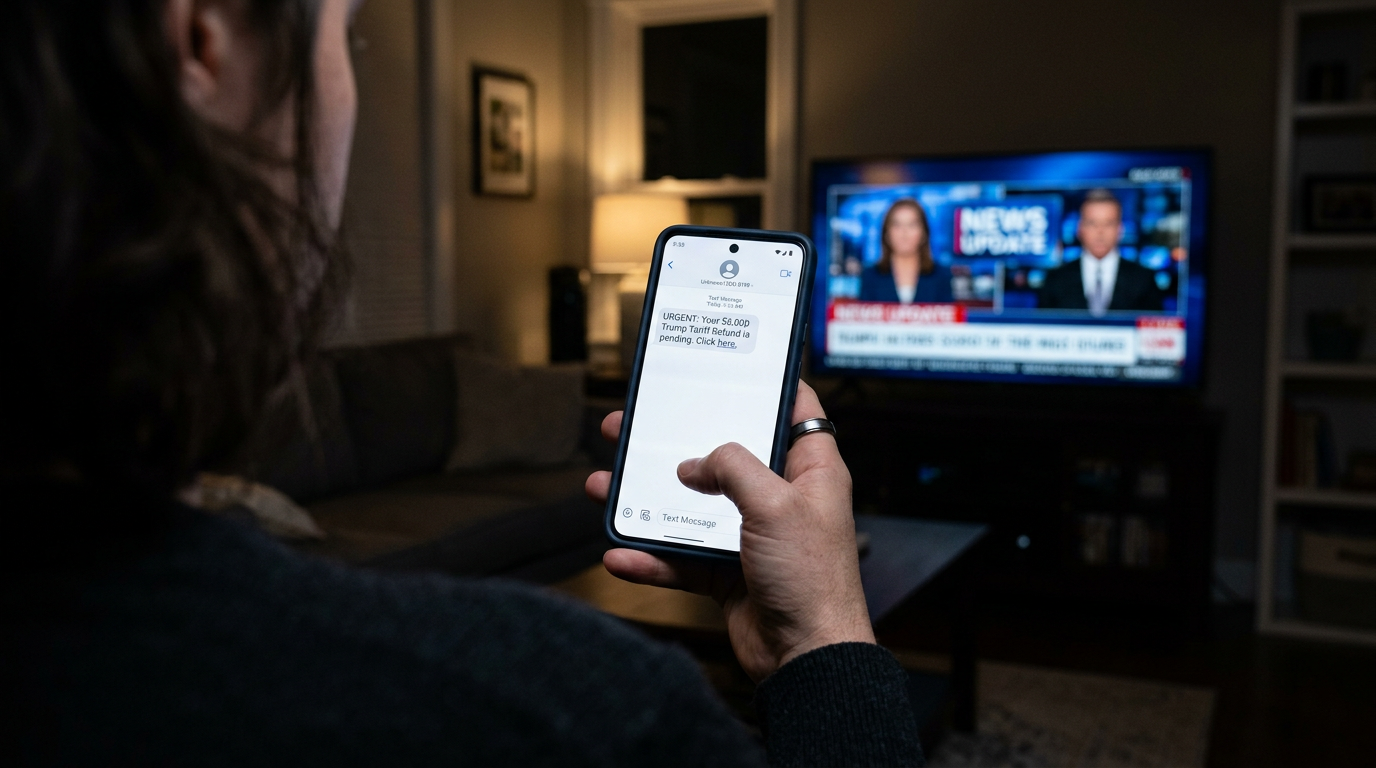
Scammers hijack the tariff refund narrative
Whenever you have a massive, confusing macroeconomic event mixed with political promises of free money, the predators circle. And right now, the predators are having a field day.
Because the mainstream media has spent months muddying the waters about tariff refunds and $2,000 checks, the American public is primed to be scammed. A recent report from Malwaretips exposed a massive operation pushing fake $6,000 Trump Tariff Refunds.
The scam is brilliantly insidious because it is built to look timely, patriotic, and financially tempting. It shows up in text messages, emails, and social media ads claiming you qualify for a large refund tied to tariffs or economic relief. The branding changes, the wording changes, but the goal is always the same: steal your data and drain your accounts.
Why does it work? Because it piggybacks on real public debate. It leverages the actual court fights over tariff collections and the genuine confusion about whether consumers will ever see a payment. Back in 2025, Reuters reported that Trump said some Americans could get a distribution from tariff revenues, and later reported the White House was committed to exploring a $2,000 dividend.
That background matters. Once people hear enough headlines about tariffs and government money, a fake text message about a "tariff refund" stops sounding ridiculous. It starts sounding possible. Scammers don't need perfect credibility; they just need enough familiarity to get you to click. They take a real headline, remove the context, and convert it into a fake direct-to-consumer offer. You hear "refund" on the news, see "refund" on your phone, and assume they are connected. They aren't.
Officials have been sounding the alarm on this for a while. The Idaho Attorney General warned late in 2025 about fraudulent texts claiming recipients had to act urgently to get $2,000 tariff rebate checks. They made it clear: no government payment requires a text response to qualify.
The new evolution of the scam pushes the number to $6,000. Why? Because it hits a psychological sweet spot. A promise of $50,000 triggers immediate skepticism. But $6,000? That feels just plausible enough during a period of intense economic stress, inflation, and tax changes. Falling for it isn't stupidity. It is the result of scammers weaponizing timing and confusion. The government is not texting you a link to claim six grand.
Where the real opportunities are
So where does this leave us? The smart money aspirant doesn't sit around waiting for a $2,000 check that may never come, or a $6,000 text message that is guaranteed to be a scam. The smart money looks at the underlying infrastructure of the trade.
We are watching a real-time reset of global trade plumbing. The Supreme Court just invalidated $175 billion in government revenue. The CAPE portal is going to funnel that money back into the balance sheets of massive corporate importers. Meanwhile, the Treasury is scrambling to slap 15% Section 122 tariffs on everything to plug a $2 trillion budgetary hole, while 24 states try to sue them into submission.
This is a volatile, asymmetric environment. The cost of consumer goods is going to fluctuate wildly as these legal battles play out. The corporations getting those B2G refunds are going to see unexpected cash infusions on their quarterly earnings. That is where the actual opportunities are. You look for the suppliers, the shipping logistics firms, and the legal infrastructure handling this massive capital reallocation.