The $1.75 Trillion Wall Street Hijack

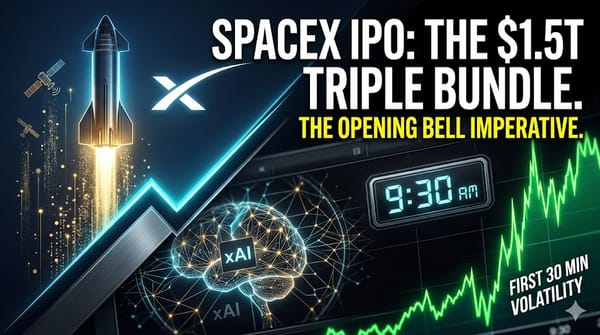
If you've turned on a TV in the last 48 hours, you know the headline. Elon Musk wants to take SpaceX public. Reports point to an IPO as early as June 2026. The rumored price tag? A crazy $1.5 trillion to $1.75 trillion.
At the top end, it would eclipse Saudi Aramco’s $1.7 trillion debut in 2019; at $1.5 trillion it would trail slightly. Either way, it would make SpaceX one of the ten most valuable companies on Earth. It drops right in with Apple, Microsoft, NVIDIA, Amazon, and Alphabet.
The mainstream media is doing what they always do. They are freaking out. They argue if a space company is "worth" that much. They pick apart Elon’s tweets. They debate the ethics of Mars.
While everyone watches the shiny object, the real story is in the market's plumbing.
This isn't just an IPO. It's a forced cash event for big funds. It rewires how money flows into hard tech, physical AI, and space assets.
If you're smart money, ignore the CNBC hype. You need to see the backdoor trades setting up in the shadows. By the time this hits the retail ticker, the real money is gone.
Here is the secret debrief on the SpaceX IPO. Here is how smart money is playing the fallout.
The Nasdaq-100 Hijack
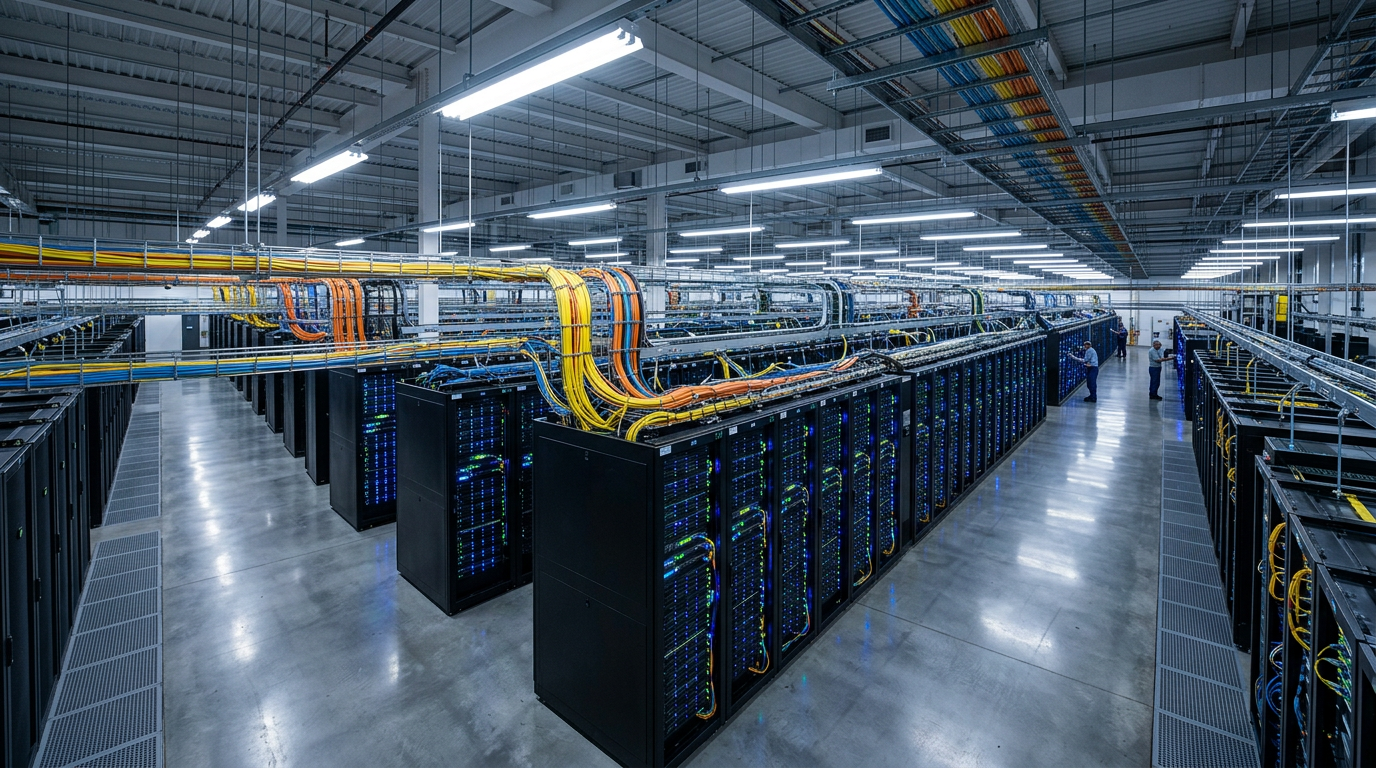
Let’s start with market structure. This is where the mainstream completely misses the boat.
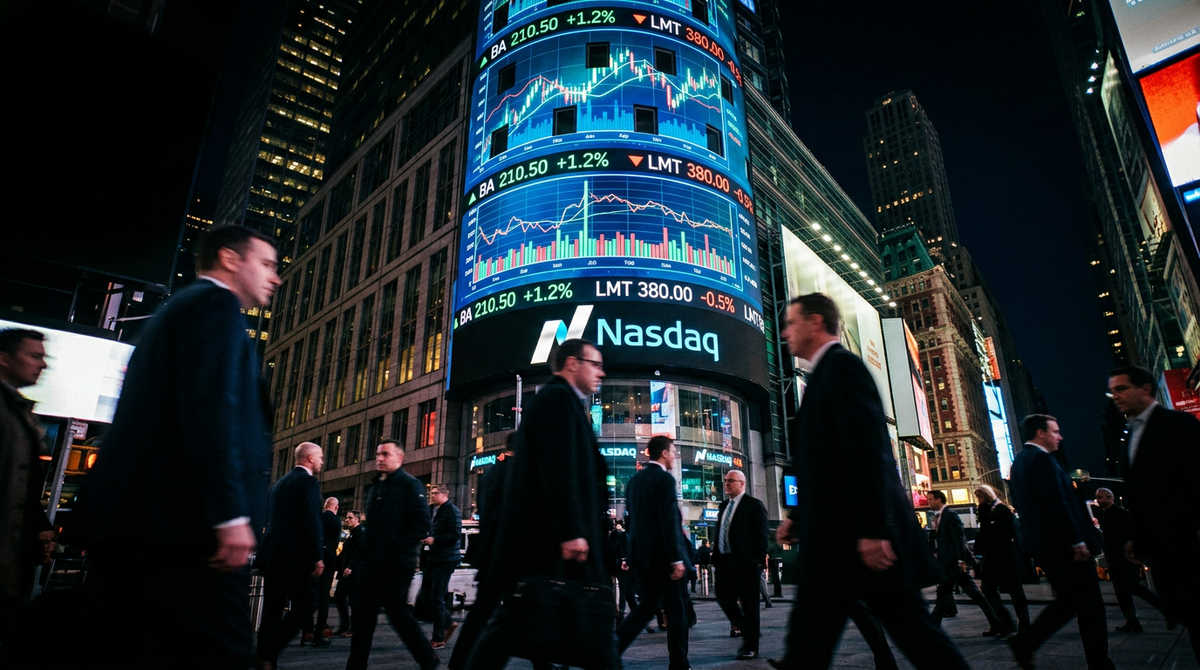
Over in Europe, a German outlet called Investmentweek just leaked huge news. Musk isn't just looking to list SpaceX on the Nasdaq. He demands VIP status from day one.
Reports say SpaceX will only list if it joins the Nasdaq-100 index right away.
If you don't know market plumbing, that sounds like a minor detail. I promise you, it's a massive shift.
Usually, a company goes public and proves itself over time. Eventually, it earns a spot in a major index like the Nasdaq-100 or S&P 500. But Musk is putting a gun to the exchange's head. He's saying, "Give me Day 1 inclusion, or I take the biggest IPO in history somewhere else."
Why does this matter? Passive investing.
Trillions of dollars are locked in index funds, ETFs, and pensions that track the Nasdaq-100. These funds don't have human managers making choices. If a stock is in the index, the computer must buy it. It buys based on market size.
If SpaceX hits the Nasdaq-100 on Day 1 at $1.75 trillion, every big fund must buy it. Every 401(k) manager and passive ETF on earth will be forced to buy billions in SpaceX shares. Right away.
They won't care about the price. They won't care about the earnings ratio. They will buy it because the code tells them to.
This is a financial hijack. Musk is using passive index funds to guarantee a record cash raise. It's the exact fuel he needs for Starship and Starlink. And for early investors and staff, this huge cash pool is a safety net. They can sell shares without crashing the price. The index funds are legally forced to catch them.
This is why arguing over the "fair value" is a waste of time. The market plumbing is rigged to hold up the price.
The "Garbage Financials" Distraction
Now, let’s talk numbers. A lot of traditional analysts are losing their minds.
Fortune just ran a piece by Shawn Tully. He said SpaceX needs to earn more than Berkshire Hathaway to justify a $1.5 trillion price. He thinks that's unlikely.
He points out SpaceX is pitching this off messy, partial financials. Yes, the company has signaled about $15 billion in revenue and roughly $8 billion in EBITDA last year. But reports show a $2.4 billion loss over the first nine months of 2025. Add in depreciation, interest, and wear-and-tear, and SpaceX will show almost no real GAAP profit at the IPO.

Tully’s takeaway? Investors are buying a cash-burning growth story for a market that doesn't exist yet.
He’s not wrong on the math. But he completely misses what this asset is.
Judging SpaceX on standard profits right now is stupid. It's like valuing the first railroad before the tracks are done, while whining about the cost of steel.
Smart money isn't buying SpaceX for a quarterly payout. They buy it because it's the base plumbing for the next century of trade and defense.
Look at the government cash. SpaceX handles NASA’s crew flights. It runs the Pentagon’s space launches. It builds the Starshield network for spy gear. SpaceX has made itself vital to the U.S. government.
In 2025 alone, SpaceX locked up over $5 billion in government deals.
Uncle Sam is backing the floor for this company. The Pentagon can't let SpaceX fail. They need it for national security. When the U.S. military is your main client, standard stock math goes out the window.
Plus, Elon expects Starlink to make up to $36 billion a year soon. Critics worry these goals will fall short. But the truth is, Starlink is already fixing the global web gap. It's crushing old telecom giants on a global scale.
You aren't buying a rocket company. You're buying a global telecom utility, a defense firm, and a shipping network, all in one.
The Asymmetric Trade: Suppliers and the Rising Tide
Here is the real, actionable intel.
If you want to buy SpaceX on IPO day, go ahead. But know you are buying an asset priced for perfection at $1.5 trillion.
The real asymmetric trade is the reset of the whole space sector.
When a giant like this goes public, it sets a price anchor for everyone else. As Spacenexus noted this week, the "rising tide" is real. When Amazon went public, it lifted all e-commerce stocks. The SpaceX IPO will do the same for space tech.
Look at companies like Rocket Lab (RKLB). Right now, they trade at a huge discount to SpaceX per launch. When the market suddenly has a $1.5 trillion yardstick, the prices on smaller, proven launch firms will explode.
The same goes for satellite data and comms players. Think Planet Labs (PL), BlackSky (BKSY), AST SpaceMobile (ASTS), and Spire Global (SPR). Even moon tech firms like Intuitive Machines (LUNR) will catch this massive wave of money.
Then there is the venture capital boom. Space VC funds like Seraphim, Space Capital, and In-Q-Tel will find it much easier to raise cash. A huge SpaceX IPO proves space companies can make investors rich. That means more money flows into private space startups. That drives more tech and more public exits.
But the biggest plays are in the hard tech. SpaceX will use this IPO cash to build massive things.
Reports tracked by Opentools show SpaceX isn't just launching more Starlink birds. They want to build sci-fi-level projects. We are talking about space data centers. We are talking about moon factories. We are talking about shooting AI satellites from the moon using railguns.
This sounds crazy until you look at the math. Space data centers solve the huge heat and power limits of Earth-bound AI. A moon railgun uses low gravity to launch deep-space gear for pennies on the dollar.
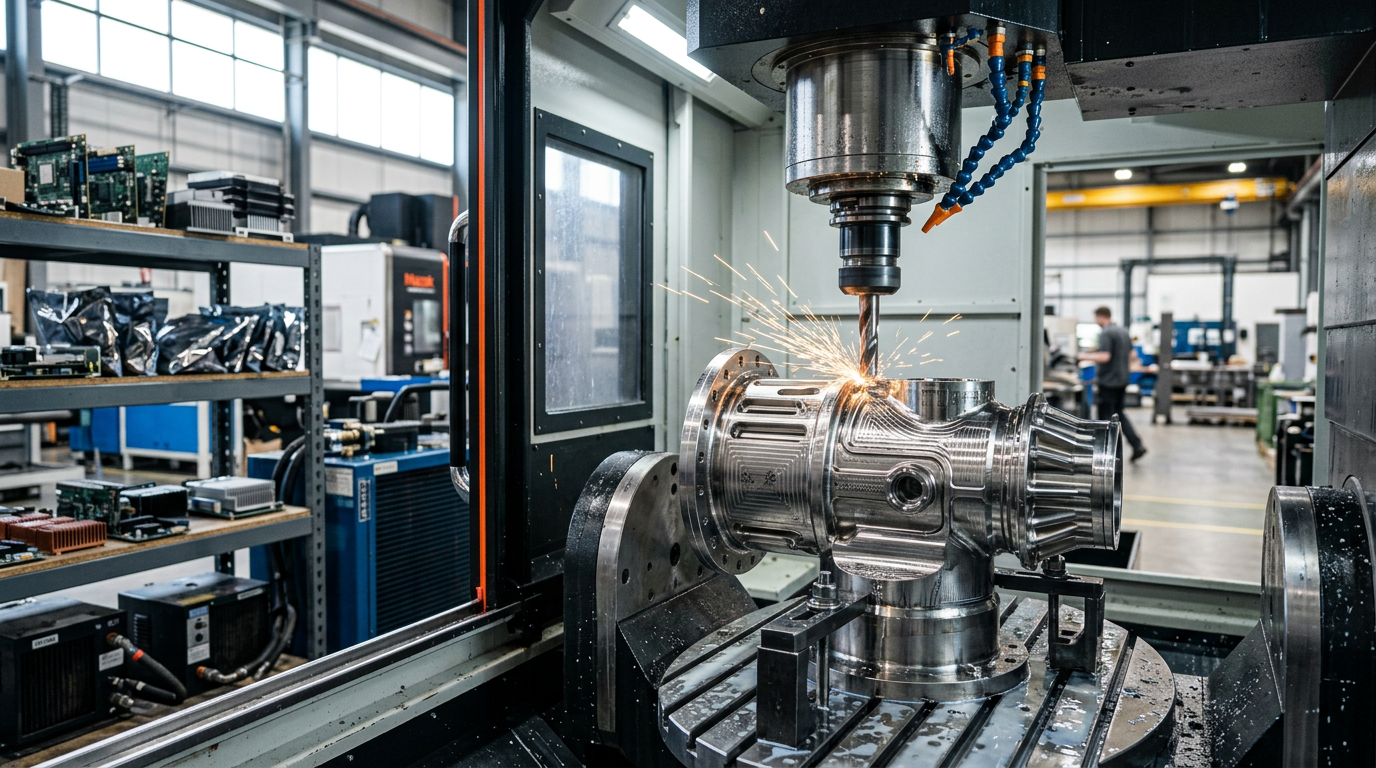
To build this, SpaceX needs physical parts. They need tough computer chips. They need advanced cooling systems. They need sensors, motors, and special metals.
Smart money looks down the supply chain. They find the companies building the physical "picks and shovels" for these mega-projects. Because whether SpaceX hits its $36 billion goal or not, they will spend billions buying hardware from suppliers.
The Liquidity Squeeze
To know why this IPO is happening now, look at the private market pressure.
For over 20 years, SpaceX has been the most game-changing firm in aerospace. It also stayed totally private. Elon Musk feared public shareholders would ruin his long-term Mars vision.
But the math finally caught up with him.
SpaceX has sold private shares many times over the last few years. The price keeps going up. We saw $180 billion in late 2023. We saw $210 billion in mid-2024. By late 2024, it hit $350 billion. In 2025, private deals pushed it over $500 billion. Today, share buybacks put the value near $800 billion.
Here is the problem. The private market is too clunky now.
Early investors have been locked in for a decade. Thousands of SpaceX workers are rich on paper. But they can't easily use that stock to buy a house or pay for college.
The pressure for cash is huge. An IPO gives these insiders a clean, massive way to cash out.
But it comes with a cost. Going public means SpaceX must face radical public openness. Musk will have to answer to analysts. They care more about profit margins than planting a flag on Mars. It also brings massive "key-person risk." If Musk gets distracted or hits legal trouble, the stock will swing wildly.
Also, there is a risk that mixing space exploration (which burns cash) and satellite internet (which prints cash) might confuse normal investors. If early backers and staff cash out all at once, it messes up the stock structure. It raises questions about long-term goals.
Musk knows this. That is exactly why he demands Nasdaq-100 inclusion. He needs the blind, robot buying power of index funds. They must absorb the massive wave of insider selling that will hit the market.
It's a ruthless piece of financial engineering.
The Stampede
We are standing on the edge of a massive shift.
Soon, SpaceX will hit the CNBC ticker. Safe financial advisors will tell retirees to buy "space stocks." Normal 401(k) holders will see a rocket company in their funds. That is the moment the space economy goes mainstream.
The tech is ready. Reusable rockets fly every day. Starlink proved the business model. Starship is blowing the market wide open.
Now, the financial plumbing is catching up.
A public SpaceX worth $1.5 trillion to $1.75 trillion will act like a black hole for cash. It will steal top engineers from Big Tech. It will force old space laws to change. It will pull up every real supplier, rival, and creator in the sector.
If you wait for June 2026 to make a plan, the herd will trample you.
Smart money is already moving. They are buying tier-two suppliers. They are buying small, public space firms that will get repriced by the SpaceX anchor. They are looking at critical metals, tough microchips, and physical AI parts. These parts will make space data centers real.