The $1.75 Trillion Force-Feed: Musk’s Secret Wall Street Loophole

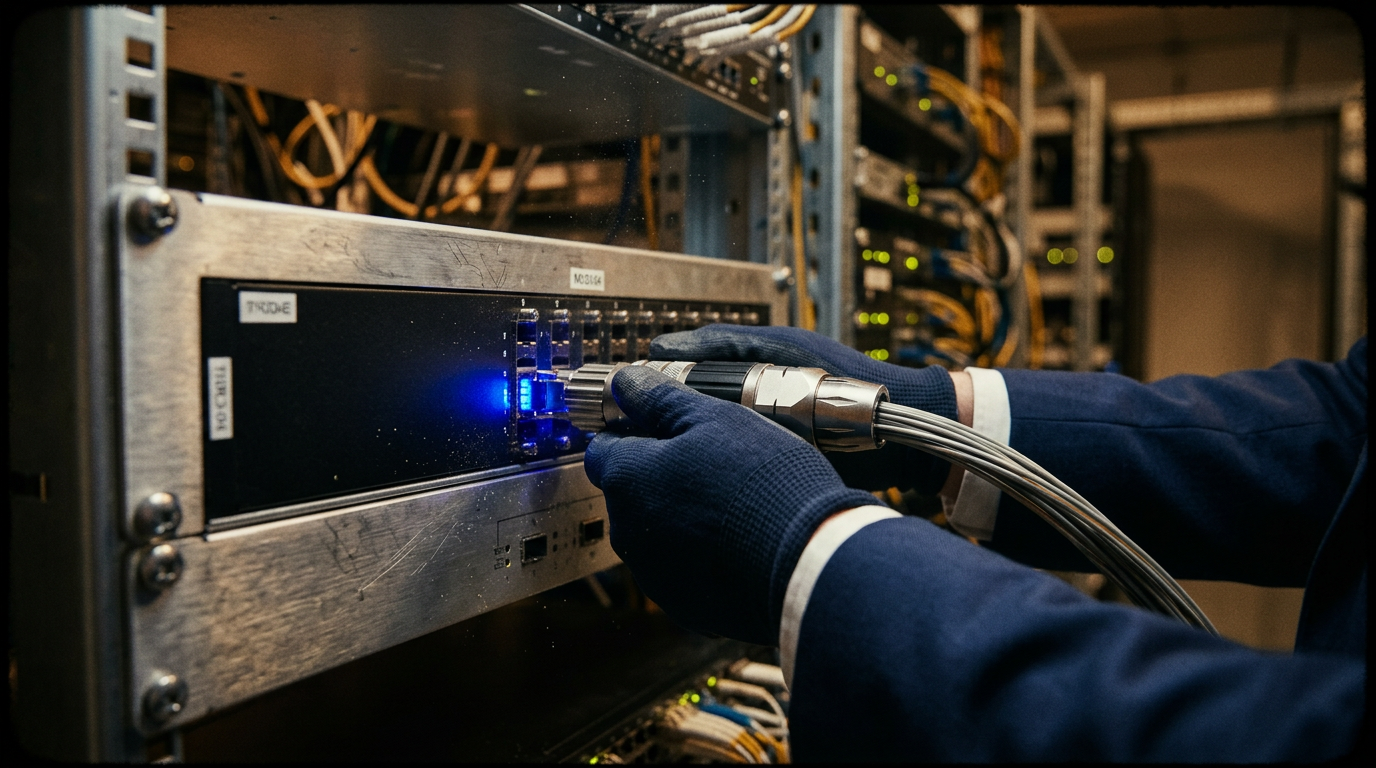
That cable is the physical plumbing of the global financial system. And right now, Elon Musk is rewiring it.
Everyone is watching the latest Starship test flights. They drool over satellite internet speeds and argue about Mars colonies online. But the real story - the money story - is playing out behind closed doors. SpaceX advisors and exchange bosses are meeting in lower Manhattan.
The mainstream media is feeding you a massive distraction. They want you focused on the consumer story. They want you thinking about rockets and space. But if you want to know how smart money works, look past the shiny objects. Focus on the market structure. Look at the rules, the laws, and the mechanical flow of big money.
Right now, a weird shift is forming in the public markets. It’s a massive, engineered loophole. It’s about to force-feed billions of dollars of blind capital straight into Musk’s empire. This isn't about space. It’s about a $1.75 trillion market setup. If you know how the plumbing works, you can get in before the retail tourists even know what hit them.
The Hostage Negotiation
Let’s get straight to the facts. Sources leaked details to Reuters this morning. SpaceX is leaning hard toward listing its shares on the Nasdaq. We are looking at the biggest Initial Public Offering of all time. It could hit the tape as early as June.
But here’s the thing… SpaceX isn’t just filing an S-1 and hoping for the best. They aren't asking Wall Street for permission to go public. They are dictating the terms.
SpaceX wants a valuation of around $1.75 trillion for this IPO. Let that number sink in. At $1.75 trillion, SpaceX wouldn't just be a large-cap stock. It would instantly become the sixth-largest company in the US by market value. It would rival the legacy tech giants that took decades to build.
When you are that big, you don't play by normal rules. You make the exchanges fight to host your ticker. The New York Stock Exchange (NYSE) is fighting hard for this listing. But Nasdaq has the edge right now. Why? Because SpaceX gave a strict ultimatum. They want early, fast entry into the Nasdaq 100 index.
Two insiders confirmed this early index entry is a "necessary condition" for SpaceX. It’s not a request. It’s a hostage negotiation. Musk’s team knows how much fee money and trading volume a $1.75 trillion beast will bring. They are dangling the biggest prize in modern finance. In return, they demand Nasdaq rewrite the rules of how index entry works.
And guess what? Nasdaq is folding. They are bending the knee. In the business of market plumbing, volume is king. And SpaceX is about to bring a tsunami of it.
Bending the Rules of the Game
To see why this is a huge deal, you have to understand the old plumbing of the public markets.
Normally, when a company goes public, it waits in line. New companies must wait up to a full year before they can join major indexes like the S&P 500 or the Nasdaq 100. This rule wasn't an accident. It’s a safeguard. Exchanges require a "seasoning period." This proves the new company is stable. It proves the stock can handle massive buy and sell orders from big funds.
But when you are worth $1.75 trillion, the rules suddenly become... flexible.
Just last month, Nasdaq proposed a brand new rule. They call it the "Fast Entry" rule. The timing is no mistake. It is a custom loophole tailor-made for Elon Musk.
Under this "Fast Entry" rule, a new company could join the index in just under a month. It completely skips the one-year wait. The only catch? The company’s market cap must rank in the top 40 of the index. At $1.75 trillion, SpaceX easily clears that hurdle. It destroys it.
This rule change could take effect in just a few months. It is designed to lure massive private companies to their exchange. The media calls this a minor update. This is a total rewiring of market mechanics. Nasdaq is changing its own laws to meet a single company's demands. They care more about capturing SpaceX than protecting the index.
Why does SpaceX care so much about getting into the Nasdaq 100 on day 30 instead of day 365? Because index entry is the ultimate cheat code in modern finance. It unlocks forced buying that defies all logic, value, and price.
The Index Fund Force-Feed
Let’s talk about "blind capital."
Trillions of dollars in the global financial system are managed passively. Every 401(k) and state pension fund operates on autopilot. Every retail account holding a Nasdaq 100 ETF (like the QQQ) does the same. The algorithms running these funds don’t read balance sheets. They don’t care about Elon Musk’s tweets. They don’t care if a rocket blows up. And they sure don’t care about price-to-earnings ratios.
Their only job is to perfectly track the index. If a company is added to the Nasdaq 100, these passive funds must buy the stock. They have no choice.
Now, imagine what happens when a $1.75 trillion company is jammed into the Nasdaq 100 just weeks after its IPO. It creates a massive cash vacuum. SpaceX will instantly become one of the heaviest stocks in the index. Passive fund managers will be forced to sell other stocks to free up cash. Then, they will blindly smash the "BUY" button on SpaceX stock to match their required share.
We are talking about hundreds of billions of dollars in forced buying. Price doesn't matter.
This is exactly why SpaceX’s team reached out to major index providers back in February. They wanted to discuss joining key indexes sooner than normal. They aren't trying to attract retail investors. They don't need to. They are building a trap. The largest pools of big money in the world will be legally forced to buy their stock. They will pay whatever price the market dictates.
It is a brilliant, ruthless play on market structure. By using the "Fast Entry" rule, SpaceX protects its post-IPO stock price. It isn't left to the whims of active traders or hedge funds. Instead, they guarantee a massive, fake floor under their stock price. This floor is funded by the retirement accounts of millions of Americans. And those Americans don't even realize they are playing.

The AI Mega-Pipeline
But if you think this story ends with SpaceX, you aren't paying attention. SpaceX is just the battering ram. They are knocking down the wall and rewriting the rulebook. But look at who is waiting right behind them. They want to walk through the exact same loophole.
The Reuters leak noted something specific. This new Nasdaq rule is designed to lure other rich private companies like OpenAI and Anthropic.
This is the real macro shift. We are watching the birth of a new market setup for Hard Tech and Physical AI. For the last decade, the most important companies stayed private much longer than before. They used huge pools of private equity and venture capital. They built trillion-dollar values behind closed doors. They were totally safe from public market swings and SEC reporting rules.
Now, the cash cycle is turning. The early backers of these AI and space titans want their exit. 2026 is shaping up to be a huge, aggressive year for IPOs. OpenAI and Anthropic are actively laying the groundwork for their own debuts.
They are watching the SpaceX situation like hawks. Musk might force Nasdaq to pass the "Fast Entry" rule. If he does, it creates a repeatable playbook for the AI giants. They will stay private until they reach massive size. Then they will IPO at a crazy valuation. Finally, they will use the fast-track loophole to dump their stock into passive index funds.
This is the new "plumbing" of the tech economy. Moving from private to public is no longer a slow build. It is a sudden, violent wealth transfer. Money moves from big index funds to Silicon Valley insiders. If you are just sitting there waiting to buy shares on Robinhood on IPO day, you are the exit liquidity. You are the sucker at the table.
How the Smart Money Plays It
So, how do we actually trade this? The mainstream story is a distraction. Buying the IPO on day one makes you a retail sucker. So where is the smart play?
You have to look at the plumbing. Look at the supply chains, the physical assets, and the private market backdoors. These are what power these massive transitions.
First, the smart money is hunting for pre-IPO access. The public waits for the Nasdaq listing. Meanwhile, big capital and rich investors use secondary markets. They use specific private equity setups (like Reg A+ loopholes). They secure stakes in these companies before the index funds are forced to buy them. If you get in before the "Fast Entry" rule triggers, you win. You are positioned ahead of the largest blind-capital bid in history.
Second, look at the physical suppliers. A $1.75 trillion space and satellite network doesn't exist in a vacuum. It needs a massive, hidden network of special hardware. It needs advanced sensors, tough semiconductors, industrial parts, and physical AI components. These let the systems run on their own. The companies that make these highly regulated parts are the true "pick and shovel" trades of this cycle. When SpaceX gets its massive cash injection, that money flows right down the supply chain. It pays for their contracts.
Finally, understand the money environment. The sheer scale of these massive IPOs requires huge banking cash. These multi-trillion-dollar assets will hit the public markets. When they do, they will strain existing banking reserves. This will force further banking resets. It could drive capital toward safe havens like gold and hard assets. Investors will need a hedge against the resulting market chaos.
The SpaceX IPO isn't about going to Mars. It is a masterclass in market manipulation. It is designed to force-feed big money into a private empire. The rules of the game just changed. Wake up. Look at the plumbing. Position yourself where the smart money is actually flowing.