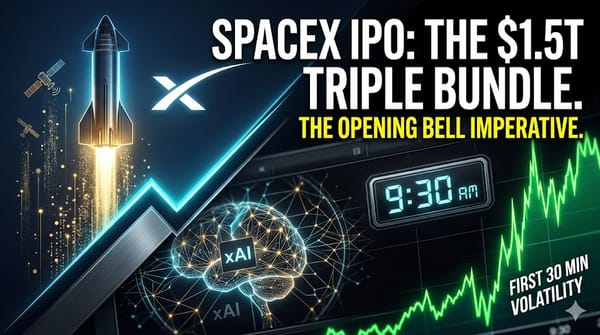
SpaceX Filed for One Million Satellites — Earth-Based AI Just Hit a Wall


SpaceX has filed with the FCC to deploy up to one million orbital data center satellites, a move that signals a significant expansion of space-based computing capabilities. This filing isn't about internet coverage; it is about compute capacity, leveraging Starlink's nearly 10,000 operational satellites and upcoming V3 models with terabit-class laser links set to launch in the first half of 2026. The sheer scale of this proposal suggests a fundamental restructuring of how artificial intelligence will be powered in the coming decade, moving the locus of processing power from crowded server farms to the silent vacuum of low Earth orbit.
The filings reveal a massive pivot from terrestrial data centers to orbital infrastructure, driven by the physical limits of Earth's power and cooling systems. SpaceX envisions moving AI processing off Earth entirely, utilizing continuous solar power and the vacuum for cooling, while competitors like Nvidia and Google are pursuing their own orbital strategies. The transition represents more than just a logistical upgrade; it is a necessary evolution to overcome the thermodynamic and spatial bottlenecks that are currently stifling the exponential growth of machine learning models.
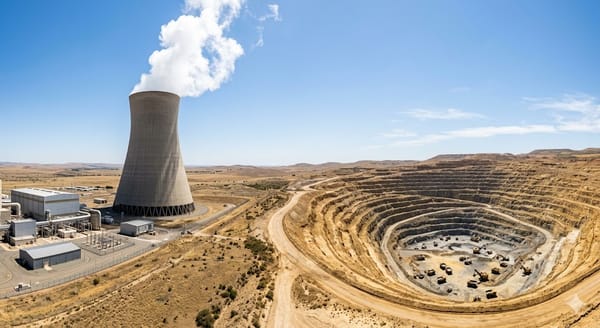
The Terrestrial Wall: Why AI Is Leaving Earth
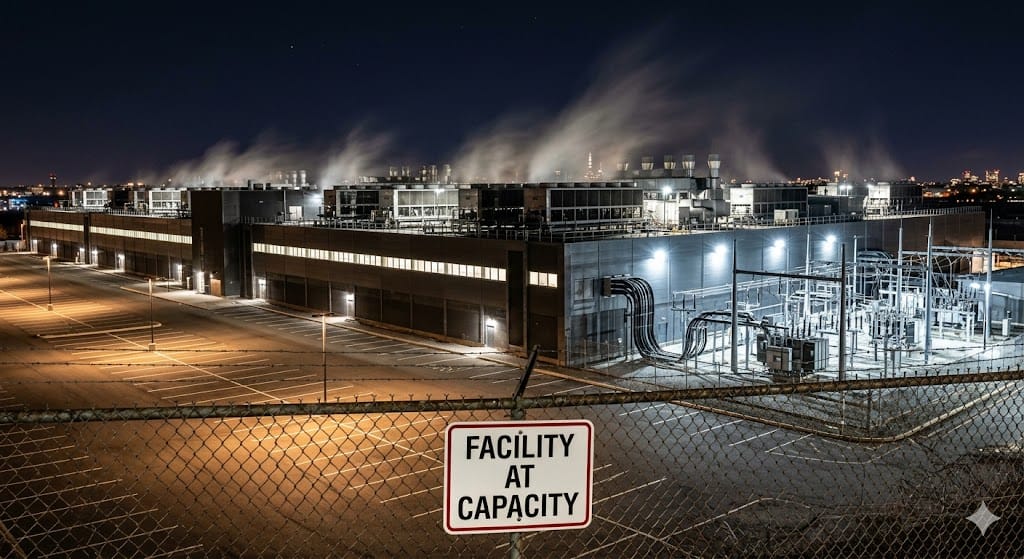
Terrestrial data centers are hitting a ceiling. Power consumption for AI workloads is soaring, and land availability is constrained. The physical limits of Earth are not just a bottleneck — they are a catalyst for innovation.
The energy density required to train next-generation models is outpacing the grid's ability to deliver it efficiently. Cooling systems, which currently consume a massive portion of data center electricity, become obsolete in the vacuum of space where radiative cooling is the only requirement. This thermodynamic advantage allows for higher density computing without the thermal throttling that plagues ground-based facilities. Furthermore, the cost of land in prime locations near power grids is skyrocketing, making the economics of orbital deployment increasingly attractive despite the high initial launch costs.
The Orbital Pivot: Competitors Are Building
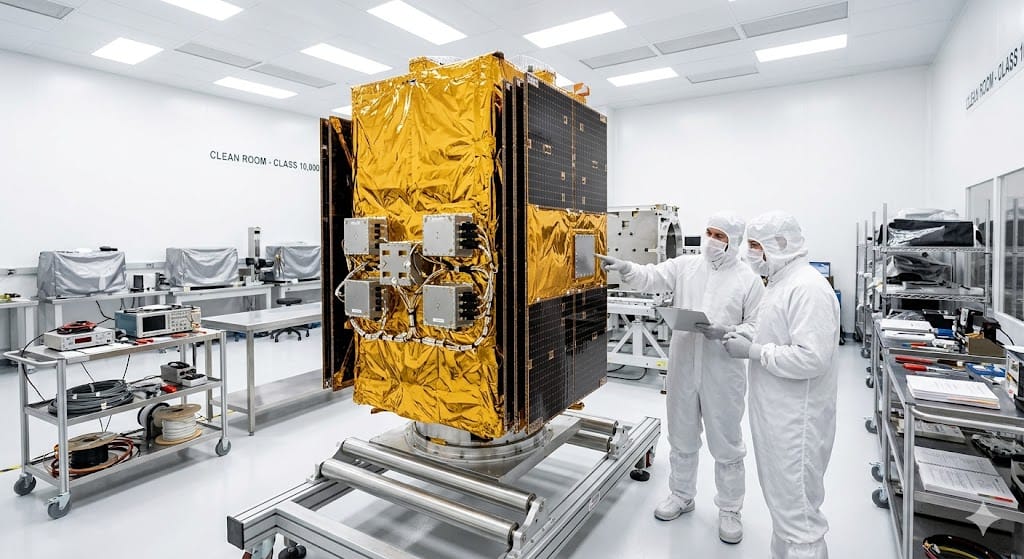
Beyond SpaceX, the race to build space-based AI infrastructure is accelerating. Google has announced Project Suncatcher, which aims to deploy TPU chips on solar-powered satellites.
Nvidia's partnership with Starcloud put the first H100 GPU into orbit. Meanwhile, China's Star Computing project plans to deploy thousands of AI satellites by 2030.
This is a global movement. Other players are moving fast, and the implications for the AI industry are profound.
The geopolitical implications of this shift cannot be overstated. Control over orbital compute capacity will likely become a new metric of national power, similar to nuclear arsenals or semiconductor manufacturing dominance. The ability to process data in space offers a strategic advantage in latency and security, as data does not need to traverse terrestrial fiber networks that are vulnerable to physical disruption or interception. This decentralization of compute power could fundamentally alter the balance of the global AI economy.
The Supply Chain Opportunity: Follow the Infrastructure
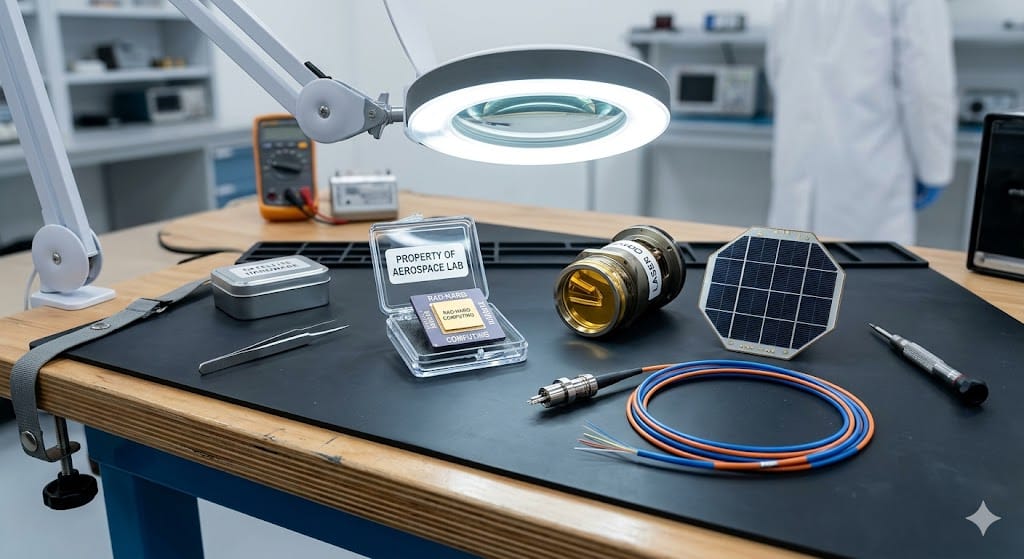
While the headlines focus on SpaceX, Google, and Nvidia, the real opportunity lies in the infrastructure that enables these orbital data centers. Laser optics, power systems, and cooling technology are the unsung heroes of this transition.
These are the "picks-and-shovels" plays of the AI revolution. Companies that provide satellite communications, laser interconnects, and energy systems for orbital platforms are poised to benefit from this shift. The ecosystem of lesser-known companies enables every AI workload, including the space-based data infrastructure layer that most investors haven't considered yet.
The supply chain for space-based AI is distinct from traditional semiconductor manufacturing. It requires components that can withstand extreme radiation, temperature fluctuations, and the vacuum of space without degradation. This creates a specialized market for radiation-hardened chips and advanced optical communication systems. Investors looking for exposure to this sector should focus on companies developing these critical enabling technologies rather than just the satellite operators themselves.
What This Means for You: The Market
The market is still focused on the chip designers and server makers. But the infrastructure enablers are the real story. The filings indicate that SpaceX is gearing up for the next phase of AI advancement, demanding enormous processing power.
SpaceX is positioning Starlink as the connective tissue for an entirely new layer of global AI infrastructure. If that happens, the implications for the infrastructure layer are massive. Investors who recognize this shift early may be positioned to benefit.
We are witnessing the early stages of a paradigm shift that will redefine the economics of computing. The transition from ground to orbit is not merely a technological upgrade but a necessary response to the physical limits of our planet. As the industry matures, the distinction between terrestrial and orbital AI will blur, but the winners will be those who control the infrastructure that makes it all possible.